
Lights Back On: US House Finally Ends 76-Day DHS Shutdown (And Yes, That's a Record)
The US House has voted to end the longest partial shutdown in US history. Here's what's in the DHS funding bill, what's left out, and why UK readers should care.











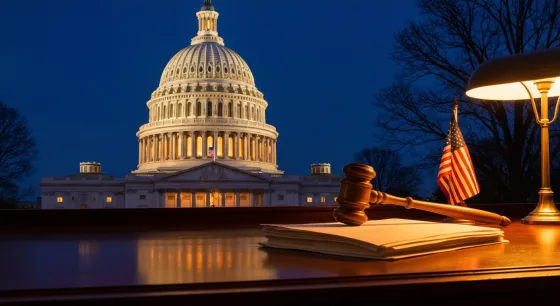
After 76 days of political brinkmanship, missed paycheques and queues at American airports long enough to qualify as a fitness routine, the US House of Representatives has finally voted to end the partial government shutdown. The bill, already nodded through by the Senate, now heads to President Donald Trump's desk, where he is expected to sign it faster than you can say "this could have happened weeks ago".
For UK readers wondering why this matters on our side of the pond: when American airports wobble, transatlantic travel wobbles with them. And given how often Westminster eyes Washington for political weather patterns, a record-breaking shutdown is the kind of storm worth understanding.
What Actually Happened
On Thursday 30 April 2026, the House passed the Senate's Department of Homeland Security funding bill by voice vote. That ended a partial shutdown which began on 14 February 2026, making it, rather grimly, the longest partial shutdown in US history. Valentine's Day to the end of April. Romantic.
The legislation keeps the lights on at the Transportation Security Administration (TSA), the Federal Emergency Management Agency (FEMA), the Coast Guard, the Secret Service and the Cybersecurity and Infrastructure Security Agency (CISA). Funding runs through 30 September 2026, which is Washington-speak for "we'll argue about this again in autumn".
What's Not in the Bill
Here's the wrinkle that kept the standoff going: the bill funds DHS but pointedly excludes Immigration and Customs Enforcement (ICE) and parts of Customs and Border Protection (CBP). That was the price of getting Senate Democrats on board.
Republicans have signalled they will pursue funding for ICE and CBP separately through budget reconciliation, the procedural shortcut that lets the Senate pass certain spending bills with a simple 50-vote majority rather than the usual 60. Translation: another fight is coming, just on a different battlefield.
Why the Shutdown Started
The standoff was triggered by two deadly shootings in Minnesota involving federal immigration officers, in which two American citizens were fatally shot in Minneapolis. Democrats demanded tighter guardrails on immigration enforcement funding. Republicans wanted the cheque written without conditions. Neither side blinked, and 76 days later, here we are.
House Speaker Mike Johnson spent weeks refusing to bring the Senate bill to the floor before eventually reversing course, which is the political equivalent of insisting you'll never eat the last biscuit and then absolutely eating the last biscuit.
The Human Cost
Shutdowns sound abstract until you remember real people are not getting paid. More than 1,000 TSA agents reportedly quit during the shutdown, which, if you have ever shuffled through an American airport security queue, you'll recognise as a recipe for chaos.
The disruption got bad enough that in March, Trump signed an executive order directing TSA agents to be paid as essential workers, an attempt to stop the bleeding at airport checkpoints. Reports suggest queues stretched for hours during the worst of it, prompting predictable outrage from travellers, airlines and anyone with a connecting flight to catch.
The White House Correspondents' Dinner Shooting
Adding to an already feverish atmosphere, on 25 April a man attempted to attack Trump at the White House Correspondents' Association dinner. The suspect, identified as Cole Tomas Allen, 31, from Torrance, California, was reportedly armed with a shotgun, a handgun and knives. He has been charged with three felonies, including the attempted assassination of the president.
A Secret Service officer was struck during the incident but was reportedly saved by a bulletproof vest. According to reports, this was the third apparent attempt on Trump's life since 2024, an extraordinary statistic by any measure.
Money, Money, Money
Reports have circulated suggesting Congress previously approved around $170bn for immigration enforcement as part of Trump's tax cuts bill last year, with Republicans now seeking up to a further $70bn for ICE and CBP. Those exact figures are widely reported but worth treating with a healthy dose of caution until officially confirmed in the upcoming reconciliation package.
Either way, the scale tells you where the political energy is going. Immigration enforcement is the dominant fiscal story of this presidency, and the next round of negotiations is unlikely to be any quieter than the last.
Who Said What
Senator Patty Murray, the top Democrat on government funding in the Senate, has been a central voice throughout the standoff, pushing for the conditions that ultimately shaped the final bill. On the Republican side, reports indicate the DHS Secretary celebrated the bill's passage on social media. (Some reporting has named Markwayne Mullin in this role, though he is publicly known as a US Senator from Oklahoma, so that detail is worth verifying before taking it as gospel.)
What This Means for the UK
Three things worth flagging for British readers:
- Travel: US airport staffing should stabilise, which is good news if you're flying to New York or Florida this summer. Expect a few weeks of recovery before queues feel normal again.
- Politics: The shutdown shows how fragile US governance has become when narrow majorities meet deeply polarised politics. Westminster watchers will spot familiar themes.
- Economics: Prolonged US shutdowns dent confidence in the dollar and ripple through global markets. Sterling-dollar traders will be paying close attention.
The Verdict
Ending the shutdown is a relief, but calling it a victory would be generous. Both parties spent 76 days achieving what could have been negotiated in 76 hours, and the underlying fight over ICE and CBP funding has merely been postponed, not resolved. Expect the autumn to bring round two.
For now, federal workers get back to work, airports get back to functioning, and Washington gets a brief breather before the next manufactured crisis. If history is any guide, that breather will be short.
Read the original article at source.