
Cheers, Your Majesty: Trump Lifts Whisky Tariffs After Royal Charm Offensive
Trump lifts 10% tariffs on Scotch and Irish whisky following King Charles's US state visit. What it means for distillers and the looming 25% single malt threat.











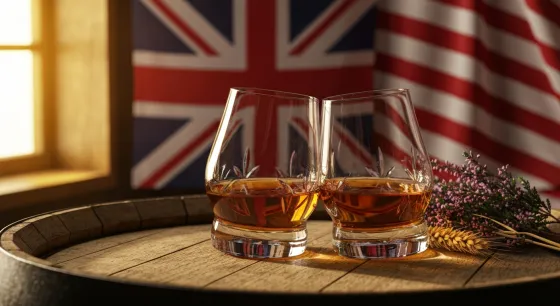
Turns out a state visit, a few corgis' worth of pageantry, and a couple of polite nods from King Charles can do what months of trade negotiations couldn't. Donald Trump has announced he's scrapping tariffs on Scotch whisky, and distillers from Speyside to Islay are quietly toasting the news with something peaty.
What's Actually Happened
On 30 April 2026, the US president confirmed he would remove all tariffs and restrictions on whisky imports to America following the state visit by King Charles III and Queen Camilla. The announcement covers Scotch, and the UK government has confirmed it also extends to Irish whisky, which is a tidy bonus for Bushmills and friends.
Trump framed the decision as a personal diplomatic gesture rather than the result of any formal trade haggling. Whether you find that charming or slightly bizarre probably depends on how you feel about monarchy, tariffs, or both.
The 10% Headache, Gone
Until now, Scotch whisky exports to the United States carried a 10% tariff, part of Trump's broader sweeping tariff regime introduced in April 2025. For an industry whose exports are worth almost £1bn according to UK trade secretary Peter Kyle, that 10% was less a paper cut and more a slow puncture.
Chris Swonger, head of the Distilled Spirits Council, read Trump's announcement as confirmation that the 10% rate is being lifted entirely. Cue cautious cheer from Edinburgh boardrooms and slightly less cautious cheer from anyone holding shares in a distillery.
The Single Malt Time Bomb
There was also a rather grim sequel waiting in the wings. Single malt Scotch was previously hit with a 25% tariff back in 2019, a souvenir of the long-running Airbus and Boeing dispute at the WTO. That tariff was suspended in 2021, and it had been due to come roaring back this spring with the same 25% charge attached.
For premium single malt producers, who tend to operate on long ageing cycles and tight margins, the prospect of a 25% reentry was the sort of thing that turns your morning dram into a stiff one. Removing that threat alongside the 10% rate gives the industry rare breathing room on both fronts.
Mark Kent's Measured Relief
Mark Kent, chief executive of the Scotch Whisky Association, called the move a 'significant boost' and said distillers can now 'breathe a little easier'. As industry quotes go it's restrained, but read between the lines and you can practically hear the sigh of relief echoing through the warehouses.
The US is the single largest export market for Scotch whisky by value. Anything that makes shipping bottles across the Atlantic less painful is going to be greeted with enthusiasm, even if that enthusiasm is dressed up in the polite vocabulary of trade body statements.
The Bourbon Barrel Connection
One of the more delightful subplots here is the £200m worth of used Kentucky bourbon barrels the Scotch industry imports every year. It sounds like a quirky aside, but it's central to the whole relationship.
Under US law, bourbon must be aged in new charred oak barrels. Kentucky distillers can only use them once, which means they've got a lot of slightly used barrels to flog. Scotch makers, who can happily reuse them, snap them up for ageing single malts and blends. The result is a trade loop that benefits both sides.
Trump specifically said he'd lift restrictions on Scotland's ability to work with Kentucky on whisky and bourbon, which suggests this barrel pipeline was very much on his mind. It's the rare trade story where the romance of oak ageing meets the practicality of supply chains.
Why This Matters Beyond the Drinks Aisle
For UK readers, this isn't just about cheaper whisky in American bars. It's about jobs in rural Scotland, where distilleries are often the largest employer for miles. It's about confidence in an industry that's been navigating Brexit, energy costs, and a global cost-of-living squeeze that's hammered the premium spirits market.
It's also a reminder that trade policy in the Trump era runs on vibes as much as paperwork. A royal visit, a flattering banquet, a few well-placed compliments, and suddenly a 10% tariff disappears. Make of that what you will.
The Political Reaction
Scottish first minister John Swinney and UK business secretary Peter Kyle both welcomed the announcement, though predictably with different emphases. Swinney leaned into the Scottish jobs angle, Kyle into the broader UK trade picture and that almost £1bn export figure.
There'll be plenty of voices arguing about whether the King should be doing the heavy lifting on trade policy, and whether tariffs should depend on the success of a state visit at all. Those are fair questions. But for the people actually making and selling whisky, the immediate answer is probably: we'll take the win, thanks.
The Verdict
This is unambiguously good news for the Scotch industry, and decent news for whisky drinkers, though don't expect the savings to land in your bottle of Famous Grouse overnight. Tariff changes take time to filter through pricing, and distillers will reasonably want to bank some of the relief after a bruising couple of years.
It's also worth keeping a slightly sceptical eye on what happens next. Tariffs that arrive on a whim can leave on one too. For now, though, the news is the news, and it's the kind that puts a small smile on the face of anyone who likes their whisky Scottish, their barrels Kentuckian, and their trade disputes resolved over a state banquet.
Slàinte, basically.
Read the original article at source.