
Trump Says He's 'Not Happy' With Iran as Peace Talks Wobble Again
Trump rejects Iran's partial peace offer brokered by Pakistan, demanding nuclear concessions and warning the military option remains firmly on the table.












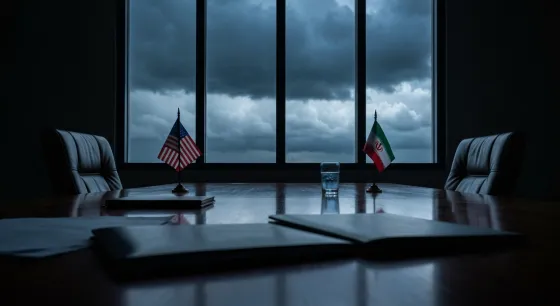
Just when it looked like the diplomatic carousel might slow down, Donald Trump has hopped off, folded his arms, and announced he is, in his own words, 'not happy' with Iran's latest peace proposal. Cue the usual shrug from anyone who has been watching this saga unfold for the past two months.
The US president, never knowingly understated, framed his options on Thursday as a choice between trying to 'make a deal' or 'blast the hell out of them and finish them forever.' He did add, mercifully, that he would prefer not to 'blast them away.' Small mercies.
What Iran is actually offering
The proposal, delivered through Pakistani mediators, is the diplomatic equivalent of being handed half a sandwich and told the other half is on the way. Tehran has offered to reopen the Strait of Hormuz, the narrow shipping lane through which roughly a fifth of the world's oil passes, but wants to park the nuclear question for later.
That is precisely the bit Washington cares most about. Trump has been clear, repeatedly and loudly, that any agreement must include Iran giving up its near bomb-grade uranium and abandoning enrichment altogether. Asking the US to sign off on a Hormuz deal while the centrifuges keep spinning is, in Trump's view, a non-starter.
Pakistan plays postman
Islamabad has emerged as the unlikely middleman in all this, ferrying messages between Tehran and Washington. It is a curious choice on paper, but Pakistan has working channels with both sides and, crucially, isn't aligned closely enough with either to spook the other. Whether that is enough to bridge a chasm this wide is another matter.
Trump, for his part, described Iranian leadership as 'very disjointed' and 'argumentative,' which is one way of saying the negotiating team can't seem to agree on what it actually wants. Anyone who has sat through a particularly fraught family WhatsApp group will recognise the energy.
The military option is very much on the table
This week the president sat through a 45-minute briefing on military strike options against Iran. Forty-five minutes is a long time to be talking about bombs, and the timing is not subtle. The US is also maintaining a naval blockade of Iranian ports, squeezing the regime economically while diplomats pretend to be optimistic.
The conflict, now grinding into its third month, hit day 61 on 29 April. That number matters because it crosses the 60-day threshold under the War Powers Act, the law requiring presidents to get congressional authorisation for sustained military action. Trump has called the law 'totally unconstitutional,' which will surprise precisely nobody, but it has prompted congressional scrutiny and a hearing featuring Defence Secretary Hegseth.
Why this matters at the British petrol pump
You might be reading this from Manchester or Margate and wondering why a row between Washington and Tehran should bother you. The answer, as ever, is petrol. American drivers are now paying an average of $4.39 a gallon, the highest since July 2022, and prices have jumped 33 cents in the past week alone.
Global oil markets do not respect national borders. When the Strait of Hormuz is in play and the US blockade is squeezing Iranian crude out of the market, prices wobble everywhere. UK forecourts have already felt the pinch, and any escalation, real or rumoured, tends to add a few pence to the litre before you've even had your morning coffee.
Russia hovers in the wings
Iran is reportedly looking to Moscow for diplomatic cover, which adds another awkward dimension to a situation already short on graceful exits. Russia's interest in keeping the West distracted is not exactly a state secret, and a prolonged Iran crisis suits the Kremlin nicely. Whether that translates into anything more than warm words from Moscow remains to be seen.
The nuclear sticking point
Strip away the bluster and the briefings, and the heart of the matter is uranium. Iran has, by most accounts, edged closer to weapons-grade enrichment than at any point in its history. The US position is that no deal worth signing leaves that capability intact. Tehran's position is that nuclear talks are a separate conversation for another day.
Those two stances are not just far apart, they are pointing in opposite directions. Reopening Hormuz is a tactical concession; dismantling an enrichment programme is a strategic surrender. Iran isn't there yet, and Trump isn't pretending to be patient.
What happens next
Realistically, three things could happen. First, Pakistan could broker a face-saving compromise that quietly folds the nuclear question back into the talks. Second, Trump could decide the deal isn't coming and authorise strikes, with all the regional consequences that would unleash. Third, and perhaps most likely, the current grim equilibrium drags on, with blockades, briefings and bluster filling the gap where progress should be.
None of these outcomes look pleasant. The first requires Iranian leadership to agree among themselves, which Trump himself doubts they can do. The second risks a wider war in a region that has had quite enough of those, thank you. The third just makes everyone poorer and more anxious.
The verdict
Calling this a 'breakdown' might be generous, because that implies talks were getting somewhere in the first place. What we are watching is two governments shouting past each other through a Pakistani megaphone, while the meter ticks up at petrol stations and the military planners keep their slides updated.
For British readers, the practical takeaway is unromantic but real. Keep an eye on fuel prices, expect more dramatic Truth Social posts before any actual diplomacy, and don't bank on a breakthrough this week. Trump's 'not happy' is rarely the prelude to compromise. It is usually the prelude to something louder.
Read the original article at source.