
Trump's 'We've Already Won' Iran Boast: Bravado, Blockades and a Whole Lot of Uranium
Trump claims victory over Iran while the Pentagon briefs new strike options. Inside the bravado, the blockade plans and the uranium problem.










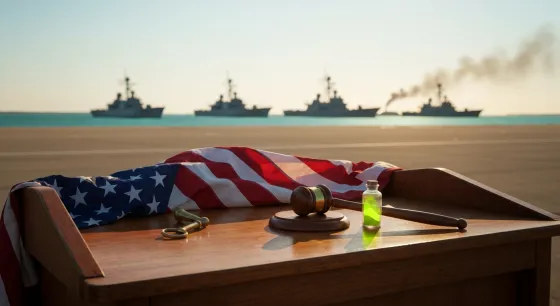
President Donald Trump is back at the podium, back on the airwaves, and back to insisting the United States has 'already won' its war with Iran. The only snag? He'd quite like to win it again, but bigger. Because nothing says decisive victory like asking for a rematch.
The quote that launched a thousand eye-rolls
Speaking to Greta Van Susteren on Newsmax, Trump declared: 'We've already won, but I want to win by a bigger margin.' It's the geopolitical equivalent of beating your mate at darts and demanding best of seventeen. The line landed on day 63 of the US-Israel conflict with Iran, a war that began when Israel kicked things off in June 2025 and quickly pulled Washington into a much larger entanglement.
Trump's confidence is, shall we say, generously sourced. He claims Iran's navy, air force, anti-aircraft systems, radar and leadership have all been flattened. US intelligence officials, talking to CBS News on condition of anonymity, paint a rather different picture. Their assessment as of early April 2026 suggests roughly half of Iran's ballistic missiles and launch systems remain intact. Half is, mathematically speaking, not zero.
Why the Pentagon is back in Trump's diary
Behind the bluster, the war machine is whirring. According to reporting from Axios on 30 April 2026, Trump received a fresh briefing from CENTCOM commander Admiral Brad Cooper and Joint Chiefs Chair General Dan Caine on a new menu of military options against Iran.
The options reportedly on the table include:
- A 'short and powerful' wave of strikes designed to remind Tehran who's boss
- An expanded operation in the Strait of Hormuz, the world's most jittery shipping lane
- A special forces mission to physically seize Iran's stockpile of enriched uranium
If that last one sounds like a Tom Clancy plot, that's because it broadly is. The optics matter too: Cooper gave Trump a strikingly similar briefing on 26 February 2026, just two days before the US and Israel launched their joint attack on Iran. History, as they say, doesn't repeat, but it does occasionally rhyme loudly enough to set off the smoke alarms.
The uranium problem nobody wants to talk about
While Trump is busy declaring victory, IAEA chief Rafael Grossi is busy declaring concern. In an AP interview on 29 April 2026, Grossi said the bulk of Iran's highly enriched uranium is still sitting at the Isfahan complex, where international inspectors have not set foot since June 2025. That was when Israel kicked off its 12-day war and the US obliged by bombing three Iranian nuclear sites.
The numbers are not comforting reading.
- Iran's stockpile is enriched up to 60 per cent purity, a hair's breadth from the 90 per cent considered weapons-grade
- If weaponised, it could reportedly produce up to 10 nuclear bombs
- Grossi notes that on 9 June 2025, 18 blue containers holding around 440 pounds of enriched uranium were filmed entering a tunnel at Isfahan
So while Trump talks about winning by a bigger margin, the IAEA is essentially saying that the scoreboard's still flickering and the umpire hasn't been allowed in the stadium for nearly a year.
The blockade nobody's calling a blockade
The current phase of the conflict is less about cruise missiles and more about chokeholds. The US has imposed a naval blockade on Iran, while Iran has retaliated with its own counter-blockade of the Strait of Hormuz, the narrow waterway through which a sizeable chunk of the world's oil passes every day.
The result, predictably, has been a punishing spike at the petrol pump. CBS News and CNBC report oil prices have hit four-year highs, with the Independent's live coverage suggesting they have surged past $125 per barrel, though that exact figure has not been independently confirmed across all major outlets. Either way, UK drivers can expect the cost-of-living squeeze to lean on the throat a little harder this summer.
Why this matters for Britain
If you're sitting in Surrey wondering why a war thousands of miles away should ruin your weekend road trip, the answer is depressingly familiar: oil, supply chains and inflation.
- Higher crude prices feed straight into petrol and diesel
- Shipping disruption in the Gulf nudges up the cost of everything from electronics to olive oil
- Energy-driven inflation makes the Bank of England's job rather more awkward
There's also the security angle. The UK has long-standing naval interests in the Gulf, and any escalation involving the Strait of Hormuz could draw Royal Navy assets into a wider operation, with all the political headaches that implies.
The political cracks at home
Trump's narrative is also wobbling on the home front. Iran's President Masoud Pezeshkian has called the US siege 'intolerable,' which is exactly the sort of language that tends to precede dramatic decisions. Meanwhile, a senior Democrat has accused Defence Secretary Pete Hegseth of misleading Trump on how the war is actually going.
That's a striking allegation. If accurate, it suggests the President's bullishness is being fed by selectively rosy briefings rather than the bleaker assessments coming out of the intelligence community. It would also help explain the gap between 'we've already won' and 'about half their missiles still work.'
So has the US actually won?
Honestly? It depends on how you define winning. If victory means battering Iran's conventional forces and choking its economy, the US has clearly inflicted serious damage. If it means neutralising Iran's nuclear potential, the picture is far murkier — sorry, far more complicated. The uranium is still there. The inspectors are not. And the centrifuges, wherever they may now be, are not known for taking sabbaticals.
Trump's instinct to declare the job done while quietly briefing on Plan B is classic political theatre. Project strength, keep options open, and hope the public doesn't read past the headline. The trouble is, the headline this time is attached to a war that is genuinely shifting global oil markets and, by extension, every household budget from Belfast to Bournemouth.
The bottom line
Trump wants a bigger margin of victory. The Pentagon wants more options. The IAEA wants access. Iran wants the blockade lifted. And the rest of us would quite like the price of unleaded to come down.
Whether the next move is a deal, a fresh round of strikes, or a daring uranium grab straight out of a thriller novel, one thing is clear: the war that was supposed to be over is still very much ongoing, and 'we've already won' is starting to sound less like a victory lap and more like a man trying to convince himself.
Read the original article at source.