
May Day 2026: Why Workers Are Marching as the Iran War Pushes Energy Bills Through the Roof
May Day 2026 rallies hit hard as the Iran war sends energy bills soaring. From Paris to the US, workers demand peace, fair pay and relief from rising costs.







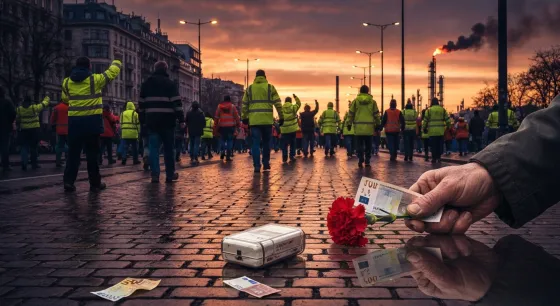
Forget the maypoles and the lily of the valley for a moment. May Day 2026 is shaping up to be less about springtime cheer and more about workers everywhere asking the same blunt question: why is my electricity bill behaving like a cryptocurrency?
From Paris to Pakistan, rallies are kicking off on Friday with a familiar trio of demands: peace, higher wages, and working conditions that don't feel like a Victorian throwback. The twist this year is the Iran war, which has done unpleasant things to oil prices and, by extension, to the cost of keeping the lights on.
The big picture: a global grumble with sharp edges
May Day, or International Workers' Day, has always been the labour movement's annual stretch and shout. This year, the volume is up. Energy costs are biting, inflation is misbehaving, and a fresh war in the Middle East has given organisers a very tangible thing to point at.
The European Trade Union Confederation, which represents 93 trade union organisations across 41 European countries, has thrown its weight behind the rallies. Translation: this is not a niche march down a side street. Expect proper crowds.
America: 'workers over billionaires'
Stateside, the 'May Day Strong' coalition is leading the charge with a slogan that fits neatly on a placard: workers over billionaires. The rallying cry is 'no school, no work, no shopping,' which is either a powerful general strike or every teenager's dream Friday, depending on your perspective.
Reporting suggests organisers have lined up thousands of events across hundreds of US cities. Immigration policy is back in the mix too, echoing 2006 when roughly a million people marched against immigration legislation, with around half a million of them filling the streets of Chicago.
Worth remembering: May Day isn't even a federal holiday in the States. The fact it still pulls these numbers tells you something about how cross people are.
France: lily of the valley, with a side of legislation
Over in France, May 1 is sacred. Almost everything closes. The tradition of gifting muguet, those tiny white lily of the valley sprigs, reportedly traces back to King Charles IX in 1561, which is the sort of detail that makes British bank holidays feel a bit underwhelming.
This year there's a wrinkle. France has introduced a bill allowing bakeries and florists to open and employ staff on May 1, which sounds reasonable until you remember that May 1 in France is the one day when not working is essentially a national sport. Unions are not thrilled.
Italy and Pakistan: cash and crisis
Italy has reportedly approved nearly 1 billion euros, around 1.17 billion dollars, in job incentives ahead of the holiday, according to AP reporting. It's a tidy sum, though whether it lands as meaningful relief or political theatre depends on who you ask.
Pakistan, meanwhile, is staring down inflation estimated at around 16 percent, according to government figures cited by AP. That estimate is hard to verify independently, but the direction of travel is clear: oil prices up, household budgets squeezed, tempers frayed.
Why this matters for British readers
You might be reading this from Manchester or Margate thinking, lovely, but what's it got to do with my standing order to the energy company? Quite a lot, as it happens.
Global oil markets don't respect borders. When the Strait of Hormuz gets twitchy, your gas bill notices. The UK isn't holding May Day rallies on the scale of Paris or Berlin, but the underlying pressures are the same: stubborn inflation, sluggish wage growth, and a creeping sense that the cost of living crisis never really ended, it just changed costume.
A short history lesson, briskly delivered
May Day's labour roots go back to Chicago's Haymarket Square in 1886, where a rally turned deadly and four labour activists were later executed. It's a grim origin story, and it's why the day became the international workers' rallying point rather than just an excuse for morris dancing.
Modern May Day stitches together two threads: the historical fight for the eight-hour day, and the present-day fight for whatever workers are losing this particular decade. In 2026, that's purchasing power.
What to expect on the streets
The flavour varies by country, but the common ingredients are roughly:
- Wage demands tied to inflation that has refused to behave
- Anti-war messaging aimed squarely at the Iran conflict and its economic fallout
- Energy cost protests, with placards likely to feature household bills
- Immigration politics, particularly in the US
- Union solidarity across borders, coordinated through bodies like the ETUC
The honest take
Here's the thing. May Day rallies often get written off as ritual, a bit of annual shouting before everyone goes back to their inboxes on Monday. That's lazy analysis. When the same grievances show up in Karachi, Chicago, Rome and Lyon on the same day, it's not coincidence, it's a signal.
The Iran war has handed workers' movements a unifying issue that crosses every border: nobody likes paying more to heat their flat because of a war they had no say in. Whether governments listen is another matter entirely. History suggests they listen briefly, then get distracted.
Still, if you're British and watching from afar, it's worth paying attention. The economic pressures driving these marches are not staying neatly inside other countries' borders. They're already on your bill.
Read the original article at source.