
Trump's Iran Endgame: Three Options on the Table After CENTCOM's 'Final Blow' Briefing
Trump weighs three options to end the Iran war after CENTCOM's 'final blow' briefing: air strikes, Hormuz action, or pressure. Here's what's at stake.










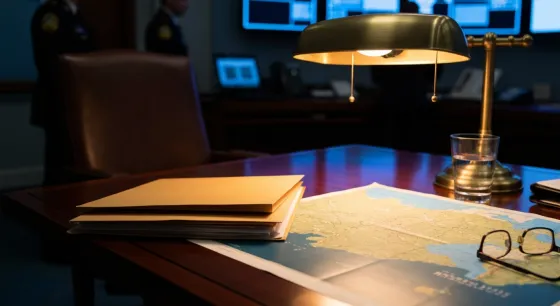
So here we are again, watching the White House situation room turn into a war-game lounge. According to reporting first broken by Axios on 30 April 2026 and now confirmed across CNBC, NBC and ABC, President Trump has been handed three rather chunky options for finishing what the US and Israel started on 28 February. None of them are subtle.
How we got here
Quick recap for anyone who has been blissfully avoiding the news. The war kicked off on 28 February 2026 with joint US-Israeli strikes on Iran. A Pakistan-mediated ceasefire took hold on 8 April and was extended on 21 April. The bombs have largely stopped falling, but the US Navy is still squeezing Iranian oil exports with a blockade, and nobody seems entirely sure whether the war is over, paused, or just buffering.
Enter CENTCOM commander Admiral Brad Cooper, who reportedly walked Trump through the menu of next steps, with Joint Chiefs chairman General Dan Caine in the room. The briefing has been dubbed the 'final blow' presentation, which is either ominous or marketing genius, depending on your worldview.
Option one: the 'short and powerful' strike package
This is the classic. A sharp, concentrated wave of air strikes designed to crater whatever is left of Iran's military and nuclear infrastructure, then get out before anyone can write a strongly worded UN resolution.
The trouble is the cupboard is looking a bit bare. CSIS analysis suggests the US went into this conflict with around 3,000 Tomahawk cruise missiles and has already burned through roughly a third. The JDAM stockpile sits at somewhere between 140,000 and 180,000 kits, which sounds enormous until you remember how quickly modern campaigns chew through precision munitions. A 'short and powerful' wave is doable. A second one, less so.
Option two: boots on Hormuz
The second option is the one that should make every petrol-pump-watcher in Britain sit up. CENTCOM has reportedly drawn up plans for a ground operation to seize Iranian islands in the Strait of Hormuz, with Qeshm and Kharg named as targets.
Why those two? Geography and oil. Qeshm is a 558 square mile slab of rock that effectively governs the northern shipping lane. Kharg, further up the Persian Gulf, handles around 90 per cent of Iran's oil exports. Take Kharg, and Iran's economy stops breathing. Take Qeshm, and you control the choke point through which roughly 20 per cent of the world's oil travels every day.
It is a tidy plan on a map. In practice, you are talking about an opposed amphibious landing on home turf for the Iranian military, with around 40,000 US troops already in the region but most not configured for that kind of fight.
Option three: the Hollywood raid
The third option reads like a screenplay pitch: a special forces raid to grab or destroy Iran's stockpile of enriched uranium. Quick in, quick out, no awkward occupation, no months of cable news graphics about troop movements.
It is also, by some distance, the riskiest. If it works, it ends the nuclear question in an afternoon. If it goes wrong, you have American operators captured or killed inside Iran, and a ceasefire that evaporates faster than you can say 'second Tehran embassy crisis'.
The blockade nobody is talking about
Here is the bit that gets lost in the strike-package excitement. Trump told Axios that the existing naval blockade is 'somewhat more effective than the bombing', and the numbers back him up. He claims it is costing the Iranian regime around $500 million a day. Vortexa data cited by Axios suggests Iranian crude departures fell roughly 80 per cent between 13 and 25 April compared with March, though that figure has not been independently corroborated in the primary Vortexa releases I could find.
The US is also pushing the Maritime Freedom Construct, a coalition arrangement confirmed by Euronews, Arab News and ABC News, designed to keep the squeeze on without firing fresh shots. Cheaper than war, slower than bombing, and with the bonus that nobody has to explain casualty figures on Sunday morning television.
The catch for British wallets
None of this is free, and a chunk of the bill lands on UK forecourts. GasBuddy's Patrick De Haan estimates inflated petrol costs are running at $300 to $450 million a day extra in the US alone. Global oil markets do not respect borders, so every wobble in the Strait of Hormuz nudges what you pay at Tesco's pumps in Slough.
There is also a domestic political timer ticking in Washington. The 60-day War Powers Resolution deadline is closing in. Defence Secretary Hegseth and the White House argue the ceasefire stopped the clock. Senator Tim Kaine and friends argue an active blockade is still 'hostilities', which means Trump may need congressional cover before he picks any option off Cooper's menu.
The diplomatic side-show
The Independent's reporting includes a striking claim that the Pentagon floated suspending Spain from NATO and reviewing UK sovereignty over the Falklands as leverage in coalition talks. I have not been able to independently corroborate that, so file it under 'extraordinary if true'. Closer to home, Prime Minister Keir Starmer has already clashed publicly with Trump over the conflict, which suggests Downing Street is bracing for whatever comes next.
So what does Trump actually do?
If you read the runes, the blockade-plus-coalition route is the path of least resistance. It hurts Iran, costs the US fewer missiles, and keeps the ceasefire technically intact. The 'short and powerful' strike is the option Trump reaches for if Tehran tests him. The Hormuz landings and the uranium raid are the break-glass scenarios, and break-glass scenarios have a habit of escalating in ways briefings never quite predict.
The honest verdict: nobody outside that room knows which way this goes, and anyone telling you otherwise is selling something. What we can say with some confidence is that British drivers, British troops in the region, and British politicians are all going to feel the consequences whichever option Trump signs off on.
Read the original article at source.