
May Day 2026: Why Millions Are Marching From Manila to Madrid (And Why You Should Care)
From Manila to Madrid, May Day 2026 protests are bigger and angrier. Here's why workers are marching and what it means for everyday households.






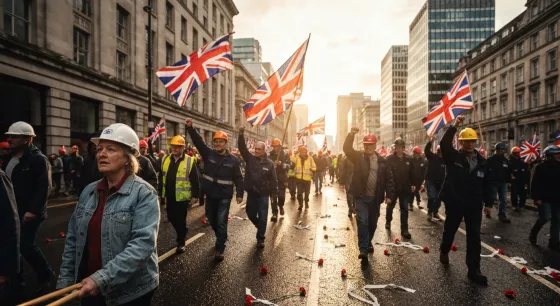
Bin the bunting and forget the bank holiday lie-ins for a moment. May Day 2026 has rolled in with the kind of energy you only get when wallets are thin, bills are fat, and the world is, frankly, a bit on edge. From Asia to Europe and well beyond, workers have spilled onto the streets in their thousands, and this year the chants have a sharper edge than usual.
What Is May Day, Again?
For the uninitiated, May Day, also known as International Workers' Day or Labor Day in much of the world, is the annual nod to the people who actually keep the lights on, the trains running and the coffee pouring. It is part celebration, part protest, and historically a moment for organised labour to flex.
Picture trade union banners, brass bands, the occasional giant inflatable fat cat, and a lot of very tired feet by the end of the day.
Why 2026 Feels Different
This year is not your standard placard-and-pasties affair. Two big forces are pushing people out of their homes and into the squares.
First, the cost of living is doing what it has been doing for years now, only more so. Wages are sluggish, rent is not, and energy bills have become the household horror story everyone has a version of.
Second, the 2026 Iran war is bleeding into ordinary life in ways that are hard to ignore. The blockade of the Strait of Hormuz in early March sent energy markets into a flap, and the knock-on effects have hit Asian economies first and hardest, with Europe bracing for a slower, medium-term squeeze.
In short, marchers this year are not protesting an abstract idea of inequality. They are protesting their gas bill.
Asia Sets the Tone
Asia, as ever, kicked things off first thanks to time zones doing their thing. Crowds gathered in cities across the region, with workers calling for stronger labour protections, higher wages and a more even split of the pie.
The mood, by most accounts, was determined rather than festive. When your purchasing power has been quietly eroding for a year, the carnival vibes tend to take a back seat.
Common Themes On The Streets
- Demands for higher minimum wages that actually track real-world prices
- Stronger protections for gig and platform workers
- Pushback against rising energy costs hitting low-income households first
- Calls for greater equality between workers and the very top earners
Europe Joins In, With An Edge
By the time the marches rolled west, the tone had picked up an unmistakably political flavour. European demonstrations this year have leaned into anti-authoritarian themes, with notable turnouts in Italy, Hungary and Georgia.
It is not just about pay packets anymore. It is about who gets to make decisions, who gets heard, and who keeps quietly hoovering up the gains while everyone else tightens their belts.
For UK readers, the British scene is a touch quieter than mainland Europe's, but the underlying gripes are familiar. Stagnant real wages, sky-high housing costs, and the persistent feeling that hard work is no longer a reliable route to a comfortable life.
The American Angle: Workers Over Billionaires
Across the Atlantic, May Day 2026 has been rebranded under the punchy 'Workers Over Billionaires' banner. Nearly 500 organisations planned more than 750 events across the United States, with calls for what organisers describe as an economic blackout: no work, no school, no shopping.
Whether the blackout actually bites or fizzles out into a long lunch break is another question entirely. But the framing tells you something. The conversation has shifted from 'fair pay' to 'why does one bloke own a country's worth of wealth while my landlord just hiked the rent again'.
Why It Matters For Everyday Brits
You might be reading this from a flat in Manchester thinking, fine, but what has any of this got to do with my Friday?
Quite a bit, actually.
Energy markets do not respect borders. If the Strait of Hormuz disruption keeps biting, expect that to filter through to UK bills in the coming months. The wage stagnation story is not unique to Athens or Seoul, it is your story too. And the political mood music in Europe tends to drift across the Channel sooner or later, whether we like it or not.
May Day is, in a sense, a global temperature check. And the thermometer this year is reading a touch feverish.
The Bigger Picture
What makes 2026 stand out is not any single demand or any single country. It is the breadth. When workers in Manila, Milan and Minneapolis are essentially saying the same thing on the same day, a pattern is hard to ignore.
The pattern, broadly, is this: the post-pandemic economic recovery has not felt like a recovery to the people doing the actual work. Add a war-driven energy shock, throw in a generation that suspects the property ladder is now a property cliff, and you have got a march on your hands.
What To Watch Next
- Energy prices in Europe through the summer and into autumn, when the medium-term Iran-related squeeze is expected to land
- Wage settlements in major economies, particularly in sectors with strong union density
- Political ripples from the European protests, especially in Hungary and Georgia where the anti-authoritarian thread is loudest
Final Thought
May Day has always been a bit of a Rorschach test. To some, it is a slightly dated relic of socialist iconography. To others, it is the one day a year the people who actually do the work get to be the headline.
In 2026, with energy bills biting and a war reshaping global markets, it is firmly back in the headline category. Whether anything actually changes as a result is the trickier question, and one that probably will not be answered by next May.
But for one day, the streets belonged to the people emptying the bins, stocking the shelves and keeping the kettles on. And given the year they have had, they have earned the noise.
Read the original article at source.