
Hegseth's Stopwatch Diplomacy: Defence Secretary Says Iran War Clock is on Pause
Defence Secretary Pete Hegseth tells the Senate the 60-day War Powers clock pauses during a ceasefire. Here is why that claim matters.












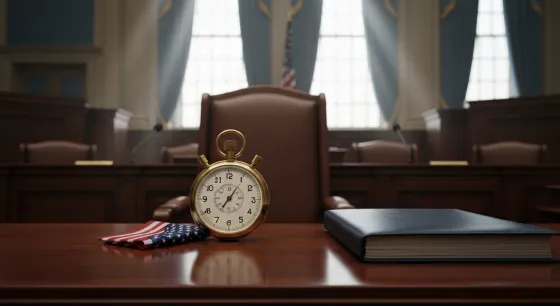
If you have ever tried to argue that your parking meter does not count when you nipped inside for a coffee, you will recognise the energy Pete Hegseth brought to Capitol Hill this week. The US Defence Secretary stood before the Senate Armed Services Committee on Thursday 30 April 2026 and made a remarkable claim: the 60-day War Powers clock, which legally compels the president to seek congressional approval for ongoing hostilities, has been paused. Why? Because there is a ceasefire on. Convenient, that.
What Hegseth actually said
Testifying to senators, Hegseth argued that the constitutional timer 'pauses or stops in a ceasefire'. The line landed with a thud on the Democratic side of the room and not much warmer on a few Republican benches either. The 60-day deadline, set by the 1973 War Powers Resolution (a piece of post-Vietnam legislation designed precisely so a president could not Nixon his way into an open-ended conflict), was due to expire on Friday 1 May, sixty days after Trump formally notified Congress of the strikes on Iran on 2 March. The strikes themselves began a few days earlier, on 28 February.
In other words, the clock has been ticking loudly, and Hegseth has decided to declare it broken.
Why this matters to anyone who is not a constitutional lawyer
For UK readers wondering why a procedural row in Washington should keep them up at night, the answer is simple: the War Powers Resolution is one of the few mechanisms that can rein in an American military adventure before it becomes a generational quagmire. If the executive branch can simply argue that a ceasefire freezes the calendar, the 60-day limit becomes more of a polite suggestion than a legal guardrail.
And given that US operations against Iran have already cost roughly $25bn (a figure disclosed at a House Armed Services hearing on Wednesday), the question of who gets to decide what happens next is not academic.
Tim Kaine is not having it
Senator Tim Kaine, the Virginia Democrat who has spent years campaigning for tighter congressional control over military force, pushed back hard. He told reporters he had 'grave concern' that the White House would not honour the 60-day window, and disputed Hegseth's creative reading of the statute on the spot.
Kaine's logic is straightforward: if a temporary lull in fighting resets the constitutional clock, then any president could maintain hostilities indefinitely simply by stringing together a series of pauses. That is not a guardrail. That is a revolving door.
The ceasefire, briefly explained
The current ceasefire was brokered by Pakistan and has held since early April, with no fire exchanged between US and Iranian forces since 7 April. Initially a two-week truce, it has since been extended. By any reasonable definition, the guns are quiet, which is precisely why Hegseth feels comfortable calling time on the timer.
But quiet guns are not the same as concluded hostilities. And here is where the picture gets murkier.
The Strait of Hormuz situation is messier than it looks
You may have read that Iran has 'closed' the Strait of Hormuz. The reality is more tangled. Iran formally reopened the strait on 17 April, but is reportedly charging tolls in excess of $1m per ship, which is not exactly a return to free maritime commerce. Meanwhile, the US Navy began blockading Iranian ports on 13 April after talks in Islamabad collapsed, creating what some analysts have called a 'dual blockade'.
Senator Elizabeth Warren has seized on this, arguing that an active naval blockade is itself an act of war, which rather undermines Hegseth's tidy claim that hostilities are on hold. It is hard to argue you have stopped fighting when your warships are parked outside the other side's harbours.
The Senate has tried (and tried, and tried)
Democrats have brought the Iran War Powers Resolution to a vote six times now. The latest attempt failed 50-47, but with one notable wrinkle: Senator Susan Collins of Maine crossed the aisle to vote with Democrats. It was the first Republican defection of the cycle, and it suggests the wall of GOP support for the operation may be developing hairline cracks as the political and financial costs mount.
Most Republicans have, so far, stuck with the administration. But $25bn is real money, and patience in election years is famously short.
The bigger backdrop
It is worth remembering how we got here. The strikes that began on 28 February killed Iran's supreme leader, Ayatollah Ali Khamenei, who was succeeded by his son Mojtaba Khamenei following appointment by the Assembly of Experts on 8 March. Whatever your view of the original intervention, the ripple effects are still spreading: a new and untested leader in Tehran, a fragile ceasefire, a contested waterway, and now a constitutional row over who gets to decide what comes next.
So is the clock paused or not?
Legally, this is uncharted territory. The War Powers Resolution allows for a 30-day extension for the 'prompt removal' of troops once the 60-day window closes, but it does not, on any plain reading, contain a pause button. Hegseth is essentially arguing for a clause that is not in the text. Whether that holds up in court, or simply becomes another norm quietly bent until it breaks, will depend on how aggressively Congress chooses to push back.
For now, the Defence Secretary has bought the administration time. Whether he has bought it legitimacy is another matter entirely.
The takeaway
Hegseth's argument is convenient, untested and politically expedient. It may also be wrong. With Susan Collins peeling off, $25bn already spent, and a blockade that looks an awful lot like ongoing military action, the idea that everyone can simply look at the wall clock and pretend the second hand is not moving is starting to feel like a stretch.
The British view from across the Atlantic should probably be one of careful attention. Precedents set in Washington this spring will shape how future US administrations wage war for decades.
Read the original article at source.