
Selfies, Shotguns and a Stopped Bullet: Inside the Washington Hilton Shooting Case
Inside the Cole Tomas Allen case: alleged selfies with weapons, a shot Secret Service officer and the chaos at the 2026 Correspondents' Dinner.










If you wanted a snapshot of how strange and unsettling 2026 has already become, look no further than the case of Cole Tomas Allen. Prosecutors say the 31-year-old from Torrance, California, paused to take selfies with his weapons before allegedly trying to assassinate the President of the United States. Yes, really.
Federal prosecutors are now urging a judge to keep Allen behind bars until trial, and freshly released images, dropped into a detention memorandum, suggest they have a fairly compelling argument.
What actually happened on 25 April
The shooting unfolded on the evening of 25 April 2026 at the Washington Hilton, the venue hosting the White House Correspondents' Dinner. It was a notable night before any shots were fired: the first WHCD Donald Trump had attended as president, having skipped both his first-term dinners and the 2025 event.
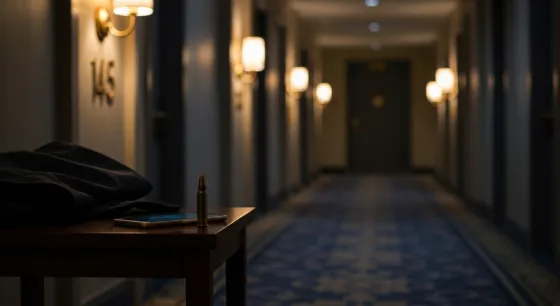
According to the Department of Justice, Allen charged a security checkpoint on the hotel's Terrace Level with a pump-action shotgun raised. A Secret Service officer was shot in the chest. He survived, thanks entirely to a ballistic vest doing exactly what ballistic vests are designed to do. The BBC's reporting describes the officer as shot but not seriously wounded, which rather understates how close this came to being a fatality.
Trump, Vice President JD Vance and several cabinet members were swiftly evacuated. The dinner, predictably, did not continue as planned.
The selfies that have everyone talking
This is the bit that pushes the case from grim to genuinely surreal. According to the DOJ's detention memorandum, cited by CNBC, Allen took photographs of himself in his hotel room at around 20:03 EST (that is 1:03 BST for anyone keeping track from the UK).
The images, prosecutors say, show him kitted out with:
- A semi-automatic handgun
- A pump-action shotgun
- Three knives
- A holster
- Pliers and wire cutters
- An ammunition bag
It is the sort of evidence that does not require a barrister with a flair for the dramatic. The pictures essentially speak for themselves, which is presumably why prosecutors put them front and centre in their argument for keeping Allen in custody.
Who is Cole Tomas Allen?
On paper, he does not fit the obvious profile. Allen is a former California schoolteacher with an engineering degree. Not a militia type, not someone with a long, loud political footprint online. NPR has reported that investigators have so far failed to uncover a clear radical political background, which is both reassuring and unsettling, depending on how you look at it.
What investigators have found is decidedly stranger. The Washington Post reports that Allen sent an email to family members before the attack, describing administration officials as 'targets, prioritized from highest-ranking to lowest'. Reporting from the same outlet also notes he referred to himself as a 'friendly federal assassin', a phrase that is probably going to feature in every legal summary of this case for years to come.
A trip across the country by train
Allen did not exactly bolt to Washington. According to NBC News and CBS News, he left Torrance, California on 21 April, travelling by train via Chicago. That is several days of cross-country travel, plenty of time to reconsider, change course, or simply turn around. Instead, prosecutors allege, he ended up at a black-tie gathering in the capital with a shotgun.
That deliberate, drawn-out journey is one of the reasons the DOJ is leaning so heavily on its detention argument. This was not, in their telling, a sudden snap. It was a plan with a timetable.
The charges he is facing
Allen has been charged with three federal offences:
- Attempted assassination of the President
- Interstate transportation of a firearm to commit a felony
- Discharging a firearm in a crime of violence
If convicted of attempted assassination, he faces a possible life sentence. The other two charges carry a maximum of 10 years each, according to the DOJ press release. He has pleaded not guilty.
Why this matters beyond the headlines
For UK readers, it is tempting to file this away as another grim American gun story. But there is more going on here than that.
First, there is the security question. A man, allegedly armed to the teeth, got close enough to a sitting President to fire a weapon and hit a Secret Service officer. That is not a near miss in the usual sense. It is a system relying on a ballistic vest to keep an event from becoming a national catastrophe.
Second, there is the digital evidence angle. Selfies as a self-incriminating document is not new, but using them as the centrepiece of a detention memo for an attempted presidential assassination is a striking moment. Anyone still operating under the illusion that their phone camera roll is somehow private should probably take note.
Third, there is the political temperature. PBS NewsHour has already published fact-checks knocking down online conspiracy theories about the incident, which gives you a sense of how quickly the story has been swallowed by the broader rumour mill. In the UK, we tend to import America's political anxieties whether we want to or not, and this case will be no exception.
What happens next
The immediate question is whether the judge agrees with prosecutors that Allen should remain in custody until trial. Given the photographic evidence, the alleged email to family, the cross-country journey and the charges on the table, betting against detention would be a brave call.
The bigger questions, the ones about motive, mental health, security failings and what was really going through Allen's head as he posed for those photographs, will take far longer to answer. Trials of this scale tend to creep rather than sprint.
The takeaway
Strip away the surreal details, the selfies, the 'friendly federal assassin' line, the train journey, and what you are left with is a deeply uncomfortable reminder of how thin the margins are at major political events. A vest stopped a bullet. That is the difference between a strange news story and a historic disaster.
Whatever the courts ultimately decide about Cole Tomas Allen, this case is likely to reshape conversations about presidential security, digital evidence and the very modern habit of documenting yourself doing things you absolutely should not be doing.
Read the original article at source.