
Hegseth's House Mauling Was Just the Warm-Up: The Senate Sharpens Its Knives
Pete Hegseth survived a brutal House hearing on the $1.5T Pentagon budget and Iran war. Thursday's Senate grilling looks set to be far worse.












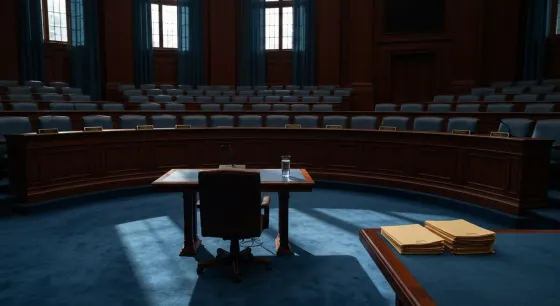
If Tuesday's House Armed Services Committee hearing was a polite tenderising of Defence Secretary Pete Hegseth, Thursday's Senate appearance is shaping up to be the full butcher's window. Six hours in front of the House left him bruised, quotable for all the wrong reasons, and visibly rattled. The Senate, historically less forgiving of bluster, is unlikely to be kinder.
What actually happened in the House
On 29 April 2026, Hegseth sat down to defend the Pentagon's eye-watering $1.5 trillion FY2027 budget request. The hearing was meant to be about dollars and procurement. It very quickly became about Iran, body bags, and the Defence Secretary's apparent allergy to accountability.
The war with Iran is now in its ninth week. The Pentagon's own comptroller, Jules Hurst, has put the running tab at roughly $25 billion, mostly in spent munitions. A further $200 billion supplemental is reportedly on its way to Congress. For a campaign sold as swift and surgical, the receipts are starting to look distinctly long.
The line that will follow him for years
Asked about the conduct of the war, Hegseth declared that the 'biggest adversary' the United States faces is not Tehran, not Beijing, not Moscow, but the 'reckless, feckless and defeatist words of congressional Democrats and some Republicans.' It is the kind of soundbite that plays beautifully on cable news for about forty minutes and then haunts you through every subsequent hearing, every campaign advert, and quite possibly every memoir written by anyone in the room.
Members of his own party were not amused. Telling senators who hold the purse strings that they are the real enemy is, to put it gently, an unusual lobbying strategy.
Pat Ryan and the Kuwait question
The hearing's most damaging moment came from Representative Pat Ryan, the New York Democrat and West Point graduate. Ryan zeroed in on the deaths of six US service members killed by an Iranian drone strike on a US Army Reserve site at Port Shuaiba, Kuwait.
According to reporting on survivor testimony, the base had no counter-drone, counter-rocket or counter-mortar capability when it was hit. Ryan accused Hegseth of brushing off soldiers' accounts as 'falsehoods' and called, bluntly, for his resignation. Hegseth bristled. The clip travelled. Democrats afterwards described the hearing, with characteristic restraint, as proof of 'what a f***ing joke he is.'
Republican grumbling, on and off camera
It would be easier for Hegseth if the discomfort were confined to the opposition benches. It isn't. Representative Jen Kiggans of Virginia, a Republican, reportedly pressed him on the dismissal of Navy Secretary John Phelan, part of a wider purge of senior Pentagon figures that has unsettled even reliable allies.
And looming over all of it is Mitch McConnell. The former Senate Republican leader, one of only three GOP senators to vote against Hegseth's confirmation in January 2025, has used a Washington Post op-ed to attack the Pentagon for sitting on what he says is roughly $400 billion in unspent Ukraine funds. That figure is worth taking with a pinch of salt until the op-ed is read in full, but the political signal is unmistakable. McConnell is not done with Hegseth. McConnell, as a rule, is rarely done with anyone.
Why the Senate is the harder room
The House operates on five-minute clocks and tribal loyalty. The Senate Armed Services Committee, by contrast, is built for the long, patient kind of cross-examination that wears witnesses down. It also contains every Republican who already voted against him: Murkowski, Collins and McConnell. Add in Senator Mark Kelly of Arizona, the retired Navy combat aviator whom Hegseth recently tried to humble by floating a downgrade of his retirement rank after Kelly posted a video reminding troops they can refuse illegal orders, and you have something close to a custom-built panel of unfriendly questioners.
Kelly, in particular, has a personal score to settle. He is also extremely good at not raising his voice while filleting someone, which is exactly the wrong combination if you are Pete Hegseth.
The War Powers clock no one wants to discuss
There is a structural problem hovering behind every question about Iran. The 1973 War Powers Resolution gives the administration 60 days from the start of hostilities before Congress must either authorise the conflict or trigger withdrawal. By that maths, the bill comes due in June.
Hegseth has so far refused to engage seriously with the deadline. The Senate is unlikely to let him drift past it with vague references to 'defeatist' lawmakers. Expect senators to ask, repeatedly, what specific authorisation the administration believes it is operating under, and what the plan is if Congress declines to provide one.
The Noem and Bondi precedent
There is a pattern Hegseth's defenders would prefer no one noticed. Reports suggest Kristi Noem was eased out of the Department of Homeland Security after a rough Senate Judiciary outing, and that Attorney General Pam Bondi exited in April after February questioning over the Epstein files. Both removals are background colour rather than confirmed facts in the public record, and worth treating with appropriate caution. Still, the through line is clear enough: this administration's Cabinet officials have tended to survive the House and stumble in the Senate.
What to watch on Thursday
A few specific flashpoints are worth keeping an eye on:
- Whether any Republican senator publicly echoes McConnell's Ukraine spending critique on the record.
- How Hegseth handles the Port Shuaiba drone strike and the counter-drone capability question, which Ryan exposed and the Senate will not drop.
- Whether the $200 billion Iran supplemental gets a clean reception or a queue of amendments.
- Any sign that Senator Kelly extracts a concrete answer on the rank-downgrade attempt, which several committee colleagues will view as petty and political.
- The June War Powers deadline and whether Hegseth offers any actual legal theory for continued operations.
The verdict
Hegseth is a combative communicator who thrives on confrontation in short bursts. The Senate is not a short-burst venue. It is a slow-burn one, and the questioners on Thursday have both the procedural patience and the personal motivation to make the most of it.
The House hearing showed his weaknesses: thin command of detail, a habit of treating dissent as treachery, and a temper that surfaces precisely when calm would serve him best. The Senate is designed to find exactly those weaknesses and press on them until something gives.
If he gets through Thursday intact, it will be because senators chose to let him. On current form, that is not the way to bet.
Read the original article at source.