
Seashells, Subpoenas and a Second Swing: James Comey Surrenders Over That Instagram Post
Ex-FBI chief James Comey has surrendered to federal authorities over a 2025 Instagram post of seashells. Here's what the new indictment actually says.











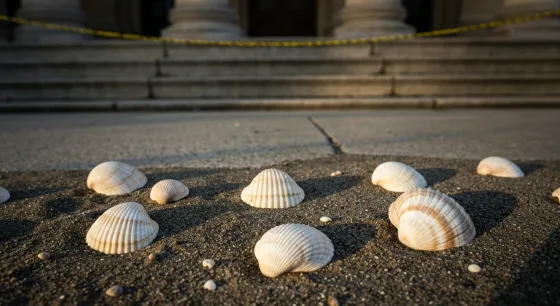
Well, here we are again. Former FBI director James Comey has surrendered to federal authorities, this time over a photograph of seashells. Yes, seashells. The kind you might pick up on a Cornish beach holiday and post to your nan's WhatsApp. Except in this case, the shells were arranged to spell '86 47', and prosecutors reckon that arrangement amounts to a threat against the 47th President of the United States.
What Actually Happened
On 29 April 2026, Comey turned himself in at a Virginia federal court to face a fresh indictment. The charge stems from an Instagram post he made back in May 2025, showing shells laid out as '86 47' alongside the breezy caption: 'Cool shell formation on my beach walk.'
For anyone not fluent in American diner slang, '86' means to get rid of something, and 47 is a nod to Trump's current presidential number. Prosecutors argue it was a coded call for violence. Comey, for his part, called the post a coincidence and the prosecution a stitch-up.
The Second Bite at the Apple
This is not the Justice Department's first attempt to pin something on Comey over the same photo. The original indictment was thrown out in November 2025 after Judge Cameron Currie ruled that Lindsey Halligan, the US Attorney behind the case, had been improperly appointed. Awkward.
Undeterred, the DOJ regrouped and a grand jury in the Eastern District of North Carolina, where the beach in question apparently sits, returned a new indictment. The surrender itself, however, played out in Virginia.
The Court Appearance
The hearing in front of Judge William Fitzpatrick was brisk. The judge denied the DOJ's requested release conditions, which suggests prosecutors were pushing for tighter restrictions than the bench thought reasonable. Comey walked out a free man pending trial, but firmly back in legal limbo.
Representing him is Patrick Fitzgerald, a name that will ring bells for anyone who follows American legal sagas. Fitzgerald has signalled he will move to dismiss on grounds of selective and vindictive prosecution, essentially arguing that the government is going after Comey because of who he is rather than what he did.
How Serious Are the Charges?
According to the BBC's reporting, each charge carries a maximum sentence of up to 10 years in prison. It is worth flagging that some other outlets have cited lower maximums, and we were not able to independently verify the statutory ceiling, so treat the precise figure with a pinch of sea salt. Either way, this is not a parking ticket.
The First Amendment Problem
Here is where things get legally spicy. To secure a conviction for a 'true threat', prosecutors typically have to show the speaker understood their words would be taken as threatening. That standard was reinforced by the US Supreme Court in 2023 in Counterman v. Colorado, and it is a meaningful hurdle.
'86 47' has become a popular bit of shorthand among anti-Trump protesters, plastered on placards, T-shirts and, evidently, beach selfies. Turning a widely used political slogan into a federal crime is the kind of move that tends to attract First Amendment lawyers like seagulls to chips.
Former federal prosecutor Jimmy Gurulé was unsparing, branding the indictment 'an embarrassment to the American criminal justice system'. That is not a quote you want printed about your case.
The Politics of It All
Attorney General Todd Blanche has insisted the prosecution is 'absolutely, positively not' politically motivated. Make of that what you will. He pointed to a separate incident over the weekend, in which a man charged towards the ballroom at the White House Correspondents Dinner before being stopped by the Secret Service, as evidence that threats against the President are being taken seriously across the board.
Yet even within the President's own party, the mood is not exactly unanimous. Republican Senator Thom Tillis has voiced public scepticism about the case, which is notable given how rare cross-aisle eyebrow-raising tends to be in modern Washington.
Trump's second term has featured a steady drumbeat of public demands that the DOJ go after his political opponents, and the optics here are doing the prosecution no favours. Whether the case has legal legs or not, it lands in a climate where many observers will struggle to see it as anything other than score-settling.
Comey's Response
Comey is not exactly going quietly. He posted a video on his Substack titled 'Seashells', in which he declared: 'I'm still innocent, I'm still not afraid.' Whatever you think of the man, he has form for keeping his composure when the legal weather turns rough.
It is worth remembering that this is a former FBI director. Comey knows precisely how federal indictments work, what discovery looks like, and how to play the long game in a courtroom. Prosecutors will not be facing a confused civilian.
Why This Matters to Readers in the UK
You might reasonably ask why a story about American seashells deserves your attention over a cuppa. A few reasons.
First, it is a striking test of how far criminal law can stretch into political speech, and that conversation is hardly confined to the United States. The UK has its own ongoing rows about online speech, malicious communications and where the line sits.
Second, the case sits at the intersection of executive power and prosecutorial independence, which is a theme that travels. When governments are seen to direct prosecutions against political rivals, faith in the rule of law takes a knock everywhere.
Third, and let us be honest, it is also a fascinating saga. A former FBI director, a beach photo, a dismissed indictment, a fresh indictment, and a courtroom drama with a jury pool yet to be assembled. If a screenwriter pitched this, you would tell them to dial it back.
What to Watch Next
Keep an eye on Fitzgerald's motion to dismiss. If a judge agrees that the prosecution is selective or vindictive, the case could collapse before a jury hears a word. Watch too for any First Amendment challenge built around the Counterman standard, which could turn this into a landmark speech case rather than a niche threats prosecution.
And if it does go to trial? Expect the seashell to become the most photographed mollusc in American legal history.
The Verdict, For Now
This is a case with shaky foundations, a messy procedural backstory and a political odour that no amount of DOJ denials will quite scrub off. Whether Comey is ultimately convicted, acquitted or sees the charges tossed before trial, the story is already a stress test for the American justice system.
Innocent until proven guilty applies, of course. But on the available evidence, the prosecution looks a long way from a slam dunk.
Read the original article at source.