
Hegseth's Iran Nuke Riddle: 'Imminent Threat' or Already 'Obliterated'? Pick One
Pete Hegseth struggles to explain how Iran's nuclear programme can be both an imminent threat and already obliterated by Operation Midnight Hammer.









Pete Hegseth went to Capitol Hill expecting a budget chat. He left having to explain how something can be both an urgent menace and a smouldering ruin at the same time. Schrödinger's nuke, anyone?
The awkward question nobody could dodge
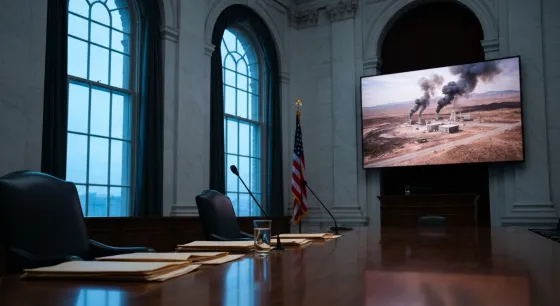
While testifying before a House committee about the Trump administration's military spending plans, the US Defence Secretary was pressed on a curious wrinkle in his own talking points. On one hand, Iran's nuclear programme is supposedly an imminent threat that justifies a hefty chunk of the Pentagon's wishlist. On the other, Operation Midnight Hammer, the much-trumpeted strike on Iranian facilities, allegedly 'obliterated' the very same programme.
So which is it? That was, more or less, the question lawmakers wanted answered. Hegseth, to put it kindly, did not appear to relish the framing.
Why this matters to people who aren't policy wonks
It's easy to roll your eyes at another Washington hearing. But this one cuts closer to home than it looks, even from a sofa in Salford or Swansea.
Defence budgets are the world's largest game of follow-the-leader. When the Pentagon ramps up spending citing a particular threat, NATO allies, Britain very much included, tend to feel the gravitational pull. That means money, kit, and political bandwidth flow toward the Middle East rather than, say, the NHS, energy security, or anything else competing for attention.
There's also the small matter of oil. Anything that rattles the Gulf nudges petrol prices at the pumps. UK drivers don't need a refresher on what a jittery oil market feels like.
The contradiction in plain English
Strip away the jargon and the dilemma is genuinely simple:
- If Iran's nuclear capability was 'obliterated' by Midnight Hammer, then the imminent threat has been, well, neutralised.
- If the threat is still imminent, then Midnight Hammer didn't do what was claimed.
- You can't really have both without doing some impressive linguistic gymnastics.
Hegseth's defenders will argue that intelligence is messy, that programmes can be rebuilt, and that 'obliterated' was perhaps a touch of rhetorical flourish rather than a forensic damage assessment. Fair enough. But that's also the point critics are making: pick a story and stick with it, because the public, allies, and Congress are all writing cheques based on which version is true.
What we actually know
Here's where honesty matters more than confidence. Public reporting on the actual outcome of Midnight Hammer has been patchy, and independent damage assessments are not something you can rustle up over a cup of tea. Satellite imagery analysts and open-source researchers have offered varying takes, and the US administration's own messaging has shifted in tone depending on the audience.
What we don't have is a clean, verified picture of how much of Iran's nuclear infrastructure is actually gone, how much is dented, and how much was simply moved before the strikes landed. Anyone telling you they know for certain is selling something.
The political theatre angle
Congressional hearings are part oversight, part performance. Members of the committee know a juicy soundbite gets clipped, posted, and shared faster than any 400-page budget appendix. Catching a Defence Secretary in an apparent contradiction is, in political terms, gold dust.
That doesn't make the contradiction less real. It just means we should keep an eye on whether the substantive question, has the threat been handled or not, gets a substantive answer once the cameras stop rolling.
A quick reality check
Politicians of every stripe lean on the word 'imminent' when they want a budget approved. They lean on words like 'obliterated', 'decisive', or 'historic' when they want credit for action already taken. Doing both about the same target, in the same week, is what made this hearing memorable.
What it means for Britain
The UK has its own Iran file, its own naval presence in the Gulf, and a relationship with Washington that involves more nodding than negotiating when it comes to Middle East strategy. If the US position is genuinely confused, that confusion gets exported.
A few things worth watching from a British perspective:
- Defence spending pressure. Expect renewed calls for the UK to push past two per cent of GDP on defence, with Iran cited as part of the rationale.
- Energy markets. Any flare-up in tensions tends to show up at the pumps within a fortnight.
- Diplomatic positioning. The Foreign Office has historically preferred the diplomatic track on Iran. A Washington that swings between 'imminent' and 'obliterated' makes that line harder to hold.
The bigger picture
Strip the politics out and the underlying question is one Britain has been wrestling with for decades: what do you do about a country pursuing nuclear capability that nobody, including most of its neighbours, wants it to have? Sanctions, diplomacy, sabotage, airstrikes. All have been tried, in various combinations, with varying results.
The honest answer is that none of them produces a tidy ending. Programmes get delayed, set back, occasionally exposed, sometimes paused. They rarely get 'obliterated' in the sense the word implies. Which is precisely why Hegseth's choice of vocabulary matters. Words shape expectations, and expectations shape the next decision, and the next decision often involves something rather more expensive than a press conference.
The verdict
If you're keeping score at home, the takeaway is this: be sceptical of any official, in any government, who tells you a threat is both urgent and already destroyed. Pick the version that fits the budget request, by all means, but ask which version fits reality.
Hegseth had a rough hearing. The bigger problem isn't the soundbite, it's that the actual state of Iran's nuclear programme remains genuinely unclear. Until that clarifies, every claim from the podium deserves a raised eyebrow and a follow-up question.
Read the original article at source.