
Bahrain Yanks Citizenship From 69 People Over Iran 'Sympathies' and Rights Groups Smell a Very Slippery Slope
Bahrain revokes citizenship from 69 people accused of Iran sympathies. Rights groups warn it's a dangerous slippery slope amid the regional war.












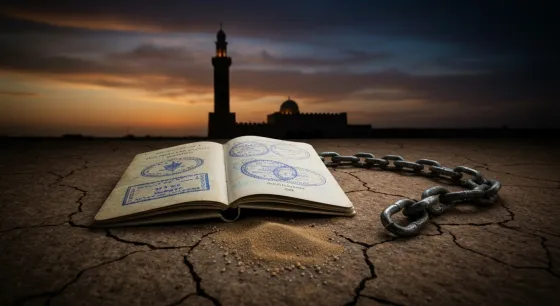
If you thought losing your passport at Gatwick was stressful, spare a thought for the 69 people Bahrain has just stripped of citizenship altogether. The kingdom says they were 'glorifying or sympathising with hostile Iranian acts'. Rights groups say something rather less flattering: that Manama is using a regional war as cover to silence anyone it finds inconvenient.
What actually happened
By royal directive from King Hamad bin Isa Al Khalifa, Bahrain has revoked the nationality of 69 people under Article 10/3 of its Nationality Law. Every single one of them, the government says, is of 'non-Bahraini origin'. That phrase is doing a lot of heavy lifting, and we'll come back to it.
It is the first mass revocation of its kind in Bahrain since 2019, according to the Bahrain Institute for Rights and Democracy (BIRD). Multiple outlets including Al Jazeera, Middle East Eye and The National have all reported the same headline figure, so this is not a rumour swirling on Telegram channels. It is official policy, signed at the top.
Why now? Because there is a war on
The backdrop here is not subtle. Israel and the United States launched attacks on Iran on 28 February 2026, and Tehran has been lobbing retaliation at Gulf states unfortunate enough to host American military hardware. Bahrain, home to the US Fifth Fleet, ticks that box in luminous paint.
Iranian strikes have already landed on Bahraini soil. Fuel tanks in Muharraq were hit on 12 March 2026, and a residential building in Manama was struck on 10 March 2026. When missiles are dropping on your fuel infrastructure, governments tend to reach for the harshest tools in the cabinet. The question is whether those tools are being aimed at genuine threats or at anyone who might mutter the wrong thing at a family dinner.
The 'non-Bahraini origin' problem
Here is where things get uncomfortable. Many of the people now declared 'non-Bahraini' are from Ajami families, ethnic Persians whose ancestors settled in Bahrain generations ago. We are not talking about recent arrivals with one foot on the boat. We are talking about families that have built lives, businesses and communities in the kingdom across decades, sometimes centuries.
Strip the citizenship of someone whose grandparents were born there, and you are not enforcing immigration policy. You are rewriting belonging. And once 'origin' becomes a legal category that can be peeled away from a person, it tends not to stop with the first 69 names on the list.
The wider pattern
Bahrain has form here. Citizenship stripping has been a tool of choice since the 2011 Arab Spring uprising, when the Shia-majority population (roughly 45 per cent of the country, ruled by the Sunni Al Khalifa monarchy) took to the streets. BIRD claims that between 2012 and 2019, the country revoked citizenship from at least 990 people. That figure has not been independently verified beyond BIRD's own count, but the trajectory it describes is hard to dispute.
The group also says at least 286 people have been detained since the war began, as of 10 April 2026. Other outlets put the figure more cautiously at 'more than 200 arrests'. Either way, you don't need a calculator to spot a crackdown.
Why this matters beyond Bahrain
Rights advocates warn the precedent is the truly dangerous bit. If a Gulf monarchy can strip nationality from dozens of citizens during a war, citing vague 'sympathy' offences, what stops the next government, in the next crisis, doing the same? Citizenship is supposed to be a floor under your feet, not a privilege withdrawn when the politics turn awkward.
For UK readers, this is not abstract. Britain has its own citizenship-stripping powers, recently expanded, and the Shamima Begum case put them firmly in the public eye. When a friendly Gulf ally normalises mass revocations on national security grounds, it gives cover to anyone in Westminster tempted to reach for the same lever. Precedents travel.
The human cost of statelessness
It is easy to read 'citizenship revoked' and picture a bureaucratic inconvenience. The reality is brutal. Statelessness can mean losing the right to work, losing access to healthcare, losing the ability to rent a home, and in many cases facing deportation to a country you may never have set foot in. Children inherit the limbo. Bank accounts freeze. Schools turn pupils away.
And because the affected individuals are classed as 'non-Bahraini', they are not even afforded the cold comfort of a domestic legal route built for citizens. The state has, with a single directive, defined them out of the conversation about their own lives.
The diplomatic tightrope
Bahrain's calculation is presumably that wartime allows it to act decisively without much pushback from Western capitals. London and Washington both rely on Bahraini bases and Bahraini cooperation, and neither is in a hurry to publicly scold a partner currently being shelled by Iranian missiles.
That silence is its own message. Rights groups will keep shouting, but absent meaningful diplomatic pressure, the chances of these 69 people getting their nationality back look slim. The chances of the next list being longer look considerably better.
The verdict
Bahrain is in a genuinely difficult spot. Hosting the Fifth Fleet during a hot war with Iran is not a relaxing job, and no government would shrug off internal sympathisers with a hostile power. But there is a vast gulf between prosecuting actual offences and bulk-stripping nationality from people whose only crime, in many cases, may be belonging to the wrong ethnic community at the wrong moment.
If 'sympathising with Iran' becomes a shorthand for 'inconvenient to the regime', the policy stops being about national security and starts being about silencing dissent under wartime cover. That is the precedent rights groups are warning about, and on the available evidence, the warning looks well-founded.
Read the original article at source.