
Your Weekly Shop Is About to Get Pricier, and You Can Thank the Iran War for That
The Strait of Hormuz closure is pushing up fertiliser and fuel costs. Here's why your grocery bill is about to rise and which items will be hit first.












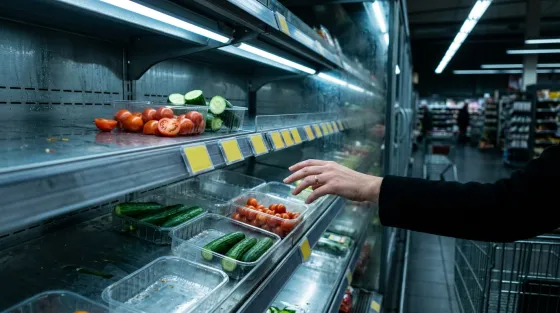
The salad aisle is about to sting
If you have been blissfully enjoying affordable cucumbers, tomatoes and peppers, savour them while you can. The National Farmers' Union is warning that prices for these everyday staples are likely to climb over the next six weeks, with broader grocery bills set to follow in the months after that.
The culprit? A conflict thousands of miles from your local Tesco. Since Iran closed the Strait of Hormuz on 2 March 2026, following US-Israeli airstrikes that began days earlier, one of the world's most critical shipping chokepoints has been effectively shut off. And the knock-on effects are heading straight for your kitchen table.
Why a strait you have never visited controls your food bill
The Strait of Hormuz is not just an oil corridor. Roughly 20 to 25 per cent of the world's oil and gas passes through it, yes, but it also carries approximately one-third of all seaborne fertiliser trade. That is around 16 million tonnes of the stuff farmers need to actually grow the food we eat.
The fertiliser angle is the one most people are missing. Urea, a key nitrogen fertiliser, has seen export prices surge by around 40 per cent, jumping from under $500 to over $700 per metric tonne. Nearly half of global urea supply originates from Gulf states, with Qatar alone accounting for 14 per cent. When that supply gets choked off, farmers everywhere feel it.
NFU President Tom Bradshaw laid it out plainly: fresh produce like tomatoes, cucumbers and peppers will be hit first because heated glasshouse crops are extremely sensitive to energy costs. Other crops and milk are expected to follow over the next three to six months.
Red diesel and the 60 per cent problem
It is not just fertiliser. Some NFU members have reported red diesel prices hitting around 110p per litre, representing a 60 per cent increase. While these are anecdotal reports rather than a confirmed national average, they paint a grim picture of what farmers are dealing with right now.
The Lea Valley Growers Association, which represents a significant chunk of UK glasshouse producers, has flagged that some members are actively contemplating halting production altogether. When it costs more to grow a cucumber than you can sell it for, the maths stops working pretty quickly.
Echoes of Ukraine, but potentially worse
Industry analysts are calling this the most significant pressure on supermarket prices since Russia's invasion of Ukraine in 2022. That comparison should worry anyone who remembers watching their grocery bills climb relentlessly through 2022 and 2023.
The global picture is bleaker still. The UN has warned that 45 million more people could face acute hunger as a result of these disruptions, potentially exceeding the record of 319 million. Nitrogen fertiliser prices could roughly double, according to Morningstar analyst Seth Goldstein, with phosphate climbing around 50 per cent.
The UK's particular vulnerability
Britain is especially exposed here. The UK imports around 80 per cent of its fruit and more than half of its vegetables. That import dependency means we are at the mercy of global supply chains in a way that countries with more domestic production simply are not.
The NFU has also highlighted a structural problem that predates the war: there is no recognised red diesel pricing index and fertiliser prices are only updated monthly. When costs are moving this fast, that lack of transparency leaves farmers flying blind and makes it harder for anyone to plan.
Defra Secretary Emma Reynolds and Farming Minister Dame Angela Eagle are the government figures in the hot seat on this one. Whether any meaningful intervention materialises remains to be seen.
What this means for your trolley
In practical terms, expect salad items and fresh produce to be the first casualties. Food price inflation is expected to peak around autumn 2026, so this is not a short-term blip. It is worth keeping an eye on seasonal British-grown alternatives where possible, though that only goes so far when the underlying energy and fertiliser costs affect domestic growers too.
The honest takeaway? Global conflicts have a habit of finding their way into the most mundane parts of daily life. This time it is the price of a cucumber. Again.
Read the original article at source.