
Putin and Zelensky's Duelling Ceasefires: Whose Truce Wins the Victory Day Showdown?
Putin's 2-day truce meets Zelensky's open-ended ceasefire as Moscow's tank-free Victory Day parade exposes the awkward optics of peace.






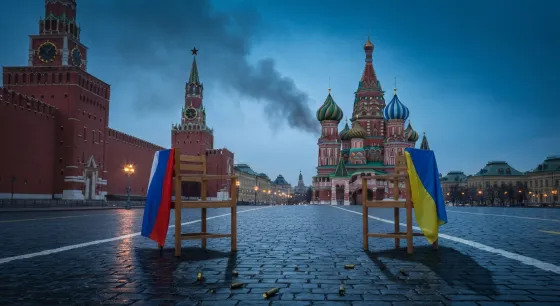
Two leaders, two ceasefires, and one very awkward parade. As Moscow gears up for its 81st Victory Day commemorations, Vladimir Putin and Volodymyr Zelensky have somehow turned the act of not shooting at each other into a competitive sport. Welcome to the strangest diplomatic standoff of 2026.
The Ceasefire Race Nobody Asked For
Here is the situation in plain English. Putin announced a unilateral pause in fighting for 8 and 9 May 2026, conveniently lining up with the parade on Red Square marking 81 years since the defeat of Nazi Germany. Zelensky took one look at the offer, called it 'not serious', and declined to guarantee the safety of foreign dignitaries strolling around Moscow.
Then he went one better. Ukraine's president countered with his own ceasefire, kicking off at midnight on 6 May 2026, and crucially, with no end date attached. Open-ended. Indefinite. The diplomatic equivalent of saying, 'fine, you want peace? Let's actually have peace.'
Why Zelensky Junked Putin's Offer
Zelensky's reasoning was sharp and quotable. He branded Russia's two-day pause a 'theatrical performance' and pushed the line that it should be 'life over parades'. The argument writes itself: a 48-hour truce timed to protect a military parade is not peacemaking, it is stage management.
By proposing a longer, open-ended ceasefire, Zelensky shifted the political weight onto Moscow. If Russia rejects it, Russia looks like the side that wants war. If Russia accepts, the fighting actually stops. Either way, Kyiv wins the optics.
A Parade Without the Parade Bits
Speaking of optics, this year's Red Square spectacle is going to look rather thin. According to reporting, the 2026 parade will go ahead without tanks, missiles, or heavy military hardware rolling past the Kremlin walls. That is reportedly the first time in close to two decades that the equipment has been left in the depot.
The reason? Ukrainian long-range drones. Moscow has even imposed mobile internet and SMS restrictions across the capital from 5 to 9 May, apparently to scramble any drone targeting attempts. A Victory Day parade where the victors are too nervous to wheel out the tanks is a striking visual, even before anyone fires a shot.
The Threats Behind the Theatre
Lest anyone mistake this for genuine de-escalation, Russia has reportedly threatened a 'massive missile strike on the centre of Kyiv' if the parade is disrupted. That is the backdrop to all this ceasefire talk. Putin wants his moment on Red Square, and he wants it underwritten by the implied promise of devastation if anything spoils it.
Last year's 2025 parade pulled in Xi Jinping, Brazil's Lula, and Slovakia's Robert Fico. The guest list for 2026 is yet to fully shake out, but you can imagine the awkward calls being made by foreign protocol officers right now. 'Are we sure about this trip, Minister?'
Meanwhile, the War Carries On
While the diplomats trade press releases, the actual fighting has not paused. Ukraine reportedly struck the VNIIR-Progress plant in Cheboksary using an FP-5 Flamingo missile, the homegrown cruise missile with a stated 1,000kg warhead and a claimed 3,000km range. Cheboksary sits west of the Urals in the Volga region, and the plant matters because it produces navigation gear for Russian high-precision weapons and Shahed drones. Hit that, and you blunt the kit raining down on Ukrainian cities.
It is the kind of strike that says, 'we can reach you well beyond the front line', which is exactly the message Kyiv wants Moscow to absorb in the days before the parade.
The Human Cost on the Ukrainian Side
Russia, of course, is still hitting Ukraine too. Local officials in the Poltava region reported four killed and 31 wounded in a Russian drone and missile attack, with around 3,500 customers cut off from gas supplies. Those numbers come from the regional governor's Telegram channel and have not yet been independently corroborated, so treat them as the official Ukrainian figure rather than a verified casualty count.
There were also reports of two people injured in a drone attack on Brovary near Kyiv, again sourced to local authorities. The IAEA, meanwhile, confirmed that drone activity damaged meteorological monitoring equipment at the Zaporizhzhia nuclear plant. Even on a slow news day, the war keeps grinding.
Why This Matters to Readers in the UK
If you are wondering why a ceasefire spat over a Russian parade should bother anyone in Britain, the answer is straightforward. Energy markets, NATO posture, and the broader question of whether deterrence still works all turn on what happens next. A genuine open-ended ceasefire would be a turning point. A two-day pause for cameras would not.
There is also the matter of how this plays into the wider Western response. Each round of attacks and counter-strikes shapes the political weather around military aid, defence spending, and the rate at which European governments commit to longer-term support for Kyiv. Whitehall reads these signals carefully, and so should anyone watching their household bills.
What to Watch Next
Three things worth keeping an eye on. First, whether Russia formally responds to Zelensky's longer ceasefire proposal or simply ignores it. Silence will speak loudly. Second, whether the 8 to 9 May truce holds in any meaningful sense, or whether 'ceasefire' is defined so narrowly it covers only Red Square. Third, the guest list for the parade. The presence or absence of major foreign leaders will tell you a lot about how isolated, or not, the Kremlin currently feels on the world stage.
The Verdict
Putin's ceasefire is a stage prop. Zelensky's counter-offer is a political checkmate dressed up as goodwill. Whether anything genuinely changes on the ground depends entirely on whether Moscow chooses theatre or substance. History suggests theatre, but Kyiv has at least made it harder for the Kremlin to claim the moral high ground while parading past empty plinths where the tanks used to be.
For now, the war goes on, the parade looms, and the rest of us are left to read the signals between the missile strikes and the press releases. Quite a way to mark 81 years since 1945.
Read the original article at source.