
Iran's Bizarre Propaganda Video Casts Trump as an Oil-Guzzling Super Mario
Iran's latest propaganda clip reimagines Donald Trump as Super Mario, gobbling up oil barrels. A look at what it means and why Mario, of all things.









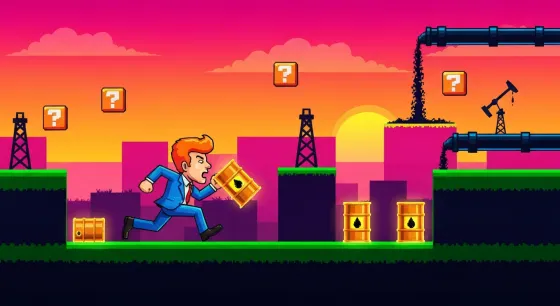
Just when you thought geopolitical messaging had hit peak weirdness, Iran has popped up with a fresh contender. A propaganda clip doing the rounds on Iranian social media reimagines Donald Trump as a Super Mario character, merrily hoovering up barrels of oil like they were power-up mushrooms.
Yes, really. This is the world we live in now.
What's actually in the video?
The clip, which has been shared widely across Iranian-aligned accounts, plonks a cartoon Trump into a Mario-style platformer. Instead of stomping Goombas or rescuing a princess, our pixelated former president is gobbling up oil barrels with the enthusiasm of a man who's just discovered an all-you-can-eat buffet.
It's crude (pun very much intended), but the symbolism isn't exactly subtle. Trump equals greed. America equals oil addiction. The Middle East equals the level he's busily plundering. Game over, presumably, when the barrels run out.
Why Mario, of all things?
Choosing Nintendo's beloved plumber as your political punching bag is a curious move, but it makes a certain kind of sense. Mario is instantly recognisable to pretty much anyone with a pulse and a passing acquaintance with the last forty years of pop culture. Slap Trump's distinctive hair onto that red cap and you've got a meme-ready visual that travels well across borders and language barriers.
It's also not the first time Iranian state-aligned media has dabbled in video game aesthetics. An earlier clip reportedly featured a Wii-style mock-up of the White House, suggesting someone in Tehran's propaganda department has clearly been raiding their nephew's games console for inspiration.
Propaganda meets pop culture
This sort of thing isn't new, of course. Governments have been using cartoons, posters and animations to take swipes at their rivals for as long as the medium has existed. What's changed is the platform and the polish.
Today's propaganda doesn't need to look slick or expensive. It just needs to be shareable. A bite-sized video that gets passed around WhatsApp groups and reposted on X can reach far more eyeballs than a glossy state broadcast ever could. And nothing screams shareable like a beloved video game character being weaponised for political point-scoring.
Does it actually work?
Here's the awkward question for whoever cooked this up in a Tehran editing suite. Does turning Trump into a chubby Italian plumber actually damage him, or does it just hand his supporters another meme to laugh at and repost?
Trump has always thrived on attention, regardless of whether it's flattering. Half his political career has been built on enemies giving him free publicity. A goofy cartoon depicting him as a video game character feels less like a devastating critique and more like fan art with hostile intentions.
If anything, it risks being the sort of thing his base shares ironically, slapped onto T-shirts at rallies before the week is out.
The oil angle
The oil barrel symbolism is the more pointed bit. Iran's economy has been hammered by US sanctions for years, with its oil exports a particular flashpoint. Depicting Trump as personally devouring barrels of crude is a not-so-veiled jab at American foreign policy in the region and the perception that Washington's interest in the Middle East starts and ends with what's under the sand.
Whether that message lands with audiences outside Iran is another matter. For most British viewers scrolling past this on social media, the takeaway is probably less geopolitical commentary and more amused bewilderment at the sheer oddness of it all.
A pattern of cartoonish messaging
Iran's propaganda machine has been leaning into this surreal, meme-flavoured style for a while. It's a long way from the stern, formal broadcasts of the past. State-aligned accounts have produced everything from animated explosions over digital recreations of US military bases to mocked-up clips imagining various American politicians in unflattering scenarios.
The strategy seems to be throwing everything at the wall and seeing what goes viral. It's the same playbook used by basically every online content creator, just with rather higher stakes attached.
Why this matters to UK readers
You might be wondering why any of this should land on a British viewer's radar. Fair question. The honest answer is that tensions between Iran, the US and Israel have ripple effects that reach well beyond the immediate region. Oil prices, energy bills, holiday flight routes and broader security concerns all get nudged when this corner of the world gets noisy.
Propaganda videos aren't going to start World War Three on their own, but they're a useful temperature check. When official or semi-official Iranian channels are putting out cartoons mocking American leaders, it tells you something about where the rhetoric currently sits. Frosty, in case you were wondering.
The strange new normal
There's something genuinely odd about living through a moment where international diplomacy and Nintendo characters share a Venn diagram. Cold War propaganda was all stoic soldiers and grim factory workers. Modern propaganda is Trump as Mario, eating oil barrels.
Whether that represents progress, decline, or simply the inevitable result of giving the entire planet TikTok is a philosophical question for another day.
The takeaway
So what should we make of all this? Honestly, probably not too much. It's a propaganda clip designed to provoke a reaction, and writing about it gives it exactly the oxygen it was created for. Guilty as charged.
But it's also a small, telling glimpse into how modern statecraft now operates. Less white papers, more pixel art. Less diplomatic cables, more memes. The medium might be daft, but the underlying messaging is deadly serious. Iran wants the world to see Trump, and by extension America, as a greedy resource hoarder. Whether anyone outside the choir is convinced is another matter entirely.
For now, we can add this to the growing pile of evidence that the 2020s are simply going to keep getting weirder. Buckle up.
Read the original article at source.