
Ukraine's Surrogacy Boom Could Be About to Hit the Brakes
Ukraine, the world's second-biggest surrogacy hub, is weighing a ban on foreign clients. Here's what's being proposed and why it matters.












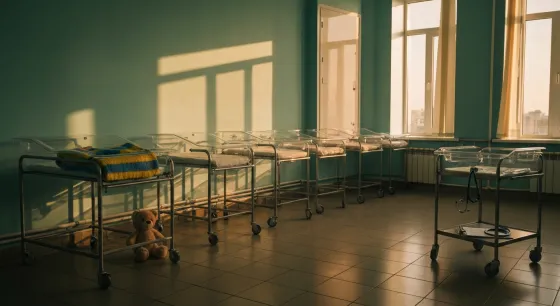
For years, Ukraine has quietly held a peculiar title: the world's second-biggest commercial surrogacy hub, sitting just behind the United States. If that sounds like the sort of thing that should be getting more airtime than it does, you're not wrong. And now, after a decade of being the go-to destination for prospective parents with a passport and a payment plan, the country is mulling a law that would shut foreigners out almost entirely.
Cue the lawyers, the lobbyists, and a great deal of moral hand-wringing.
What's actually being proposed?
Ukrainian MPs are once again pushing a bill that would effectively ban foreigners from accessing surrogacy services in the country. A previous attempt, Bill 6475, was tabled in 2023 and promptly rejected that May. The new proposal is reportedly enjoying broader political support, although given the last bill's fate, nobody is popping champagne just yet.
The motivation is part ethical, part demographic. Ukraine's birth rate has plummeted during the war, and the optics of shipping babies abroad while the country itself struggles to grow its population have become politically uncomfortable, to put it gently.
Why Ukraine became the world's surrogacy supermarket
Three words: price, law, and access.
Surrogacy in Ukraine costs around £65,000 (roughly $87,770) for a full package through clinics like BioTexCom, the country's largest provider. Compare that to the United States, where the same journey can sail past £110,000 and frequently lands closer to £150,000, and you can see why couples have been booking flights to Kyiv for years.
Then there's the legal framework. Unlike the UK, where only altruistic surrogacy is allowed and the surrogate is legally the mother until a parental order transfers rights, Ukrainian law hands legal parenthood to the intended parents from birth. No court hearings, no nail-biting wait. For commissioning parents, that's about as clean as it gets.
The numbers tell the rest of the story. Foreigners reportedly make up around 95% of intended parents using Ukrainian surrogacy services. The industry hasn't just been catering to overseas demand; it has been almost entirely built on it.
The not-so-pretty side
Where there's money and a thin regulatory net, there's controversy. And Ukraine's surrogacy industry has had quite a lot of it.
BioTexCom, the country's biggest player, has been at the centre of multiple investigations. In 2018, its CEO Albert Tochilovsky was investigated on suspicion of human trafficking, among other offences, in a case documented by outlets including OCCRP and the Center for Genetics and Society. The case has had a long and complicated life, with reports indicating it was suspended at various points.
Then there was the unfortunate marketing experiment of 2021, when BioTexCom ran a 'Black Friday sale' style advert for surrogate babies. Yes, really. It went down about as well as you'd expect.
Add to this the well-documented saga of the COVID-19 lockdowns in 2020, when dozens of surrogate babies were left stranded in a Kyiv hotel because their intended parents couldn't travel, and you start to see why critics have been calling for reform for some time.
The babies nobody comes back for
Perhaps the most uncomfortable part of the story is the children left behind. The BBC's reporting includes the case of a child it calls Wei, reportedly born via surrogacy in 2021 and, according to the article, abandoned by intended parents from a South East Asian country. The BBC reports the child now lives in a state-run home in Kyiv, and that 15 families have viewed his file without expressing interest in adopting. These specific details haven't been independently corroborated elsewhere, so a touch of caution is warranted, but the broader phenomenon of disabled or unwanted surrogate children being left behind in Ukraine has been documented before.
It's the kind of story that turns abstract policy debates into something far harder to dismiss.
What about the surrogates themselves?
This is the question that doesn't always get asked loudly enough. The BBC profiles Karina, a Ukrainian surrogate who stands to earn around £12,500 (about $17,000) for carrying a child. That figure is roughly double Ukraine's average annual salary, which goes some way to explaining why women sign up despite the physical and emotional toll.
For some, it's a route to financial stability that simply doesn't exist elsewhere in the local economy. For critics, it's a textbook case of economic coercion dressed up as choice. Both readings can be true at once, which is part of what makes the debate so thorny.
Why this matters to readers in the UK
British couples have been part of Ukraine's surrogacy story for years. The UK's altruistic-only model is genuinely restrictive: surrogates can be reimbursed for reasonable expenses, but commercial arrangements are off the table, and the surrogate remains the legal mother until a parental order is granted. For couples desperate to have a child and unwilling or unable to wait, Ukraine offered a faster, cheaper, and legally cleaner route.
If the new bill passes, that route effectively closes. The likely consequence is a redistribution of demand to other commercial surrogacy markets, with Georgia, Mexico, and parts of the US set to pick up much of the slack. Prices will likely climb. Waiting times will likely lengthen. And the ethical questions don't go anywhere; they just move address.
Will the bill actually pass?
Honest answer: nobody knows. The 2023 version was knocked back despite plenty of noise, and Ukraine's parliament has bigger fires to fight than reproductive law reform. That said, the political mood has shifted. War, falling birth rates, and ongoing reputational damage from cases like BioTexCom's may push the bill across the line this time.
If you're a betting type, the smart money probably says some form of restriction passes eventually, even if not this exact bill.
The bigger picture
Ukraine's surrogacy debate is a microcosm of a larger global conversation about reproductive rights, commercial ethics, and where the line sits between giving people genuine options and effectively monetising poverty. There are no easy answers, and anyone selling you a tidy moral conclusion is probably trying to flog something.
What is clear is that the model that made Ukraine the world's surrogacy bargain bin is creaking. Whether it gets reformed, banned, or simply moves to the next country willing to host it, the status quo looks unlikely to survive the decade.
For prospective parents, surrogates, and the children at the centre of all this, the next chapter could look very different indeed.
Read the original article at source.