
UFC London Exposes the Ugly Truth About Fighter Pay, and Nobody's Laughing
UFC Fight Night London 2026 laid bare the fighter pay crisis. With a £5.7bn TV deal and fighters barely scraping by, the backlash is growing louder.












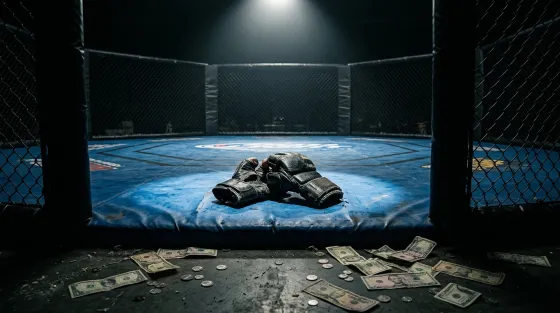
When Your Boss Pays a Boxer More Than Your Entire Career
UFC Fight Night at London's O2 Arena on 22 March 2026 was supposed to be about the fights. And to be fair, there were some absolute crackers. But the real story walking out of that building wasn't what happened inside the octagon. It was the growing chorus of fighters who are, quite frankly, fed up with being paid peanuts while the UFC prints money.
The catalyst? Conor Benn's reported £11m one-fight deal with Zuffa Boxing, Dana White's own boxing promotion. Let that sink in. One fight. £11 million. Meanwhile, UFC veterans with years of service and highlight-reel finishes are publicly saying they can barely afford training camps.
The Numbers Don't Lie
Here's where it gets properly uncomfortable for the UFC brass. The promotion recently secured a mammoth $7.7bn (£5.7bn) broadcast deal with Paramount, covering seven years at roughly $1.1bn annually. That's nearly double the previous ESPN arrangement, which paid around $550m per year. UFC's annual revenue hit $1.502bn in 2025.
So where's all that money going? Not to the fighters, that's for certain. UFC athletes receive an estimated 13-20% of revenue, depending on which analyst you ask. Compare that with boxing, where fighters typically pocket around 60%. The gap is staggering, and it's becoming increasingly difficult for the UFC to justify.
Protests, Pleas, and Walkout Songs
The frustration at UFC London manifested in ways both heartbreaking and creative. Danny Silva, after winning his fight, told Michael Bisping during his post-fight octagon interview that he was flat broke. Not exactly the victory speech the promotion wants broadcast to millions.
Michael 'Venom' Page took a more theatrical approach, choosing Michael Jackson's 'They Don't Care About Us' as his walkout song. Subtle it was not. Conor McGregor publicly backed the gesture on social media. Notably, Dana White reportedly walked out of the arena during MVP's bout.
Then there's Nathaniel Wood, a fan favourite who's given eight years and 11 wins from 14 fights to the UFC. A proper servant of the sport, yet still fighting for financial security that should have arrived long ago.
A Wave of Discontent
UFC London didn't happen in isolation. The fighter pay revolt has been building throughout early 2026, largely triggered by the Paramount deal eliminating traditional pay-per-view. Consider the domino effect:
- Conor McGregor publicly stated his contract is 'essentially void' because it was built around PPV sales that no longer exist
- Joe Rogan, the UFC's own commentator, sided with fighters on his podcast, comparing it to how he pays comedians 80% at his comedy clubs
- Ronda Rousey made headlines criticising UFC pay at a press conference
- Justin Gaethje claimed he's 'not getting one dollar more' under the new deal
- Tom Aspinall, the heavyweight champion, signed a separate commercial deal with boxing promoter Eddie Hearn to supplement his UFC income
When your heavyweight champ needs a side hustle, something is fundamentally broken.
Bonuses Are Not the Answer
Credit where it's due: the UFC did increase post-fight bonuses from $50,000 to $100,000 in January 2026, with additional $25,000 finish bonuses. Mason Jones and Axel Sola, who put on a genuine fight of the year contender at UFC London, each took home that $100k bonus.
But here's the thing. Bonuses are a sticking plaster on a structural problem. When your broadcast revenue has doubled and your fighters are still getting somewhere between 13% and 20% of the pie, throwing an extra $50k at a handful of performers per event doesn't address the fundamental imbalance.
Dana White's response? Fighter pay will be 'just fine over the next seven years.' One suspects the fighters might disagree.
The Verdict
The UFC puts on the best combat sports product on the planet. That's not in dispute. But the organisation's treatment of the athletes who make that product possible is becoming its biggest vulnerability. When fighters are winning bouts and immediately pleading poverty on camera, the optics are dreadful. When your own boxing venture pays a single fighter more than most UFC veterans earn across their entire careers, the hypocrisy is impossible to ignore.
Something has to give. The only question is whether the UFC will act before the dam breaks entirely.
Read the original article at source.