
Trump's Russian Oil Sanctions U-Turn: A Masterstroke or a Gift to Putin?
The US is easing sanctions on Russian oil. Discover what Trump's controversial U-turn means for the G7 price cap, global energy markets and UK energy bills.









Welcome to the unpredictable world of global energy politics. Just when you thought the West had a unified strategy for dealing with Moscow, the script gets completely torn up. The United States has recently signalled an easing of sanctions on Russian oil. The official line from Washington? They claim this move will provide only a "limited financial boost" to Vladimir Putin. If you are sitting in the UK, watching your energy bills fluctuate and wondering what this means for the petrol pumps, you are certainly not alone.
The Mechanics of the G7 Price Cap
Let us rewind a bit to understand how we got here. Following the invasion of Ukraine, the West needed a way to punish the Kremlin without completely crashing the global economy. The solution was the G7 price cap. The idea was incredibly clever on paper. Western countries, including the UK, heavily control the maritime insurance market. If Russia wanted to use Western ships or insurance to move its oil, it had to sell that oil below a strict price ceiling.
The goal was twofold. First, keep Russian oil flowing into the global market to prevent a massive supply shock. Second, slash the profit margins that fund the Russian military machine. It was designed to be a scalpel rather than a sledgehammer, surgically removing Putin's excess profits while keeping the lights on in Europe and the Americas.
The City of London's Crucial Role
It is worth noting just how important the UK was to this original strategy. The City of London has historically been the beating heart of global maritime insurance. When the original sanctions were drafted, the UK played a pivotal role because a vast majority of the world's shipping relies on British financial institutions. By weaponising the London insurance market, the West thought they had found the ultimate choke point. But as we have learned time and time again, international trade is like water. It always finds a way around a blockage.
Enter the Shadow Fleet
Of course, dictators rarely play by the rules. Moscow responded to the price cap by assembling what is now famously known as the "shadow fleet". This is a sprawling collection of ageing, rusty tankers operating entirely outside Western jurisdiction. They sail without standard insurance, often turning off their tracking transponders to secretly transfer oil at sea.
It is a massive environmental disaster waiting to happen. If one of these uninsured, unverified rust buckets spills millions of gallons of crude oil into the Baltic Sea or the English Channel, who pays for the cleanup? The answer is nobody. However, from a purely economic standpoint, this dangerous fleet has allowed Russia to bypass the price cap and keep the cash rolling in. The US has spent the last year trying to sanction these individual ships, playing an exhausting global game of whack-a-mole.
Why Ease Up Now?
So, why is the US suddenly backing off and easing these restrictions? The answer, as always, comes down to domestic politics and the global economy. Donald Trump has always viewed energy through the lens of pure pragmatism. The American economy runs on cheap petrol. If the US enforces sanctions too aggressively and manages to completely block Russian oil from the market, global supply plummets.
When supply plummets, prices skyrocket. Suddenly, the cost of a barrel of Brent Crude shoots past one hundred dollars, and inflation comes roaring back. The US administration is making a highly calculated gamble. They believe that keeping the oil flowing is more important for Western economic stability than squeezing every last cent out of the Russian economy. They are terrified of a global energy crisis right before a major election cycle.
The Impact on the UK Economy
What does this mean for us over here in the UK? We have spent the last few years battling a brutal cost of living crisis. The Bank of England has hiked interest rates to painful levels just to get inflation under control. A massive spike in global oil prices is the absolute last thing the Chancellor wants to see.
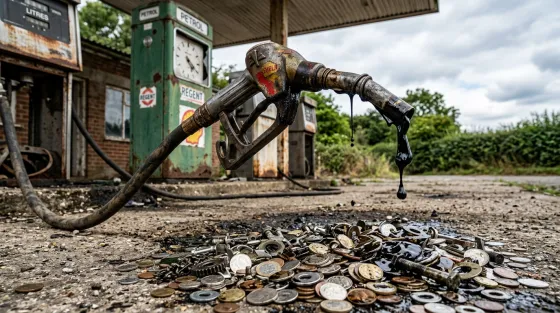
When oil goes up, everything goes up. It costs more to transport food to your local Tesco, it costs more to heat our homes during the miserable British winter, and it certainly costs more to fill up the car for the morning commute. In a purely cynical, economic sense, cheaper global oil is actually good news for the UK consumer.
If easing sanctions keeps the global oil price stable, it helps keep UK inflation in check. It might even give the Bank of England the breathing room it desperately needs to start lowering interest rates. For millions of mortgage holders staring down the barrel of a remortgage, that is a highly appealing prospect.
The Ethical Dilemma
However, economics and ethics make terrible bedfellows. The idea that we are indirectly allowing more money to flow into Russian coffers just to keep our inflation numbers down is a bitter pill to swallow. The US insists the financial boost to Putin will be "limited". But let us be honest with ourselves. In a grinding war of attrition, every single dollar counts.
A limited boost is still a boost. It buys more artillery shells, funds more drones, and prolongs a conflict that continues to devastate Ukraine. We are essentially trading a moral stance for a slightly cheaper litre of unleaded at the local Morrisons. It is a deeply uncomfortable compromise that highlights the limits of Western economic warfare.
The Geopolitical Chessboard
There is also a broader geopolitical game at play here. Trump's approach to foreign policy has always been highly transactional. By easing these sanctions, he might be attempting to create leverage for future negotiations. It is a remarkably risky strategy. The danger is that it sends a clear signal of Western fatigue.
If the US is willing to blink on oil sanctions, what else might they compromise on? For the UK and our European allies, who have taken a much harder line on Russian aggression, this unilateral shift from Washington is deeply frustrating. It undermines the united front that the West has tried so hard to maintain over the past few years. It leaves European leaders looking isolated and forces them to re-evaluate their own energy strategies.
The Future of the Oil Market
Looking ahead, the global energy market remains incredibly fragile. We are slowly transitioning away from fossil fuels, but we are nowhere near ready to completely cut the cord. As long as the world relies on oil to function, countries with massive reserves will always have a powerful seat at the table, regardless of their actions on the world stage. The easing of these sanctions is a stark, unavoidable reminder of that uncomfortable reality.
We are stuck in a transitional phase. We want to punish bad actors, but we also want cheap energy to fuel our own economic growth. Until renewable energy infrastructure is robust enough to completely replace our reliance on foreign oil, we will continue to see these awkward, contradictory policy shifts.
The Final Verdict
Ultimately, the US decision to ease sanctions on Russian oil is a pragmatic, cold, and highly controversial move. It prioritises domestic economic stability over maximum pressure on Moscow. Will it help Putin? Yes, undoubtedly. Even if the financial boost is technically limited, it is a clear strategic win for the Kremlin.
For the UK, it leaves us in a paradoxical situation. We might benefit economically from stable global oil prices, but we are forced to watch as the economic net around Russia is quietly loosened. It is a complex, messy situation, and it perfectly encapsulates the impossible choices at the very heart of modern geopolitics. We want cheap petrol, and we want to be the good guys. Right now, it seems we cannot have both.
Read the original article at source.