
The Geopolitical 'Sorry, Not Sorry': Iran's Conditional Apology to the Gulf States
The Art of the Geopolitical Non-Apology We have all been on the receiving end of a truly terrible apology. You know the sort. The classic "I am sorry you felt...












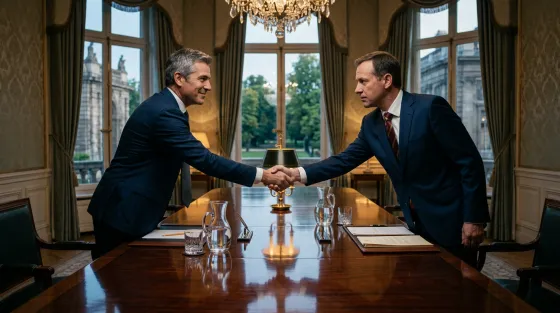
The Art of the Geopolitical Non-Apology
We have all been on the receiving end of a truly terrible apology. You know the sort. The classic "I am sorry you felt offended," or the ever-popular "I apologise if you misunderstood my actions." They are the hallmark of a bad flatmate or a passive-aggressive colleague. But in the high-stakes, heavily armed world of international geopolitics, the non-apology takes on an entirely different, far more explosive flavour.
Case in point: the recent remarks emanating from Tehran. In a move that redefines diplomatic cheek, Iran's president has essentially offered an apology for striking its Gulf neighbours, bundled neatly with a rather massive caveat. The promise? Iran will kindly refrain from launching strikes against Gulf states, provided those states ensure absolutely no attacks against Iran originate from their soil.
Frankly, it is the geopolitical equivalent of a playground bully saying, "I will stop punching you, provided you stop standing so close to my fist." It is a fascinating, conditional olive branch that speaks volumes about the current state of Middle Eastern relations, and as someone who spends most of their time looking at tech infrastructure and global supply chains, it is a statement that warrants a much closer look.
The 'Stop Hitting Yourself' Doctrine
To understand the sheer audacity of this statement, we need to look at the recent history of the Persian Gulf. For years, the region has been a tinderbox of proxy conflicts, covert operations, and sudden, seemingly unprovoked strikes on critical infrastructure. Iran's relationship with its Gulf neighbours, most notably Saudi Arabia and the United Arab Emirates, has been fraught with tension, often spilling over into tangible, destructive actions.
By stating that strikes will cease if the Gulf states ensure their territory isn't used as a staging ground for anti-Iran operations, Tehran is doing two things. First, it is retroactively justifying its past aggressions as purely defensive manoeuvres. Second, it is placing the burden of future peace squarely on the shoulders of its neighbours. It is a masterclass in shifting the blame.
But why should we, as everyday tech enthusiasts and consumers, care about diplomatic posturing in the Gulf? Because the modern theatre of war is no longer just about boots on the ground. It is about silicon, software, and supply chains. The "strikes" in question are rarely conventional military invasions; they are highly sophisticated technological operations that have a direct impact on the global economy.
The Tech Behind the Threats: Drones and Missiles
When we talk about strikes in the Gulf, we are primarily talking about the rapid democratisation of unmanned aerial vehicles (UAVs) and precision-guided munitions. Iran has spent the last decade building a formidable, homegrown drone programme. The hardware, most notably the Shahed series of loitering munitions, has completely altered the balance of power in the region.
These aren't your standard consumer drones used for snapping nice aerial photos of the Peak District. These are cheap, highly effective, and easily mass-produced weapons that can evade traditional radar systems. We saw the devastating potential of this technology back in 2019, when a swarm of drones and cruise missiles temporarily knocked out half of Saudi Arabia's oil production capacity at the Abqaiq and Khurais facilities.
Cost-Asymmetric Warfare: A single loitering munition might cost around £15,000 to produce, but it requires a £2 million Patriot missile to shoot it down. This economic disparity is a massive headache for the wealthy Gulf states.
Plausible Deniability: Because these drones are often operated by proxy groups rather than the Iranian military directly, it allows for a frustrating game of geopolitical "whodunnit."
Tech Transfer: The technological know-how developed in these regional conflicts is now being exported globally, affecting conflicts far beyond the Middle East.
So, when Iran promises to "stop striking" its neighbours, it is essentially promising to keep its drones grounded. But given the cheap, decentralised nature of this technology, enforcing such a promise, and verifying it, is a logistical nightmare.
The Invisible Frontline: Cyber Warfare
Of course, not all strikes involve explosives. If you read between the lines of this conditional apology, you have to factor in the invisible, digital frontline. The Middle East is home to some of the most aggressive and sophisticated cyber warfare on the planet.
State-sponsored Advanced Persistent Threat (APT) groups have routinely targeted critical infrastructure, government networks, and financial institutions across the Gulf. Remember the infamous Shamoon malware? It was a devastating cyber-attack that wiped the hard drives of tens of thousands of computers at Saudi Aramco, replacing their data with an image of a burning American flag. It was a stark reminder that you do not need a fighter jet to cripple a nation's economy; you just need a few clever coders and a vulnerability in a firewall.
Iran's cyber capabilities have matured significantly since then. They have moved beyond simple data-wiping attacks to complex espionage, ransomware, and disruption of industrial control systems (ICS). When the Iranian president talks about attacks "originating" from Gulf states, he isn't just talking about physical military bases hosting foreign troops. He is also pointing a finger at the cyber espionage and digital sabotage that routinely flows back and forth across the Persian Gulf.
For the tech industry, this is a massive concern. The Gulf is a major hub for global telecommunications cables and data centres. Any escalation in cyber warfare in this region has the potential to cause collateral damage that ripples across the global internet, affecting everything from cloud services to international banking.
The Economic and Supply Chain Reality
Let us look at the broader context of why this conditional apology is happening right now. The reality is that nobody in the region actually wants a full-scale war. It is terrible for business, and the Gulf is very much open for business.
Saudi Arabia is pouring trillions into its Vision 2030 project, trying to pivot its economy away from oil and towards technology, tourism, and green energy. The UAE is busy positioning itself as the AI and cryptocurrency capital of the world. You cannot attract top-tier global tech talent and venture capital if there is a looming threat of drone strikes on your shiny new smart cities.
On the flip side, Iran's economy is buckling under the weight of international sanctions. They desperately need economic relief and foreign investment. The recent, China-brokered normalisation of ties between Saudi Arabia and Iran was a pragmatic acknowledgement that both sides need a breather. This latest statement from the Iranian president is simply the next evolution of that détente. It is a messy, caveat-laden step towards regional stability.
The Final Verdict
So, how should we view Iran's apology for striking its neighbours? With a very large, healthy pinch of salt.
From a diplomatic standpoint, it is a clever manoeuvre. It allows Tehran to project an image of a peacemaker while simultaneously maintaining a thinly veiled threat. It sets a baseline for future negotiations while keeping the Gulf states on their toes.
From a technological standpoint, it highlights the terrifying new normal of modern conflict. We live in an era where cheap drones and lines of malicious code can dictate the foreign policy of entire nations. The fact that a nation can hold its neighbours hostage with loitering munitions and cyber threats, and then demand concessions to stop using them, shows just how far the goalposts of warfare have moved.
Ultimately, this conditional apology is better than active hostilities, but it is hardly a foundation for lasting trust. The Gulf states will likely accept the rhetoric publicly, while quietly continuing to heavily invest in advanced air defence systems, zero-trust cybersecurity architectures, and AI-driven threat detection. Because in the modern world, you can accept your neighbour's apology, but you should probably still upgrade your firewall.
Read the original article at source.