
Starmer Tells MPs to Drop the Wishful Thinking: Iran War Is Not Ending Anytime Soon
Keir Starmer warned MPs against 'false comfort' over the Iran conflict ending soon, urging long-term planning as UK military deployments ramp up.








The PM's Blunt Reality Check
If you were hoping the Iran conflict would wrap itself up neatly in time for summer, Keir Starmer has a message for you: stop kidding yourself.
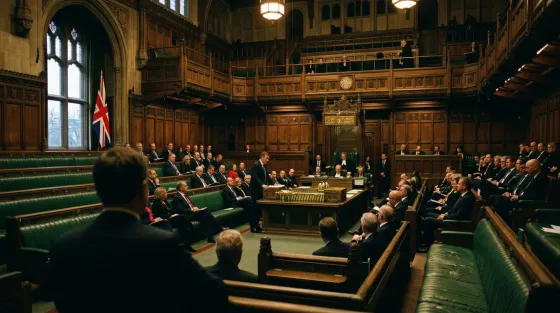
Appearing before the Liaison Committee on 23 March 2026, the Prime Minister warned senior MPs against taking "false comfort" from the idea that the war will be over quickly. His advice to the government, and by extension the country, was to plan as though this drags on for some time. Not exactly the Sunday evening pep talk anyone wanted.
Not Our War, Says Starmer (But We Are Watching Very Closely)
Starmer was unambiguous on one point: "This is not our war, and we are not getting dragged into this war." He stressed that any UK involvement must have a "lawful basis," which is a polite way of saying he is not about to write a blank cheque for military action just because Washington is asking nicely.
That said, the UK is hardly sitting on its hands. HMS Dragon, a Type 45 destroyer, has arrived in the eastern Mediterranean. Air defence specialists have been deployed to the Middle East, and Britain is distributing air defence missiles to Gulf partners including Bahrain, Kuwait, and Saudi Arabia. So while it may not be "our war," the UK certainly has its coat on and is standing by the door.
Trump Hits Pause, Iran Says "What Talks?"
President Trump announced a five-day pause in strikes against Iranian energy infrastructure, citing "very good and productive" talks. Markets responded with visible relief, with oil prices dropping from around $114 a barrel to roughly $101.
There is just one small wrinkle: Iran flatly denies that any direct talks took place. Tehran dismissed Trump's claims as an attempt to lower oil prices and buy time. So either someone is having very productive conversations with themselves, or the diplomatic picture is rather murkier than the White House suggests.
Starmer revealed he had a 20-minute call with Trump on Sunday evening focused on reopening the Strait of Hormuz, the crucial shipping lane through which roughly one-fifth of the world's oil supply passes. Iran has effectively blocked the strait since early March, and the consequences are biting hard.
The Economic Fallout Is Already Here
Centrica CEO Chris O'Shea warned that global oil supplies are down 20% as a result of the conflict. When roughly 20 million barrels a day out of the world's 100 million are stuck behind a maritime blockade, the maths writes itself.
Cornwall Insight forecasts an average energy bill rise of £332 across England, Scotland, and Wales from July. Starmer insisted the UK has no "meaningful concern about energy supplies," though telling people not to worry about energy costs while announcing they will rise significantly is a tough rhetorical trick to pull off.
A COBRA meeting was scheduled for Monday afternoon to discuss wider economic measures, suggesting the government knows reassuring words alone will not cut it.
The Bigger Picture
The conflict began on 28 February 2026 with US-Israeli strikes on Iran that killed Supreme Leader Ali Khamenei. Iran retaliated across the Gulf region, with strikes hitting UAE, Saudi Arabia, Kuwait, Qatar, Iraq, Bahrain, and Oman. An Iranian drone struck within 800 yards of British personnel at RAF Akrotiri in Cyprus, making the "not our war" line feel a touch optimistic.
With at least 200,000 British citizens in the Gulf region and Green Party MPs demanding answers about the legality of UK involvement, Starmer is walking a tightrope between caution and preparedness. His core message to Parliament was clear enough: hope for the best, but do not bet on it.
Read the original article at source.