
Russia Cries Foul Over Trump's Three-Day Truce as Drones Keep Flying
Trump's three-day Ukraine ceasefire wobbles as Russia claims 1,000+ violations and drone strikes hit Kharkiv, Kherson and Zaporizhzhia. Here's what happened.










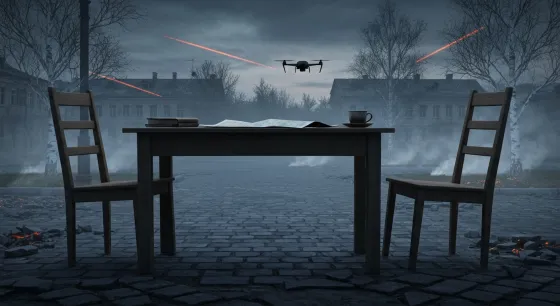
Well, that didn't take long. Barely had the ink dried on Donald Trump's three-day ceasefire before Moscow was wagging its finger at Kyiv, accusing Ukraine of more than a thousand violations. Meanwhile, Ukrainian officials were busy counting casualties from Russian drones and shellfire. So much for a quiet weekend.
What's actually happened?
On Friday 8 May 2026, Trump announced a short truce running from Saturday through Monday, conveniently timed to coincide with Russia's Victory Day parade on 9 May. The idea, in theory, was to pause the fighting long enough for both sides to mark the occasion without the awkward soundtrack of artillery.
In practice, the guns and drones never really went quiet.
Russia's Ministry of Defence claimed Ukraine had breached the ceasefire over 1,000 times. Ukraine, for its part, reported one person killed and three injured in Zaporizhzhia within 24 hours, according to regional head Ivan Fedorov. In Kherson, governor Oleksandr Prokudin said seven people were wounded. Five more were hurt when a drone slammed into a nine-storey apartment block in Kharkiv, per regional governor Oleh Syniehubov.
Across the line, Russian-installed official Vladimir Saldo claimed two people had been injured in occupied parts of Kherson by Ukrainian shelling. Whichever side you tally first, the body count keeps ticking.
The drone tally
Ukraine's air force said it shot down or destroyed all 27 Russian strike and decoy drones launched overnight. That's a tidy 100% interception rate, which sounds impressive until you remember the only reason it mattered is because the drones were launched in the first place, during a supposed ceasefire.
Why this truce was always going to wobble
Context matters here, and the context is unflattering. This wasn't the first ceasefire attempt to collapse like a wet paper bag. An earlier truce, declared unilaterally by Russia for Victory Day, reportedly fell apart within hours, with Moscow firing off 108 drones and three missiles for good measure.
Ukraine's preferred option has consistently been a proper, unconditional 30-day ceasefire from 6 May, which Moscow simply ignored. Instead, the world got Trump's headline-friendly three-day window, which just happened to align perfectly with the Kremlin's parade schedule. Funny that.
For Kyiv, signing up to a symbolic pause tied to Russia's military pageantry was always going to feel a bit like agreeing to a truce on your enemy's birthday so they can blow out the candles in peace.
Putin's parade and a 'silly joke'
Vladimir Putin pressed ahead with a scaled-down Victory Day parade on 9 May, declaring he believed the war was 'coming to an end'. Optimistic, given the same weekend featured drone strikes on apartment blocks.
Volodymyr Zelensky, never one to miss a chance for a sharp jab, issued a mock decree declaring Red Square off-limits during the parade. The Kremlin reportedly described the comment as a 'silly joke', though that quote hasn't been independently corroborated across the major outlets covering the story. Take it with a pinch of salt.
The prisoner swap
One small bright spot: the ceasefire was reportedly bundled with a prisoner exchange, said to be a 1,000-for-1,000 swap. That's a meaningful number of families on both sides who get someone home, regardless of what the politicians are shouting at each other.
Prisoner swaps tend to be the bit of these deals that actually delivers. Whatever the diplomatic theatre around them, the people coming home are real.
Why should UK readers care?
Fair question. The war in Ukraine has been grinding on for years now, and ceasefire chatter has become almost background noise. But this one matters for a few reasons.
First, it's a real-time test of how much weight Trump's diplomacy carries. A US-brokered truce collapsing into mutual accusations within 24 hours is not a brilliant advert for the 'I'll end the war on day one' rhetoric.
Second, energy markets, supply chains, and defence spending across Europe are all still tied to what happens in Ukraine. UK households have felt the knock-on effects in fuel bills and grocery prices. A genuine ceasefire would matter; a cosmetic one mostly doesn't.
Third, it shapes the political climate in NATO countries, including ours. Defence budgets, support packages, and parliamentary debates all hinge on how the war is trending. A failed truce makes the long-haul case stronger, not weaker.
So who's actually breaking it?
That's the awkward bit. Both sides are accusing the other, both are reporting casualties, and both have political reasons to frame the narrative their way. Russia's claim of 1,000 plus violations comes from its own Ministry of Defence, which is not exactly a neutral umpire. Ukraine's casualty reports come from regional officials with names, places, and visible damage to back them up.
You can draw your own conclusions, but when one side is producing photographs of a hit apartment block in Kharkiv and the other is producing a press release, the credibility gap is fairly visible.
What happens next?
By the time the three days are up, expect both sides to declare the other side broke the deal first. Trump will likely claim partial credit for any reduction in fighting and blame the other lot for the rest. Putin will continue insisting the end is near. Zelensky will keep pushing for a longer, unconditional ceasefire that Moscow will keep brushing off.
In other words, the choreography is familiar. The question is whether anything substantive comes out of it, like a longer ceasefire framework or a serious negotiating track. So far, the signs are not encouraging.
The verdict
Three-day ceasefires tied to symbolic dates are diplomatic theatre. They look good in headlines, give politicians something to point at, and rarely change facts on the ground. This one was no exception. Until both sides agree to a serious, longer-term framework, expect more of the same: drones flying, accusations swapping, and ordinary people paying the price.
If there's a genuine glimmer of hope, it's the prisoner swap. Everything else is mostly noise.
Read the original article at source.