
Robert Mueller, the Man Who Investigated a President, Dies at 81
Robert Mueller, former FBI director and special counsel who led the Russia investigation, has died aged 81. A look back at his life of service and controversy.










A Life Defined by Service, Shaped by Controversy
Robert Mueller, the former FBI director whose name became synonymous with one of the most politically charged investigations in modern American history, has died at the age of 81. His family confirmed the news on Saturday, 21 March 2026. The cause of death was not disclosed, though Mueller had been living with Parkinson's disease since a 2021 diagnosis, which his family made public in August 2025.
Whether you considered him a dogged guardian of democracy or a politically motivated thorn in a president's side depended largely on which cable news channel you watched. But love him or loathe him, Mueller's career was anything but unremarkable.
From Princeton to Purple Hearts
Born in New York City on 7 August 1944 and raised outside Philadelphia, Mueller was educated at Princeton University before earning a master's in international relations from NYU and a law degree from the University of Virginia. He attended St. Paul's School in New Hampshire alongside a certain John Kerry, which must have made for interesting reunions.
Before the courtrooms and congressional hearings, Mueller served as a Marine officer in Vietnam, where he earned a Bronze Star and a Purple Heart among other decorations. The man was shot, recovered, and went back to the fight. Say what you will about his politics, but questioning his courage would be a hard sell.
The FBI's Longest-Serving Director Since Hoover
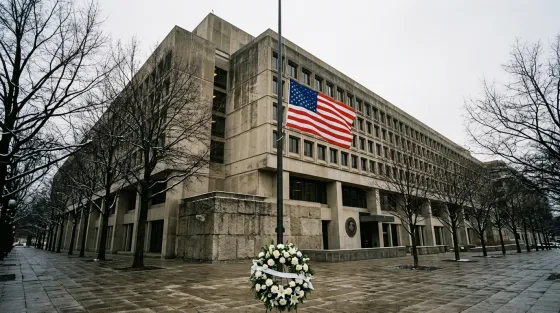
Mueller took the helm of the FBI in 2001, confirmed by the Senate in a rather emphatic 98-0 vote on 2 August. One week later, the September 11 attacks reshaped the agency's entire mission. He would go on to serve for 12 years, making him the longest-serving FBI director since J. Edgar Hoover, after President Obama requested he stay beyond the standard 10-year term.
Between leaving the Bureau in 2013 and his next act, Mueller kept busy at the law firm WilmerHale and did a stint as a Stanford professor. A quiet retirement, it was not.
The Investigation That Launched a Thousand Headlines
In May 2017, Mueller was appointed special counsel to investigate alleged Russian interference in the 2016 US presidential election. What followed was 22 months of relentless media coverage, political warfare, and enough legal drama to fill a Netflix series.
The resulting 448-page Mueller Report produced 37 indictments (34 individuals and 3 companies) and secured 7 guilty pleas. Notable figures caught in the net included Paul Manafort, who received a 7.5-year sentence on financial charges, and Roger Stone, convicted on 7 counts and sentenced to over three years before receiving a presidential pardon.
Crucially, the investigation did not establish that the Trump campaign conspired or coordinated with Russia. It did, however, detail 10 instances of potential obstruction of justice by then-President Trump, while declining to make a prosecutorial decision on the matter, citing longstanding Department of Justice policy against indicting a sitting president. The result was a conclusion that satisfied absolutely nobody, which in fairness might be the hallmark of genuine impartiality.
Reactions: Predictably Divided
The response to Mueller's death was characteristically split along political lines. Senator Mark Warner praised his "devotion to the rule of law," while Representative Dan Goldman called him "a true public servant."
Former President Trump, never one to let decorum get in the way of a post, took to Truth Social with a message that read: "Robert Mueller just died. Good, I'm glad he's dead. He can no longer hurt innocent people!"
Roger Stone, whose own legal fate was tangled up in Mueller's investigation, offered a more measured if pointed remark: "The judgement of Robert Mueller has moved to a much higher court."
The Verdict on Mueller
Mueller is survived by his wife of nearly 60 years, Ann Cabell Standish, their two daughters, and three grandchildren. His earlier career included prosecutions of Panama's Manuel Noriega and mob boss John Gotti, cases that would have been career-defining for most lawyers but barely register as footnotes in Mueller's extraordinary CV.
History will likely argue about Robert Mueller for decades. Was the investigation a necessary exercise in accountability, or an expensive political saga that changed very little? Reasonable people disagree. What is harder to dispute is that the man spent his entire adult life in service, whether in the jungles of Vietnam or the corridors of Washington. He did the work, filed the report, and let others do the shouting. In an era of performative outrage, that restraint might be his most unusual legacy.
Read the original article at source.