
The Pentagon Tried to Muzzle the Press. A Judge Just Said No.
A federal judge has ruled the Pentagon's press credentialing policy unconstitutional, finding it amounts to viewpoint discrimination against journalists.












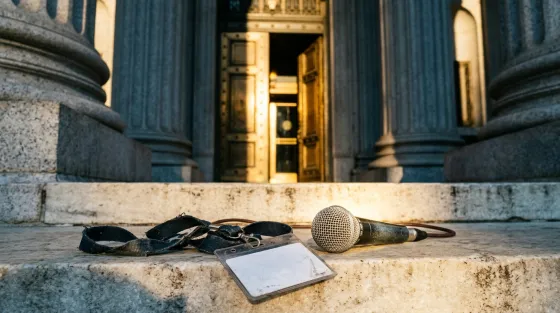
The Pentagon tried to put a muzzle on the press. A federal judge just yanked it off.
U.S. District Judge Paul L. Friedman ruled on 20 March 2026 that the Department of Defence's press credentialing policy violates both the First and Fifth Amendments to the U.S. Constitution. The 40-page ruling is a stinging rebuke of a policy introduced under Defence Secretary Pete Hegseth in September 2025, one which essentially asked journalists to pinky-promise they would not gather or report on information the Pentagon had not personally blessed.
Spoiler: the journalists said no.
What the Policy Actually Demanded
The Pentagon Facility Alternate Credentials (PFAC) policy required reporters to pledge they would not obtain or publish information that had not been officially cleared for release. Crucially, this was not limited to classified material. Even unclassified information was off the table unless the Pentagon had given its nod. The policy was updated in October 2025, but the core demand remained the same.
In practical terms, the government was asking journalists to agree not to do journalism. You can see why that might cause a spot of bother.
Nearly every major U.S. news outlet refused to sign up. The New York Times, Washington Post, CNN, NBC, CBS, ABC, NPR, and Fox News all declined. When outlets spanning the entire political spectrum agree on something, you know the policy has managed something truly remarkable: uniting an industry that can barely agree on font choices.
The Lawsuit and the Ruling
The New York Times, along with national security reporter Julian E. Barnes, filed suit in December 2025. Judge Friedman's ruling did not pull its punches. He found the policy amounted to viewpoint discrimination, writing that its "true purpose and practical effect" was "to weed out disfavoured journalists."
The evidence backing that finding was rather damning. Court proceedings revealed that right-wing influencer Laura Loomer was granted Pentagon tip line access, while the Washington Post's similar request was denied. If you are going to play favourites, at least try to be subtle about it.
The judge ordered the reinstatement of press badges for seven New York Times national security reporters and struck down the core provisions of the policy. He did, however, uphold some restrictions, including requirements for escorts when reporters move through certain areas of the Pentagon building. Fair enough. It is a military headquarters, after all, not a WeWork.
One particularly pointed line from the ruling noted that the First Amendment has "preserved the nation's security for almost 250 years." The maths puts it closer to 235, but the sentiment lands all the same.
Why This Matters Beyond the Beltway
Press freedom is not just an abstract constitutional principle. It is the mechanism by which the public learns what its government is actually doing, particularly in defence and national security. A policy that lets the government decide which journalists receive access based on whether it approves of their coverage is not credentialing. It is censorship with extra paperwork.
The Committee to Protect Journalists publicly welcomed the ruling, and rightly so. When press access becomes a reward for favourable coverage, accountability journalism dies on the vine.
What Happens Next
The Pentagon is not accepting this quietly. Department of Defence spokesperson Sean Parnell stated: "We disagree with the decision and are pursuing an immediate appeal." This fight is heading to the higher courts, where the constitutional questions will be tested once more.
For now, the ruling stands as a clear judicial statement: the government does not get to hand-pick its press corps based on editorial viewpoint. The First Amendment, as the judge reminded everyone, has been doing its job for a rather long time. It is not about to clock off now.
Read the original article at source.