
LaGuardia Airport Crash: A Fire Truck, a Landing Plane, and Ten Ignored Calls to Stop
Air Canada Flight 8646 hit a fire truck on an active runway at LaGuardia. Ten calls to stop were ignored. Here's what went wrong and why it matters.












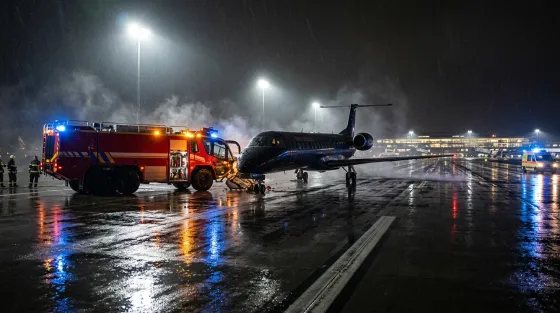
Late on Sunday night, Air Canada Flight 8646 touched down at LaGuardia Airport after an unremarkable journey from Montreal. What happened next was anything but unremarkable. The CRJ-900 regional jet, still decelerating on Runway 4, slammed into an airport fire truck at somewhere between 93 and 105 mph. Both pilots were killed. Of the 72 passengers and four crew on board, 41 were taken to hospital, though 32 have since been released.
This was not a mid-air disaster. It was a ground-level runway incursion. The plane had already landed. And that somehow makes it worse.
How a Fire Truck Ended Up on an Active Runway
This is where the story shifts from tragic to deeply frustrating. The fire truck was not there by accident or malfunction. It had been dispatched to handle a completely separate incident: United Flight 2384 had aborted takeoff after an anti-ice warning light appeared and a cabin odour began sickening flight attendants. Air traffic control cleared Truck 1 to cross Runway 4 at taxiway Delta.
Then, apparently realising the error, the controller began shouting "stop" - at least ten times, according to audio recordings. The truck did not stop. The plane could not stop. Two pilots are dead because of it.
The ATC Audio That Has Everyone Talking
Within hours of the collision, ATC audio started circulating online, and one line in particular has drawn sharp attention. After the impact, the controller can be heard saying: "I messed up."
It is a remarkably candid admission in an industry built on precise, emotionless communication. Whether that statement reflects the full picture or simply a moment of shock remains to be seen. The NTSB is leading the investigation, and Transportation Secretary Sean Duffy has confirmed his office is looking into whether ATC staffing levels played a role. Given the well-documented concerns about controller fatigue and understaffing across US airports, that question practically answers itself - though the investigation will need an estimated 12 to 18 months to deliver official findings.
The Flight and the Crew
Flight 8646 was operated by Jazz Aviation on behalf of Air Canada. One report from CBS News identifies the captain as Laura Einsetler, said to have over 30 years of flying experience, though this has not been independently confirmed by other outlets at the time of writing. What is confirmed is that both the captain and first officer lost their lives on what should have been a routine landing.
The Fallout
LaGuardia was shut down entirely and remained closed until at least 2 p.m. on Monday, with more than 500 flights cancelled across the network. Port Authority Executive Director Kathryn Garcia addressed the situation, and Canadian Prime Minister Mark Carney called the incident "deeply saddening." No foul play or terrorism is suspected.
What Happens Next
The NTSB investigation will piece together the full chain of events, from the initial clearance given to the fire truck through to the controller's desperate attempts to halt it. Even the exact time of the collision is still in dispute - sources place it variously at 11:38 p.m., 11:40 p.m., or 11:47 p.m. on Sunday night - which gives you some idea of how much basic detail still needs nailing down.
What is already clear is this: a plane had landed, a fire truck crossed its path, and somewhere in the chain of communication between human beings and machines, something went catastrophically wrong. The question is not whether the system failed. It is how many parts of it failed at once.
Read the original article at source.