
Iran Strikes Near Dimona Nuclear Site as Israel's Interceptors Fail Their One Job
Iranian ballistic missiles hit near Israel's Dimona nuclear research centre, wounding over 100. Israel confirms its interceptors failed to stop the incoming fire.












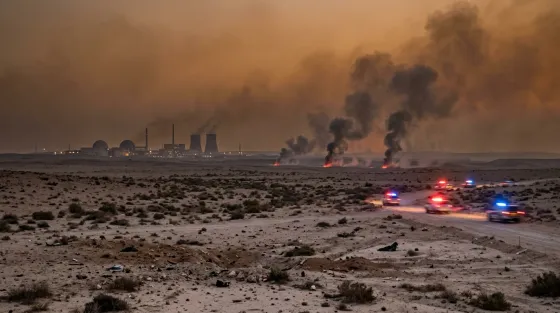
Three weeks into the 2026 Iran war, and the conflict just found a new gear that nobody with a functioning survival instinct wanted it to reach. Iranian ballistic missiles struck near Israel's Shimon Peres Negev Nuclear Research Centre in Dimona, wounding over 100 people across the surrounding area. The IAEA has since called for "maximum military restraint," which at this point feels rather like suggesting an umbrella in a hurricane.
What Actually Happened
On Day 22 of the conflict, Iranian missiles hit near the Dimona nuclear research centre and the nearby city of Arad. At least 39 people were wounded in Dimona, where a three-storey building was completely flattened and a 10-year-old boy was left in critical condition with multiple shrapnel wounds. In Arad, 88 people were injured, 10 of them seriously.
Israeli firefighters confirmed two direct hits from ballistic missiles carrying warheads weighing hundreds of kilograms. This marked the first time Israel's nuclear research centre had been targeted since the war began on 28 February.
Israel's Interceptors Had One Job
Here is where things get particularly uncomfortable for Israel's defence establishment. The Israeli military confirmed that interceptors were launched to counter the incoming missiles. They also confirmed those interceptors failed to hit their targets. The missiles got through.
For a nation that has built its entire security doctrine around layered missile defence, this is not a minor footnote. It is a headline.
The Natanz Factor
Iran framed the strikes as direct retaliation for an earlier attack on its Natanz nuclear enrichment complex, located roughly 220 km southeast of Tehran. Iranian officials reported no radioactive leakage from Natanz, but the political damage was already done. Tehran's message was unmistakable: you hit our nuclear site, we strike near yours.
The operative word there is "near." The IAEA confirmed that the Dimona facility itself sustained no damage and that radiation levels remained normal. Small mercies in a conflict that seems determined to test every red line on offer.
The Escalation Ladder Is Getting Crowded
The broader picture is dizzying. Since 28 February, over 1,500 Iranians have been killed (including more than 200 children), 15 Israelis have died from Iranian missile strikes, and at least 13 US military personnel have lost their lives.
On the same day as the Dimona strikes, Iran attempted to hit the US-UK Diego Garcia base some 4,000 km away (unsuccessfully), Saudi Arabia shot down 20 Iranian drones, and a missile alert sounded in Dubai. The spillover is very real.
Israeli Army Chief General Eyal Zamir described the campaign as being at the "halfway" stage. Prime Minister Netanyahu called it "a very difficult evening in the campaign for our future." The US, meanwhile, was deploying three additional amphibious assault ships and 2,500 more Marines to the region, even as President Trump floated "winding down" operations while ruling out a ceasefire with Iran. Mixed messaging at its finest.
The Nuclear Shadow
The Dimona centre, opened in 1958 and built secretly with French assistance, sits at the heart of Israel's undeclared nuclear programme. Israel has never officially confirmed possessing nuclear weapons, though it is widely believed to have developed them by the late 1960s.
Iran had an estimated 440 kg of enriched uranium before the conflict, with the bulk now reportedly buried beneath rubble at Isfahan. When both sides have already struck at or near each other's nuclear infrastructure, the IAEA's plea for restraint starts to feel like asking two boxers in round seven to consider a friendly handshake instead.
With nuclear facilities now in the crosshairs on both sides, this conflict has entered genuinely uncharted territory. The question is no longer whether further escalation is possible, but whether anyone involved has the will to stop it.
Read the original article at source.