
I Got a Heat Pump and I Love It. My Bank Account? Not So Much.
I switched to a heat pump and it works brilliantly. But with UK electricity prices still high, the savings aren't what you'd expect. Here's my honest take.












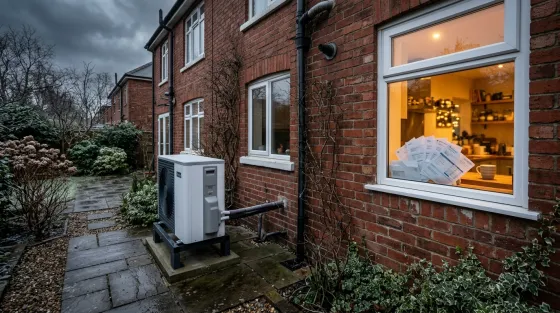
The Government Wants Us All on Heat Pumps. The Maths Isn't Quite There Yet.
Let me be upfront: I'm a heat pump convert. The thing works brilliantly. My house is warm, the radiators do their job, and I sleep soundly knowing I'm not burning fossil fuels to keep my toes from going numb. So why am I writing this with a slight grimace? Because my wallet hasn't quite joined the fan club yet.
The UK government is pushing heat pumps hard. There are grants, incentives, and enough ministerial enthusiasm to heat a small village. The target is ambitious: millions of installations by 2035 as part of the broader net zero strategy. And on paper, it all makes perfect sense. Swap your gas boiler for an air source heat pump, slash your carbon emissions, and ride the wave of clean energy into a greener future.
The Reality of Running Costs
Here's where the dream gets a cold splash of reality. Electricity in the UK remains significantly more expensive than gas per unit. A heat pump is far more efficient than a boiler, pulling roughly three units of heat from every unit of electricity. But even with that clever trick, the running costs don't automatically drop below what you'd pay with a decent gas boiler. For some households, they can actually creep higher.
The upfront cost is the other elephant in the room. Even with the Boiler Upgrade Scheme knocking a chunk off the price, you're still looking at several thousand pounds more than a like-for-like boiler replacement. That's a big ask for families already stretched thin by the cost of living.
So Why Bother?
Because the direction of travel is clear. Gas prices are volatile and tied to geopolitical chaos. Electricity is increasingly generated from renewables, meaning your heat pump gets greener every year without you lifting a finger. The government is also under pressure to rebalance energy levies, shifting green taxes off electricity bills and onto gas. When that happens, and most analysts expect it will, the economics flip dramatically in the heat pump's favour.
There's also the comfort factor, which doesn't show up on a spreadsheet. Heat pumps deliver a steady, even warmth rather than the boom-and-bust cycle of a gas boiler firing up and shutting down. Once you've lived with it, going back feels like swapping a thermostat for a campfire.
What Needs to Change
For heat pumps to become a genuine no-brainer for ordinary households, a few things need to happen:
- Electricity prices need to come down relative to gas. Policy reform on energy levies would help enormously.
- Installation costs need to fall. More trained installers and greater competition will drive prices down over time.
- Better public information is essential. Too many people still think heat pumps only work in new-builds or that they need underfloor heating. Neither is true.
The Verdict
If you're motivated by sustainability and can absorb the upfront cost, a heat pump is a genuinely excellent bit of kit. It works, it's reliable, and it future-proofs your home. But if you're hoping it'll save you money right now compared to a gas boiler, you'll likely be disappointed. The savings are coming, but they're not here yet.
The honest take? Heat pumps are a brilliant long-term bet on a system that hasn't quite caught up with them. Early adopters are paying for the privilege of being right before the market agrees with them. That's either admirable or irritating, depending on how you feel when the energy bill lands.
Read the original article at source.