
Hong Kong Now Wants Your Phone Password, and 'No' Could Land You in Prison
Hong Kong's new national security rules make refusing to unlock your phone for police a criminal offence, with up to three years in prison for non-compliance.












Your Passcode or Your Freedom
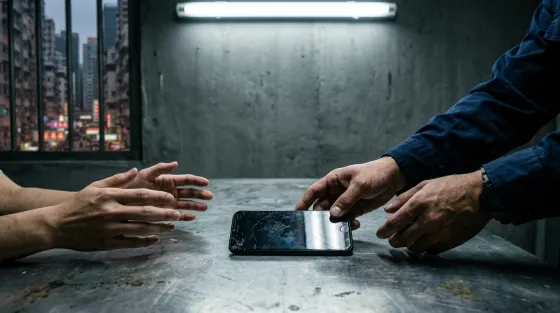
Hong Kong has just made it a criminal offence to refuse handing over your phone password to police. Under freshly gazetted amendments to the city's national security rules, officers can now compel individuals to unlock their devices, and anyone who declines faces up to a year behind bars and a fine of HK$100,000 (roughly £9,600). Try lying about it instead? That earns you up to three years in prison and a HK$500,000 fine. So much for "I forgot my passcode."
What Exactly Changed?
The amendments, published on 23 March 2026, were drawn up by Chief Executive John Lee in conjunction with the Committee for Safeguarding National Security. Notably, these changes bypassed Hong Kong's legislative council entirely. The new powers allow police officers holding a magistrate's warrant, or those ranked assistant commissioner and above, to demand passwords and decryption keys in the course of national security investigations.
Here is the part that should make civil liberties advocates particularly uneasy: there is no exemption for self-incrimination. That means you must hand over your password even if doing so would directly incriminate you, breach confidentiality obligations, or violate disclosure restrictions. The right to remain silent, it seems, does not extend to your lock screen.
Not Just Phones
The amendments go beyond device passwords. The police commissioner can now compel organisations suspected of being external political groups or foreign agents to provide information and submit their office-bearers to questioning. Customs officers have also been handed new powers to seize "seditious articles" arriving from overseas, including books and publications. Penalties for overseas political organisations that fail to provide requested information have been doubled, jumping from six months to one year of imprisonment.
The Bigger Picture
These changes represent the second amendment to the implementation rules of Hong Kong's National Security Law since it was imposed by Beijing in 2020, following the massive pro-democracy protests of 2019. The first was a technical amendment back in 2023. A separate piece of legislation, the Safeguarding National Security Ordinance (Article 23), was enacted in March 2024, adding offences like treason, insurrection, and espionage to the legal toolkit.
The numbers tell their own story. According to Hong Kong Free Press, as of 1 March 2026, a total of 389 people have been arrested under national security provisions. Of those, 208 individuals and five companies have been charged, with 179 people and four companies convicted. The most high-profile case remains that of media tycoon Jimmy Lai, who was sentenced to 20 years in prison on 9 February 2026.
Why This Matters Beyond Hong Kong
For residents, the practical implications are stark. Your phone is no longer just a personal device; it is a potential evidence locker that authorities can crack open on demand. The absence of any self-incrimination safeguard fundamentally alters the relationship between citizen and state when it comes to digital privacy.
For the international community, the amendments add another layer to the ongoing debate about Hong Kong's autonomy and civil freedoms. Tech companies, journalists, and NGOs operating in the region will need to reassess their digital security postures rather urgently.
It is worth noting that Hong Kong already had some decryption powers under existing ordinances like UNATMO and OSCO, but those required materials to be presented in "visible and legible form" rather than explicitly demanding passwords. This amendment removes any ambiguity about what authorities can ask for.
The Verdict
Whether you view this as a necessary security measure or a troubling erosion of digital rights depends largely on how much faith you place in the phrase "national security." What is beyond debate is that Hong Kong's legal landscape has shifted once again, and your phone's lock screen just became a lot less private.
Read the original article at source.