
Farage Frames Local Elections as a Starmer Report Card, and He's Betting Big
Reform UK launches its May 2026 local election campaign with Nigel Farage framing 5,000 council seats as a verdict on Keir Starmer's Labour government.








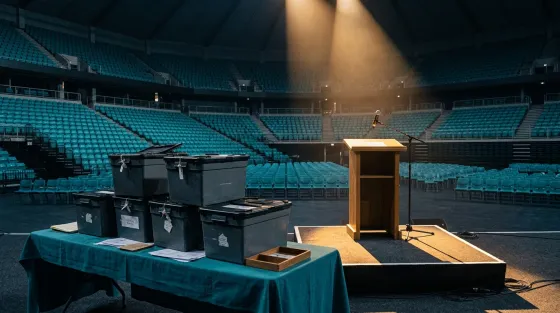
Reform UK goes all in on the council chamber
Nigel Farage has never been one for quiet entrances. On 26 March, the Reform UK leader descended upon Sunderland Live Arena in Houghton-le-Spring to officially launch his party's campaign for the English local elections on 7 May 2026. His message? These are not just local elections. They are, in his words, a referendum on Keir Starmer's Labour government.
It is a bold framing, but then boldness has always been the Farage brand.
The stakes are genuinely massive
Around 5,000 seats across 136 local councils are up for grabs this May, and Reform is treating every single one of them like a battlefield. That is not entirely bluster, either. At the 2025 local elections, Reform won the largest number of seats of any party in England, taking control of 10 councils outright, including heavyweights like Durham and Kent.
For a party that spent years being dismissed as a single-issue protest outfit, running actual councils is quite the glow-up.
A legal scrap that paid off
Part of the reason this election cycle is so large is down to Reform itself. The government initially allowed 30 councils to postpone their elections as part of local government reorganisation plans. Reform mounted a legal challenge, and ministers were forced into a rather embarrassing U-turn in February 2026, scrapping the postponements entirely.
To add salt to the wound, the government agreed to cover Reform's legal costs. Farage could not have scripted a better campaign warm-up if he had tried.
Defections and rallying cries
The Sunderland rally was not short on theatrics. Among the headline moments was the announcement that Aaron Roy, a Hartlepool councillor, had left Labour and would be joining Reform. Roy had previously resigned from the Labour group over council tax rises, so his arrival on Farage's stage carried a neat narrative: disillusioned Labour voters finding a new home.
Whether that narrative holds up to scrutiny across the country remains to be seen. Labour has been quick to point out that Reform-controlled councils have not exactly been immune to council tax increases themselves. Politics, as ever, is messier than the slogans suggest.
Beyond England
It is worth noting that 7 May is not just about English councils. Voters in Scotland and Wales will also be electing representatives to their national parliaments on the same day, making this one of the most consequential polling days in recent memory.
For Reform, though, the English councils are the prize. The party reportedly claims to have identified some £700 million in savings across the 12 councils it currently controls. Polling suggests Labour could lose heavily in northern metropolitan boroughs, with Reform also projected to take control of county councils in Essex, Norfolk, and Suffolk.
So, is it actually a referendum on Starmer?
Farage wants voters to treat their local ballot paper as a verdict on the national government. It is a well-worn tactic, and one that tends to work when the governing party is on the back foot. Local elections have always been part beauty contest, part protest vote.
The real question is whether Reform can translate rally energy and legal victories into the grinding, unglamorous work of running councils well. Winning seats is one thing. Filling potholes, balancing budgets, and keeping the bins collected is quite another.
Farage, the Clacton MP, has built a career on insurgency. The next chapter will test whether his party can do something arguably harder: govern competently at the local level while simultaneously campaigning as the anti-establishment outsiders.
That is a tricky circle to square, but if anyone enjoys a political tightrope walk, it is Nigel Farage.
Read the original article at source.