
Verstappen Stuck in P11 Purgatory as F1's New Rules Turn Suzuka Upside Down
Max Verstappen's Suzuka dominance ends as new 2026 energy rules leave him stuck in P11. How F1's regulation changes turned the grid on its head at the Japanese GP.












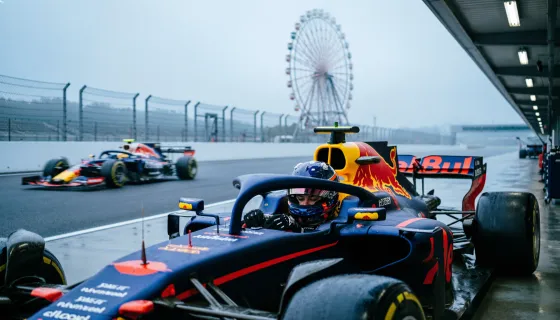
The King of Suzuka Has Been Dethroned (Temporarily, He Hopes)
If you had told anyone six months ago that Max Verstappen would qualify 11th at Suzuka, three places behind his own team-mate, you would have been politely escorted from the paddock. Yet here we are. The four-time world champion, a man who has won the last four Japanese Grands Prix from pole position (2022 through 2025, with COVID cancelling the 2020 and 2021 editions), finds himself staring at the back of ten cars on the grid. His last failure to secure pole at this circuit? 2019, when Sebastian Vettel nabbed it and Valtteri Bottas took the win.
Something has gone spectacularly sideways, and it is not just Verstappen's RB22.
Energy Management: The Elephant in the Pit Lane
The 2026 regulations promised a brave new world of roughly 50-50 power split between internal combustion and electrical energy. What they have delivered, at least so far, is a masterclass in how to make the fastest drivers on Earth look like they are nursing a dodgy battery on a Tuesday morning commute.
Verstappen has never been one to mince words. Earlier this season he compared the new cars to "Mario Kart" and "Formula E on steroids", which is the kind of review that keeps FIA officials up at night. During Q2 at Suzuka, he went further still, calling his car "completely undriveable" over team radio before being unceremoniously eliminated.
He is not alone in his frustrations. Reigning World Champion Lando Norris, who qualified fifth (a full 0.631 seconds behind polesitter Kimi Antonelli's 1m28.778s), reported losing 56km/h on the straights due to energy deployment issues. Lewis Hamilton, now sporting Ferrari red, qualified sixth and estimated he lost 0.25 seconds on the back straight alone. When three of the sport's biggest names are all singing from the same hymn sheet, perhaps the hymn sheet needs rewriting.
The FIA's Patchwork Fix
To their credit, the FIA did attempt a pre-qualifying adjustment, reducing the maximum permitted energy recharge from 9.0 MJ to 8.0 MJ in response to driver complaints about excessive lifting and coasting. The intention was sound. The result? Drivers still complained, and Haas' Oliver Bearman argued the tweak actually made cars slower overall. Not exactly the ringing endorsement the rule-makers were after.
Nicolas Tombazis, the FIA's single-seater director, has confirmed that a meeting will take place after this race weekend to discuss qualifying rule changes, with further discussions scheduled before the Miami Grand Prix. The phrase "a lot of stuff to figure out" might be the understatement of the season.
Meanwhile, at the Front of the Grid
While Verstappen wrestles with existential questions about his car (and reportedly his future in the sport entirely), 21-year-old Kimi Antonelli claimed his second consecutive pole for Mercedes. It is a striking image: the old guard struggling with regulations that the younger generation seem marginally better equipped to handle, or at least less vocal about loathing.
Over at Red Bull, rookie Isack Hadjar quietly slotted his car into eighth place, outqualifying his illustrious team-mate by three positions. Andrea Stella's McLaren operation and Carlos Sainz's Williams outfit, where the Spaniard also serves as GPDA director, will be watching the post-race rule discussions with keen interest.
What Happens Next
The race gets underway at 06:00 BST on Sunday, and Verstappen has pulled off remarkable recovery drives before. But the bigger question is not whether he can scrap his way through the field at Suzuka. It is whether F1's rule-makers can fix an energy management system that is turning qualifying into a conservation exercise before the fans lose patience entirely.
The talent is still there. The cars just need to let it show.
Read the original article at source.