
Ventilator Tug of War: Ukraine Volunteer Accuses Welsh MP of Nicking His Idea for Cuba
A Welsh volunteer says Labour MP Steve Witherden hijacked his plan to send 40 unused NHS ventilators to Ukraine, redirecting them to Cuba instead.












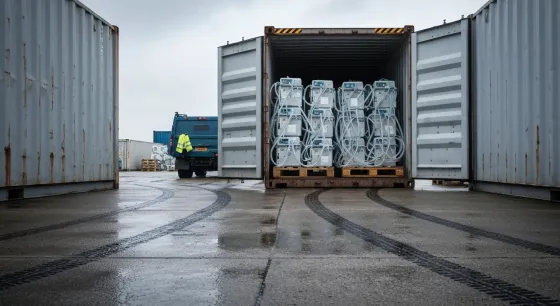
It is not every day a row over 40 dusty ventilators in a shipping container becomes a parliamentary scandal, but here we are. A Welsh volunteer says a Labour MP pinched his plan to ship unused NHS kit to Ukraine and quietly redirected the idea towards Cuba instead. Cue raised eyebrows, a complaint to the standards watchdog, and a very awkward silence from the MP in question.
What actually happened
Steve Eccleshall, who runs the charity Driving Ukraine, says he met Steve Witherden, the Labour MP for Montgomeryshire and Glyndŵr, on 6 February to pitch a tidy little plan. Forty ventilators, supplied by the Welsh government during the pandemic, have been sitting unused in a shipping container at Wrexham Maelor Hospital. They are not compatible with the hospital's systems, so they are essentially expensive paperweights with wheels.
Eccleshall wanted them sent to Ukraine, where hospitals are still patching up casualties from a grinding war. Reasonable enough, you might think.
Three days later, on 9 February, Witherden reportedly fired off a letter to the Betsi Cadwaladr health board. The pitch was almost identical, but with one rather important plot twist: the ventilators should go to Cuba, not Ukraine.
Why Cuba, and why now
This is where the story gets a bit more textured. Witherden chairs the All-Party Parliamentary Group on Cuba and is a known supporter of the Cuba Solidarity Campaign. According to his letter, he visited the island last October, although that visit has not been independently confirmed.
Cuba has been under a US blockade since 1960, and the screws were tightened again after Donald Trump returned to the White House. Medical supplies on the island are genuinely thin on the ground, so an MP with Cuba sympathies wanting to help is not, on its own, a scandal. The question is whether he borrowed someone else's homework to do it.
The plagiarism allegation
Eccleshall is not pulling his punches. He has filed a complaint with the Parliamentary Standards Commissioner, claiming Witherden lifted his idea, his research and even chunks of his pitch, then swapped the destination on the address label.
It is a juicy accusation. MPs are expected to credit constituents who bring them ideas, not repackage them as their own three days later with a different beneficiary at the end.
For his part, Witherden has not responded to the BBC's requests for comment, which means his side of the story is, at the time of writing, a blank page. That is worth keeping in mind before anyone reaches for the pitchforks.
The ventilators nobody can use
Let us pause on the kit itself, because it is quietly absurd. Forty ventilators, bought in a national panic during Covid, sitting in a metal box outside a hospital because they do not plug into anything the NHS uses. Five years on, they are still there.
Betsi Cadwaladr health board has confirmed it received both donation requests and is now wading through the financial and governance implications. The ventilators are technically health board assets, so any handover needs the Welsh government's blessing. So far, no formal request has reached ministers.
Ophthalmic equipment was also on the list, although the board is leaning towards keeping that for clinical use rather than gifting it abroad. Sensible.
Why this matters beyond a Welsh row
It would be easy to write this off as a parochial spat. Two blokes called Steve, a shipping container, a strongly worded letter. But there are a few threads worth pulling.
Trust between MPs and constituents
People bring ideas to their MPs all the time, often without paperwork or a paper trail. The relationship runs on good faith. If volunteers feel their work can be quietly hoovered up and rebadged, that good faith curdles fast.
Foreign policy by donation
Where surplus NHS kit ends up is not just a logistics question. Sending it to Ukraine sends one message. Sending it to Cuba, in the teeth of a US blockade, sends another entirely. Both are defensible. Both are political. Pretending otherwise is a bit cute.
The standards system
The Parliamentary Standards Commissioner gets a steady drip of complaints, most of which never make headlines. This one might, if only because the alleged offence is so specific and the paper trail so short. Three days, two letters, one borrowed idea.
Reading between the lines
A few things are still unclear, and it is worth flagging them rather than papering over the cracks.
- We do not know exactly what Eccleshall and Witherden discussed in that 6 February meeting, only what Eccleshall says was discussed.
- Witherden's October trip to Cuba is mentioned in his own letter but has not been independently verified.
- The health board has not decided on either donation, so nothing has actually moved.
In other words, this is a complaint and a story, not yet a verdict. The standards process will do its thing, and Witherden may yet offer an explanation that reframes the whole episode.
The bigger picture for UK readers
For anyone watching from the rest of the UK, there are a couple of takeaways. First, pandemic-era spending is still washing up on the shore in odd ways, including ventilators we never used and probably should have audited years ago. Second, the politics of where surplus aid goes are sharper than ever, with Ukraine, Gaza and Cuba all jostling for sympathy and supplies.
And third, if you are a constituent with a good idea, get it in writing before you take it to your MP. Email it to yourself, copy in a friend, do whatever it takes. A timestamp is a wonderful thing.
The verdict
Right now, Witherden has questions to answer and has not answered them. Eccleshall has a complaint in the system and a story that, on the dates alone, looks awkward for the MP. The ventilators, meanwhile, remain exactly where they have been for years: in a container, going nowhere, while two countries that could genuinely use them wait to see who wins the paperwork.
It is a small story with surprisingly long shadows. Worth keeping an eye on.
Read the original article at source.