
The UN Just Voted on Slavery Reparations. Now Comes the Hard Part.
The UN General Assembly voted 123-3 for slavery reparations. With figures reaching $107 trillion and no binding power, the real battle is just beginning.












A Historic Vote With a Very Complicated Aftermath
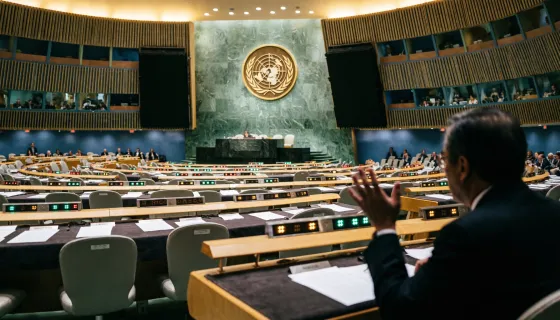
On 25 March 2026, the United Nations General Assembly did something remarkable: it passed a resolution declaring the transatlantic slave trade the gravest crime against humanity, and called on nations that profited from it to pay reparations. The vote landed 123 in favour, 3 against and 52 abstentions. If you are wondering which three countries said no, it was the United States, Argentina and Israel. The United Kingdom and all 27 EU member states opted for the diplomatic equivalent of looking at their shoes and saying nothing.
The resolution, timed to coincide with the International Day of Remembrance of Victims of Slavery, is non-binding. That is the polite way of saying nobody actually has to do anything. But politically, it carries weight. African and Caribbean nations have been pushing for this moment for decades, and 123 votes is not a number you can casually wave away.
The Numbers That Make Treasuries Nervous
Between the 15th and 19th centuries, an estimated 12 to 15 million African men, women and children were captured and trafficked to the Americas. Around two million never survived the crossing. Brazil alone received roughly 4.9 million enslaved people, making it the single largest destination of the trade.
So what does the bill look like? Well, that depends on who is doing the maths. In 2023, the Caricom Reparations Commission presented a study claiming 15 Caribbean nations were owed at least $33 trillion. Judge Patrick Robinson of the International Court of Justice commissioned a separate report from the Brattle Group consulting firm, which landed on an even more eye-watering figure: $107 trillion, owed by 31 countries. For context, the entire US federal budget for 2025 was $7.1 trillion. So we are talking about roughly 15 times that amount, which is the sort of number that makes finance ministers develop a sudden interest in early retirement.
The Precedent Problem
Reparations are not without precedent. Germany has paid more than $80 billion to Jewish victims of the Nazi regime since 1952, a programme that continues to this day. The Netherlands apologised for its role in slavery in 2022 and established a fund of roughly $230 million. These examples show reparations can work in practice, though the scale being discussed for transatlantic slavery is in a different universe entirely.
Then there is the United Kingdom, which has form on paying reparations for slavery, just not to the people you might expect. After abolition in the 1830s, the British government compensated slave owners to the tune of what would be more than $21 billion in today's money. The enslaved people themselves got nothing. It is one of those historical details that somehow manages to get worse the longer you think about it.
Words Are Cheap. Cash Is Not.
Western nations have generally preferred the apology route over the chequebook route. Tony Blair said in 2007 that he was sorry for Britain's role in the slave trade, though critics noted it fell somewhat short of a formal state apology. Barack Obama told Ta-Nehisi Coates in 2016 that reparations were politically unworkable. And UK Foreign Secretary David Lammy said during a visit to Nigeria in November 2024 that reparations "is not about the transfer of cash."
Deputy US ambassador Dan Negrea opposed the resolution outright, arguing it creates a hierarchy of human rights violations. The EU's abstention suggested a bloc that recognises the moral weight of the argument but is not ready to open its wallet.
What Happens Next?
Realistically, do not expect cheques in the post. Non-binding resolutions do not compel action, and the figures being discussed are so large they border on the abstract. But the vote shifts the conversation. It puts reparatory justice firmly on the international agenda and makes it harder for former colonial powers to treat the subject as settled history. The resolution also calls for the return of cultural artefacts and archives to their countries of origin, adding another layer of complexity.
UN High Commissioner Volker Turk said in September 2025 that reparatory justice must include reparations in various forms. Whether that means direct payments, development funds, debt cancellation or something else entirely remains an open and very expensive question.
Read the original article at source.