
Tehran Says Washington Has Replied to Its Latest Peace Plan, and Trump Is Already Grumbling
Tehran's 14-point counter-offer lands in Washington. Trump says it likely won't be acceptable. Here's what Iran is actually asking for.












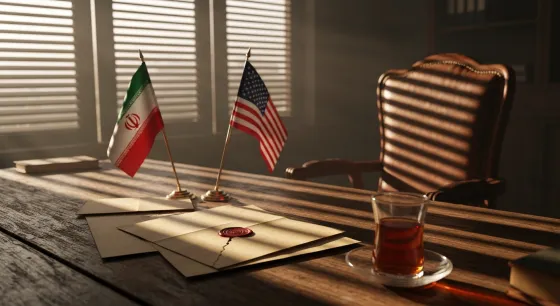
Diplomacy by post-it note continues. Iran says the United States has officially responded to its latest peace proposal, the 14-point counter-offer Tehran handed over via Pakistan in the long-running effort to turn April's shaky ceasefire into something resembling an actual end to the war.
The mood music is not exactly hopeful. Before he had even read the thing on Saturday, US President Donald Trump told reporters he could not imagine it 'would be acceptable'. A ringing endorsement, that.
What Iran Is Actually Asking For
Iran's 14-point plan, delivered through Pakistani intermediaries, is more ambitious than the American draft it is responding to. Where Washington offered a 9-point plan built around a two-month ceasefire, Tehran wants the war wrapped up inside 30 days. Not paused. Not frozen. Finished.
According to reporting from NPR, Al Jazeera and Iranian state media, the Iranian proposal also bundles in a long shopping list of grievances. Reports outside the BBC's write-up indicate the document calls for the lifting of sanctions, the release of frozen Iranian assets, reparations, a new governance mechanism for the Strait of Hormuz and explicit guarantees of Iran's right to enrich uranium under the Non-Proliferation Treaty.
Iran is, for the record, the only non-nuclear-armed state currently enriching uranium at close to weapons-grade purity, which is precisely why that last point is going to make American negotiators wince into their coffee.
The Lebanon Clause
One detail worth noticing: Tehran wants 'all hostilities' included, not just the Iran-US-Israel triangle. That is a pointed reference to Lebanon, where Israeli and Hezbollah forces have continued trading fire despite the formal ceasefire that took effect on 8 April 2026.
For Iran, leaving Lebanon out would mean signing a peace deal while one of its closest regional allies keeps getting hit. From Tehran's point of view, that is not peace, it is a rebrand.
How We Got Here
A quick recap for anyone who has been admirably ignoring the news. The current conflict kicked off on 28 February 2026, when the US and Israel launched coordinated strikes on Iranian targets. Trump formally notified Congress on 2 March, starting the 60-day clock under the War Powers Resolution.
That clock ran out on Friday 1 May. Trump's response was to tell lawmakers that hostilities had been 'terminated', which is convenient terminology if you would rather not seek congressional authorisation. Constitutional scholars including Michael Glennon at Tufts have publicly disputed the idea that a ceasefire pauses the War Powers clock, but for now the administration's position is that there is nothing left to vote on.
Pakistan, which brokered the original April ceasefire, has stayed on as the postman. Given that the two parties cannot bear to be in the same room, having a third country shuttling drafts around is not a luxury, it is the whole mechanism.
Trump's Pre-Emptive Thumbs-Down
Trump's gloomy assessment before reading the proposal is classic negotiating theatre. Rule one of haggling is to never seem keen, and the President is nothing if not a man who has read rule one.
It is also true, though, that the Iranian proposal genuinely asks for a lot. Sanctions relief, asset releases and an enrichment guarantee would each be politically explosive in Washington on their own. Bundled together with reparations and a Hormuz arrangement, they form a package that no US administration would sign without significant changes.
That does not mean it is dead on arrival. It means we are at the part of the negotiation where everyone scowls in public and edits in private.
The Politics Back Home
Trump is also negotiating with his own party. Senator Josh Hawley of Missouri has publicly called for winding down the conflict, while Senator Lisa Murkowski of Alaska has cast doubt on whether the original operation actually achieved its objectives. When Republican senators start asking what the war was for, the political ground has already shifted.
Add to that Trump's own description of the ongoing naval posture in the Gulf as 'a very friendly blockade', a phrase that manages to be both reassuring and faintly menacing in the same breath, and you have an administration that wants the war over but on its own terms.
Why This Matters in Britain
For UK readers, this is not just a faraway diplomatic spat. Around 20 per cent of the world's oil moves through the Strait of Hormuz, which is one reason Iran's proposal puts a governance mechanism for the Strait on the table. Petrol prices, shipping insurance and the cost of a weekly food shop are all quietly tied to whether tankers keep moving.
There is also the small matter of the Non-Proliferation Treaty. Britain is a signatory, and any deal that formally blesses near-weapons-grade Iranian enrichment would set a precedent that ripples well beyond the Middle East. Whitehall will be watching the small print very carefully.
What Happens Next
Expect a counter-counter-proposal. Trump's team will almost certainly send back a redlined version that strips out the most awkward Iranian asks, particularly anything resembling reparations or an enrichment guarantee, and tries to stretch the 30-day deadline back towards the original two months.
Iran, having played its strongest hand, can afford to soften some demands while holding firm on others. The Lebanon clause and the sanctions question are the likely red lines. Enrichment is the one that could blow the whole thing up.
If a deal does come together, it will not be because anyone has had a change of heart. It will be because both sides have run out of cheaper alternatives. Trump wants to claim he ended a war. Tehran wants the bombing to stop and the money to flow. Pakistan wants the diplomatic credit. The shape of an agreement is there, even if the words are not.
The Verdict
Saturday's exchange of papers is not a breakthrough, but it is not a breakdown either. Both sides are still talking, still using the same intermediary, and still pretending in public that the other is being unreasonable. That, depressingly, is what progress looks like in 2026.
Worth watching: whether Trump's 'cannot imagine it would be acceptable' hardens into a formal rejection in the next few days, and whether Pakistan signals any willingness to keep ferrying drafts. If either fails, the ceasefire that started on 8 April starts looking a lot more fragile.
Read the original article at source.