
Starmer Puts Social Media Giants on Notice: Your Addictive Tricks Are Running Out of Time
Keir Starmer warns Big Tech that addictive features like infinite scrolling and streaks are on borrowed time, as a landmark US verdict fuels global pressure.












The PM Has Had Enough of Infinite Scrolling
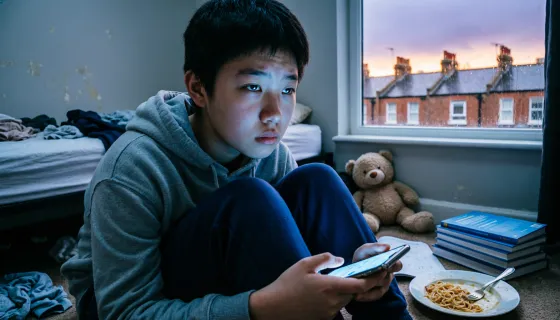
Keir Starmer has fired a warning shot across the bows of Big Tech, declaring that addictive social media features designed to hook young users "shouldn't be permitted." In an interview with the Sunday Mirror, the Prime Minister made clear his government is gearing up for a proper crackdown on the digital tricks keeping children glued to their screens.
"This is the platforms trying to get children to stay on for longer, to get addicted," Starmer said, singling out features like infinite scrolling and "streaks" that reward daily use. For the uninitiated, streaks are those delightful little counters that make teenagers feel like the world will end if they don't open Snapchat for a single day. Healthy stuff, obviously.
A Landmark US Verdict Adds Fuel to the Fire
Starmer's comments come hot on the heels of a potentially precedent-setting court ruling in California, where a jury found both Meta and Google liable for a young woman's childhood social media addiction. The plaintiff, a 20-year-old identified as KGM from Chico, California, was awarded $6 million (roughly £4.4 million) in damages, split between $3 million in compensatory damages and $3 million in punitive damages. Meta was found liable for 70% of the bill, with Google picking up the remaining 30%.
The case is the first of its kind to reach a full trial, but it certainly will not be the last. An estimated 1,500 to 2,000 similar lawsuits are currently pending across the United States. Both Meta and Google have confirmed they plan to appeal, because of course they do.
Starmer described the US decision as potentially "a turning point" that could lead to "much stricter content restriction" globally. Given the sheer volume of cases waiting in the wings, comparisons to the 1990s legal battle against Big Tobacco are starting to feel less hyperbolic by the day.
What the UK Government Is Actually Planning
This is not just tough talk. The government is already running a formal consultation on banning social media outright for under-16s, which opened on 2 March 2026 and closes on 26 May 2026. The House of Lords has backed such a ban twice, most recently on 25 March, though the Commons has so far preferred a more flexible approach with broad "power to act" provisions rather than an immediate blanket prohibition.
On 27 March, Starmer visited Rosendale Primary School in West Dulwich, south London, where he told parents bluntly that tech companies "want more children to spend more time online." The same day, the government released new screen time guidance recommending zero screen time for children under two and a maximum of one hour per day for ages two to five.
Education Minister Josh MacAlister did not mince words either, describing what has happened as "a complete rewiring of childhood" over the past decade. It is a phrase that lands harder when you consider internal Meta documents revealed during the US trial, including one that read: "If we wanna win big with teens, we must bring them in as tweens." Charming corporate strategy, that.
Will It Actually Make a Difference?
A government source pointed to the earlier confrontation with X and Elon Musk over the Grok AI as evidence Starmer is willing to pick fights with Silicon Valley. "The PM stood up for the vulnerable against Grok and won that battle," they said.
Whether legislation, consultations and strongly worded interviews will genuinely shift the behaviour of companies whose entire business model depends on maximising screen time remains to be seen. But with courtrooms now putting actual price tags on the damage done, the ground is shifting beneath Big Tech's feet. The question is no longer whether regulation is coming, but how sharp its teeth will be.
Read the original article at source.