
Silicon Valley's Reckoning: Meta and YouTube Found Liable in Landmark Social Media Addiction Trial
A landmark jury verdict finds Meta and YouTube deliberately designed addictive platforms, awarding $6m in damages and setting a legal precedent for 2,000 pending cases.










A Jar of M&Ms and a $6 Million Message
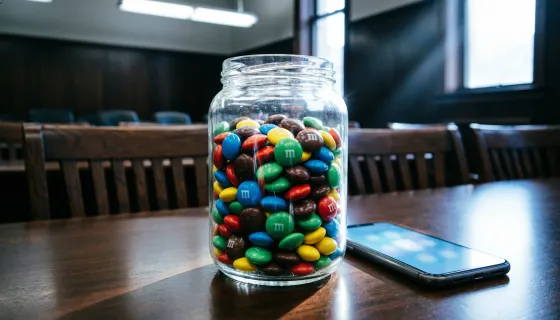
If you wanted a single image to sum up Silicon Valley's relationship with accountability, it might be a lawyer holding up a jar of sweets in a Los Angeles courtroom. Attorney Mark Lanier reportedly showed jurors a jar containing 415 M&Ms, each one representing a billion dollars of corporate value, then asked them to consider what meaningful punishment looks like for companies that wealthy.
The jury, it turns out, had been thinking about that for nine days. Their answer: $6 million in total damages, split between Meta (70% liable) and YouTube (30% liable), after finding both platforms were deliberately designed to be addictive and that this design harmed a now 20-year-old plaintiff who began using YouTube at age six and Instagram at age nine.
Small Fine, Enormous Precedent
Let us be honest about the numbers. Six million dollars to Meta is roughly what the company earns while you read this sentence. The plaintiff's legal team had sought $1 billion in punitive damages alone, so the $3 million punitive award is hardly going to dent anyone's bonus pool. Meta's market capitalisation hovers around $1.4 trillion. This is, financially speaking, a parking ticket.
But treating this as a mere slap on the wrist misses the point entirely. The jury agreed with the plaintiff on every single count. That clean sweep on liability is the bit that should be keeping Menlo Park's lawyers awake at night, because roughly 2,000 similar lawsuits are already queued up, with further bellwether trials expected to follow. Each one now has a proven legal blueprint to work from.
A Very Bad Week for Meta
The timing could scarcely have been worse for Mark Zuckerberg's empire. Just one day before this verdict landed, a New Mexico jury awarded $375 million against Meta in a separate case involving child exploitation on its platforms. Prosecutors there had originally sought more than $2 billion, and a bench trial on remaining claims is scheduled for May 2026.
Meanwhile, Meta's share price dropped nearly 8% following the LA verdict, with trading volume more than doubling the 65-day average. Investors, it seems, are rather better at reading legal tea leaves than the company's own PR team.
And where was Zuckerberg himself while all this was unfolding? On Capitol Hill, meeting Senate Majority Leader John Thune. He was recently named to a presidential tech advisory panel alongside Larry Ellison and Jensen Huang, which is either impressive networking or a masterclass in deflection, depending on your perspective.
The Big Tobacco Playbook
Legal commentators have drawn pointed comparisons to the tobacco litigation of the 1990s, and it is easy to see why. Attorney Jayne Conroy, who previously worked on opioid cases, has explicitly linked the two battles. The argument is structurally identical: companies knew their products caused harm, optimised for engagement anyway, and targeted young users who lacked the capacity to protect themselves.
Google, for its part, is trying a creative sidestep by arguing YouTube is a streaming platform rather than a social media site. It is a bold strategy that might carry more weight if the platform did not feature comments sections, subscriber counts, and algorithmic recommendation engines specifically designed to keep viewers scrolling.
Eric Goldman, associate dean at Santa Clara University School of Law, has noted that the real significance lies not in the damages figure but in the precedent. Once a jury confirms that addictive design constitutes a harm worthy of liability, the floodgates argument stops being hypothetical.
What Happens Next
TikTok and Snap's parent company both settled before this trial began, which in hindsight looks rather shrewd. For Meta and Google, the path ahead is considerably less comfortable. With thousands of cases pending and a proven legal framework now established, Silicon Valley's long insistence that these are just neutral platforms is starting to look about as convincing as a tobacco executive testifying that cigarettes are perfectly safe.
The moment, as they say, has arrived. Whether the tech giants choose to acknowledge it is another matter entirely.
Read the original article at source.