
Scalpels Down: Resident Doctors Announce Six-Day Strike as Government Talks Collapse
BMA confirms a six-day resident doctors' strike from 7-13 April after pay negotiations break down. Here's what went wrong and what it means for NHS patients.












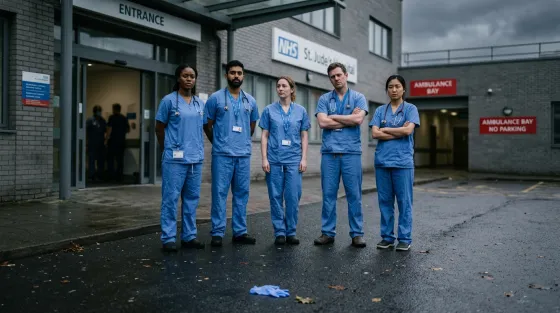
Round 15 of a Dispute That Shows No Signs of Healing
If you thought the long-running standoff between England's resident doctors and the government was winding down, think again. Talks have collapsed, and the BMA has announced a six-day strike starting 7 April, running right through to 13 April. That's right after the Easter bank holiday weekend, which is either spectacularly bad timing or spectacularly strategic timing, depending on which side of the picket line you're standing on.
This will be the 15th round of industrial action by resident doctors since 2023. Fifteen. At this point, the dispute has outlasted most streaming series.
What Went Wrong at the Negotiating Table?
Weeks of talks between the BMA and the Department of Health appeared to be making progress, until they weren't. Dr Jack Fletcher, chair of the BMA Resident Doctors Committee, put it bluntly: the government "began to shift the goalposts" in the final fortnight of negotiations.
The government's final offer included a 3.5% pay award for 2026/27, spread over three years, along with 4,000 to 4,500 additional specialty training posts (with 1,000 brought forward to April 2026) and reimbursement of mandatory Royal College exam fees. On paper, that might sound reasonable. In practice, it hasn't come close to satisfying a workforce that's seen pay erode by roughly 21% in real terms since 2008.
For context, that's not a typo. A fifth of their purchasing power, gone. If your salary had shrunk by a fifth over 18 years while your workload ballooned, you'd probably have some feelings about a 3.5% offer too.
The Numbers Behind the Mandate
The strike ballot returned a resounding result: 93% voted in favour of action on a 53% turnout. That's a clear mandate from a profession of around 77,000 resident doctors working across England's NHS.
And it's not just about pay. There's a genuine jobs crisis simmering beneath the headlines. Some 30,000 doctors are currently competing for just 10,000 specialty training places. That's three qualified doctors scrapping for every available post. The government's offer of additional training places over three years addresses the issue, but critics argue it's too little, too slow.
What Happens When Doctors Walk Out?
Previous strikes offer a glimpse. During the December 2025 walkout, 95,664 staff were recorded absent, though the NHS managed to maintain 94.7% of elective activity. That resilience comes at a cost, mind you. Each round of strikes is estimated to cost the NHS upwards of £200 million in managing disruption, rescheduling procedures, and drafting in cover.
With the April action landing straight after a bank holiday weekend, when hospitals are already running on reduced staffing, the pressure on NHS management will be acute. Health Secretary Wes Streeting will face pointed questions about why talks were allowed to fail at this stage.
Is There an End in Sight?
Not obviously. The BMA's strike mandate runs through to August 2026, meaning further action beyond April is entirely on the table. Three previous five-day strikes took place in 2025 alone, in July, October, and December. This six-day action represents an escalation.
Scotland, it's worth noting, took a different path entirely. Strikes there were suspended in January 2026 after a deal equivalent to a 9.9% pay uplift was accepted. That comparison won't be lost on English resident doctors or their union representatives.
The Verdict
There are no winners here. Patients face disruption. Doctors lose pay during walkouts. The NHS haemorrhages cash on contingency planning. And the government burns political capital with every failed negotiation.
What's clear is that a 3.5% offer, however sweetened with training posts and exam fee refunds, isn't going to close a 21% pay gap or fix a system where tens of thousands of trained doctors can't find specialist posts. Until both sides find genuine middle ground, expect more picket lines, more cancelled appointments, and more headlines just like this one.
Read the original article at source.