
Premier League Refs Are Having a Shocker, and VAR Isn't Saving Them
VAR has matched last season's entire error total with a quarter of the campaign left. We break down the numbers behind the Premier League's refereeing crisis.












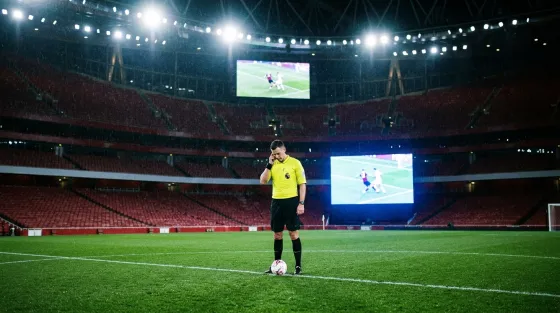
The Numbers Don't Lie (Even If the Officials Occasionally Do)
If you have spent any time on football Twitter this season, you will already know the vibes: Premier League refereeing is, to put it diplomatically, not having its finest campaign. But now there are cold, hard numbers to back up the collective rage, and they make for grim reading if you are employed by PGMOL.
According to the Key Match Incidents (KMI) panel, errors across most refereeing categories have risen in the 2025-26 Premier League season. The reported total stands at 54 mistakes so far, up from what is believed to be 44 at the same stage last season. For context, the 2023-24 campaign reportedly produced around 70 errors after 30 matches, so while things are not quite that bad, the trajectory is heading in a direction nobody wants.
VAR: The Fix That Needs Fixing
Here is the stat that should make the Premier League squirm. VAR has already racked up 18 errors this season, which matches the entire total for the whole of 2024-25. Let that sink in. A system introduced to reduce mistakes has, in roughly three-quarters of a season, already produced as many blunders as it did across the full previous campaign.
To be fair, the long-term trend had been encouraging. VAR errors reportedly fell from 38 in 2022-23 to 31 in 2023-24, before dropping to 18 last season. This year has put a rather large dent in that progress. Of those 18 errors, 15 are reportedly missed interventions, where VAR should have stepped in but simply did not bother. You had one job, lads.
A Weekend to Forget
The matchweek of 14-16 March 2026 served as a particularly brutal case study. In the space of three days, the KMI panel identified four separate errors:
- Arsenal vs Everton: Michael Keane's foul on Kai Havertz should have been a penalty. VAR stayed silent. Jamie Redknapp called the inaction "a disgrace", which felt restrained.
- Chelsea vs Newcastle: Reece James hauled down Malick Thiaw during a corner. No penalty given. Even a former PGMOL chief admitted it should have been awarded.
- Crystal Palace vs Leeds: Gabriel Gudmundsson was shown an incorrect second yellow card, reducing Leeds to ten men. Wayne Rooney, never one to mince words, also labelled it "a disgrace". Former referee Keith Hackett agreed the decision was wrong.
- Brentford vs Wolves: Kevin Schade was reportedly held by Andre in the box. No whistle. The match ended 2-2, which will sting if that penalty call was the difference.
The Silver Linings (Yes, There Are Some)
PGMOL is not without its counterarguments. VAR stoppages have fallen from an average of 64 seconds in 2023-24 to around 48 seconds this season, a roughly 25% improvement, though some reports suggest the figure may actually be closer to 39 seconds depending on when in the season you measure. Either way, matches are flowing better.
Total VAR interventions have also reportedly dipped, and incorrect VAR reviews have fallen from four to three. On-field accuracy sits at approximately 86%, which sounds reasonable until you remember that the remaining 14% includes moments that decide titles, relegation battles, and the general emotional wellbeing of millions of supporters.
What Happens Next?
There is at least one change on the horizon that should help. From the 2026-27 season, VAR will be able to review second yellow card decisions. Given that 11 incorrect second yellows have reportedly been dished out this season, that is a welcome addition. Whether it will be enough to stem the tide of on-pitch howlers remains to be seen.
The fundamental problem has not changed: VAR was supposed to be the safety net, and increasingly it is just another part of the circus. Until the Premier League addresses why so many clear errors are slipping through both the on-field officials and the Stockley Park screen-watchers, the frustration will only grow.
Read the original article at source.