
Israel Claims It Took Out Iran's Navy Chief Behind the Hormuz Blockade
Israel says it killed IRGC navy commander Alireza Tangsiri in a pre-dawn strike on Bandar Abbas. What the assassination means for the Hormuz crisis.












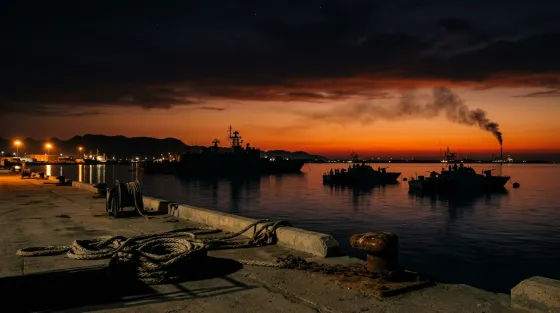
A Pre-Dawn Strike With Major Implications
Israel says it has killed Alireza Tangsiri, the head of Iran's Islamic Revolutionary Guard Corps (IRGC) navy and the man directly responsible for choking off the Strait of Hormuz. If confirmed, it would mark yet another high-profile assassination in a conflict that has already claimed Iran's Supreme Leader and its security chief.
The strike reportedly hit Bandar Abbas, Iran's key port city adjacent to the strait, at roughly 3 a.m. local time on 26 March 2026. Israel's Defence Minister Israel Katz described it as a "precise and lethal operation," which is diplomatic speak for "we knew exactly where he was sleeping."
Iran, for its part, has said nothing. Not a peep. Which, in fairness, is a response of sorts.
Who Was Tangsiri?
Tangsiri was appointed commander of the IRGC navy on 23 August 2018 by the late Supreme Leader Khamenei, and he is reported to have served as deputy commander since 2010, though that earlier role has not been independently verified. What is well documented is his knack for provocation. The US Treasury sanctioned him on 24 June 2019, shortly after Iran shot down an American surveillance drone over the Persian Gulf. He was later hit with additional sanctions in 2023 over his ties to Paravar Pars, an Iranian drone manufacturer where he served as chairman of the board.
Born in 1962, Tangsiri built a career around making the Strait of Hormuz as uncomfortable as possible for anyone he did not approve of. Israeli Prime Minister Benjamin Netanyahu described him as having "a great deal of blood on his hands," adding that the operation was carried out with US cooperation.
Not a Solo Act
Tangsiri was not the only target. The IDF confirmed that Behnam Rezaei, head of the IRGC Navy Intelligence Directorate, was also killed in the same strike, along with several other senior naval command officials. US Central Command weighed in by stating that Tangsiri's death "makes the region safer" and that the IRGC navy is now in "irreversible decline." Bold words, though the strait remains very much blocked.
Why the Strait of Hormuz Matters
For anyone wondering why a waterway most people could not find on a map keeps making headlines, here is the short version: roughly 25% of the world's seaborne oil trade and around 20% of global LNG shipments normally pass through it. That "normally" is doing heavy lifting right now, because daily traffic through the strait has plummeted by approximately 95% since the blockade began.
The blockade itself has been enforced not through traditional warships or naval mines but through a combination of drone strikes near the strait and IRGC radio warnings. Insurers and shipping companies decided the risk was not worth it, and traffic dried up almost overnight. The result? Brent crude surged past $100 per barrel, peaking at $126. Your petrol bill sends its regards.
The Bigger Picture
This strike sits within a rapidly escalating conflict that kicked off on 28 February 2026 with joint US-Israeli strikes on Iran. Since then, Israel has assassinated Supreme Leader Khamenei and security chief Ali Larijani, systematically dismantling Iran's leadership structure. Taking out the man who controlled the Hormuz chokepoint fits the pattern perfectly.
Whether removing Tangsiri actually loosens the blockade remains an open question. The IRGC navy does not run on one person, and the infrastructure for disrupting shipping is already in place. But it certainly sends a message: if you are a senior Iranian military figure, your operational security needs a serious upgrade.
The Caveat
It is worth noting that every claim about Tangsiri's death originates from Israeli sources. Iran has not confirmed or denied anything. Until Tehran speaks, treat the news with appropriate caution. History has taught us that fog of war announcements do not always age well.
Read the original article at source.