
Forget Oil: The Strait of Hormuz Crisis Is Coming for Your Phone, Your Food and Your MRI
The Strait of Hormuz shutdown is not just an oil crisis. From fertilisers and helium to phone parts and medicines, here is what is really at stake.











It Is Not Just About Petrol Prices
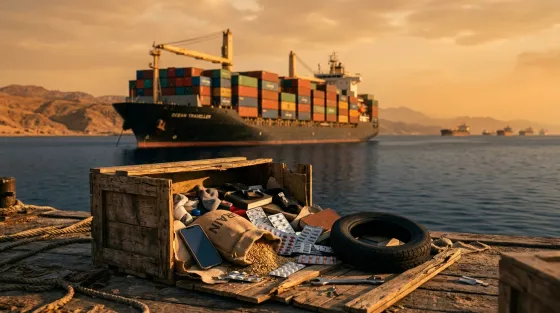
When people hear "Strait of Hormuz closure," their minds jump straight to oil. Fair enough. But while the world fixates on barrel prices, a far stranger and more varied collection of goods is quietly being held hostage by geography. We are talking fertilisers, helium, smartphone components, generic medicines and even the sulphur used to make car tyres. The Hormuz bottleneck, it turns out, is not just an oil story. It is an everything story.
Since the escalation of the US-Israel conflict with Iran, shipping through the strait has collapsed. Traffic has plummeted from over 100 vessels a day to a mere handful, according to S&P Global Market Intelligence data. That is not a slowdown. That is a near-total shutdown of one of the most important maritime chokepoints on Earth.
Your Dinner Plate Is on the Line
According to the United Nations, roughly a third of the world's fertiliser shipments normally transit through Hormuz. Cut that off, and crop yields take a hit globally. The Kiel Institute for the World Economy has modelled a full closure scenario, estimating global food prices could rise by around 3%. Some commodity-specific projections suggest wheat and fruit and vegetable prices could climb even higher, though those granular figures remain difficult to verify independently.
The countries least equipped to absorb such shocks would be hit hardest. Kiel Institute modelling points to significant welfare losses for nations like Zambia, Sri Lanka, Taiwan and Pakistan, all of which are heavily exposed to disrupted trade flows.
And here is the twist that should make geopolitical analysts nervous: Russia, already one of the world's largest fertiliser exporters at roughly a fifth of global supply, stands ready to fill the gap. Nothing says "strategic opportunity" quite like your rival's supply chain falling apart.
Helium: The Invisible Crisis
Here is one you probably did not see coming. Around a third of the world's helium supply comes from Qatar, shipped out through the very same strait. Iranian missile and drone strikes have forced Qatar's massive Ras Laffan facility to shut down, with QatarEnergy declaring force majeure on LNG shipments. Some estimates suggest repairs could take years, though QatarEnergy's leadership has indicated partial restarts may be possible once hostilities cease.
Why should you care about helium? It is not just for party balloons. MRI machines rely on liquid helium to cool their superconducting magnets, and experts note that helium gradually boils off during scans and needs regular topping up. Hospitals worldwide could face serious diagnostic bottlenecks.
The semiconductor industry is equally exposed. Back in 2023, the US Semiconductor Industry Association flagged helium as a critical input and warned of potential price spikes if supplies were disrupted. Well, here we are.
Medicines, Chemicals and the Domino Effect
India produces roughly a fifth of the world's generic pharmaceutical exports. Much of that supply moves through Gulf shipping routes and air freight hubs. With Dubai's airport operations severely disrupted, the knock-on effect for global medicine supplies is real and immediate.
Then there is sulphur. Around half of the global seaborne sulphur trade passes through Hormuz. Sulphur is essential for manufacturing everything from fertilisers (yes, again) to rubber and detergents. GCC countries also contribute a notable share of global petrochemical production, feeding into plastics and materials used across countless industries.
The Bigger Picture
The Hormuz crisis is a masterclass in how interconnected modern supply chains really are. A conflict in one region does not just affect the obvious commodities. It ripples outward into hospital waiting rooms, supermarket shelves and electronics factories on the other side of the planet. The lesson, if there is one, is that chokepoint dependency is a vulnerability we have collectively chosen to ignore for far too long.
Read the original article at source.