
Bail, Not Freedom: Iran Lets Narges Mohammadi Out of Prison and Into a Hospital Bed
Nobel laureate Narges Mohammadi has been bailed from Zanjan prison to a Tehran hospital after a suspected heart attack. It's a suspension, not freedom.









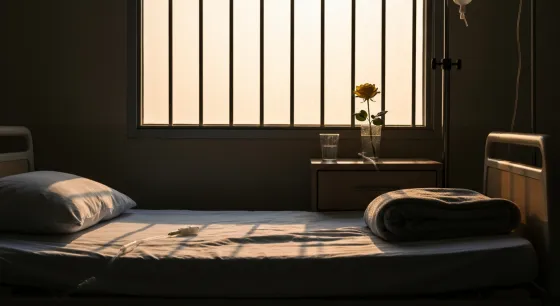
Iran has done that thing it occasionally does when the world starts paying a bit too much attention: it has cracked the cell door open just wide enough to let a very ill, very famous prisoner shuffle towards a hospital. Narges Mohammadi, the 2023 Nobel Peace Prize laureate, has been granted bail and transferred from Zanjan to Tehran Pars Hospital after ten days laid up in a prison infirmary that, by all accounts, was not exactly the Mayo Clinic.
Before anyone breaks out the bunting, this is not a release. It is a suspension. And in Iran, suspensions have a habit of un-suspending themselves the moment the cameras blink.
What actually happened
Mohammadi, 54, had been hospitalised inside Zanjan prison for ten days following a suspected heart attack. According to the Narges Mohammadi Foundation, fellow inmates found her unconscious. Her brother Hamidreza confirmed the incident, and her lawyer Chirinne Ardakani has been pushing publicly for her transfer to a proper medical facility.
Authorities have now suspended her sentence on what is being described as heavy bail and moved her to Tehran Pars Hospital. The Foundation has been blunt about how it views the gesture, saying a suspension is not enough and calling for the dismissal of all charges and her unconditional freedom.
So yes, she is out of prison. No, she is not free. Welcome to the Iranian judicial cha-cha: one step out, two steps back, repeat until international outrage subsides.
Who is Narges Mohammadi, for the uninitiated
If the name rings a bell but you cannot quite place it, here is the short version. Mohammadi is one of Iran's most prominent human rights campaigners and a long-standing critic of the death penalty and compulsory hijab laws. She won the Nobel Peace Prize in 2023 while sitting in a cell, which is the sort of CV line most activists would prefer to avoid earning.
She began a 13-year sentence in 2021 for charges that included 'propaganda activity against the state' and 'collusion against state security', phrases that in Iran tend to translate roughly as 'said something the regime did not enjoy hearing'. In February 2026, a Revolutionary Court tacked on another 7.5 years for good measure. According to the Foundation, she now has roughly 18 years left to serve.
Her health is, to put it mildly, not good
Mohammadi has a pre-existing pulmonary blood clot, which means she is on blood thinners, which means a heart attack is precisely the sort of thing her doctors would prefer she avoid. She has reportedly suffered two suspected cardiac episodes this year alone, including the one in March and the more recent collapse at Zanjan.
Her lawyer says she has lost around 20kg, roughly three stone, during her time inside. That figure has not been independently medically verified, but anyone who has seen recent photographs would not be inclined to argue with it.
The revolving door
Here is the bit that should make any UK reader who values due process raise an eyebrow. This is not the first time Mohammadi has been granted medical leave. In December 2024 she was let out of Evin prison on temporary medical grounds, only to be re-arrested in December 2025 after speaking at a memorial. Her family says she was beaten during that arrest.
So the pattern is depressingly familiar. Iran releases her when she is too ill to ignore, watches international pressure ease off a touch, then hauls her back in the moment she opens her mouth in public. The Foundation is explicitly campaigning for permanent release this time, precisely because they have seen this film before and they know how it ends.
Why this matters to readers in the UK
It would be easy to file this under 'grim news from a faraway country' and scroll on. Resist that urge. There are a few reasons this story should land closer to home than it might first appear.
First, the UK has a sizeable Iranian diaspora, many of whom have direct ties to political prisoners or have campaigned on Mohammadi's behalf. Second, the British government has been one of the louder European voices on Iranian human rights in recent years, and how London responds to this latest development will say something about whether that pressure is anything more than press releases.
Third, and this is the bigger picture, Mohammadi has become a kind of bellwether. The way Iran treats its most internationally celebrated prisoner is a fairly reliable indicator of how it intends to treat everyone else. A genuine, unconditional release would be a meaningful signal. A temporary furlough that ends with her back behind bars in six months would be the opposite.
What to watch next
A few things worth keeping an eye on over the coming weeks.
- Whether the bail conditions allow her to receive visitors, speak publicly, or travel for treatment abroad. Past precedent suggests not.
- Whether the Foundation's call for charges to be dropped gets any meaningful diplomatic backing from European governments, including the UK.
- Whether she is re-arrested the moment her vitals stabilise, which would be entirely consistent with the established playbook.
- Whether her lawyers are permitted full access. Ardakani has been working largely in public because the formal legal channels have been, shall we say, unhelpful.
The verdict
This is a small mercy in a much longer ordeal, and it should be welcomed as such. A woman who should never have been imprisoned is at least going to receive the cardiac care she clearly needs. That is genuinely good news.
But it is not vindication, and it is not victory. Mohammadi still faces 18 years on the books, a regime that has demonstrated repeatedly that it considers her freedom temporary at best, and a health situation that would be precarious even with world-class care. The international community, the UK included, would do well to keep the pressure on rather than treating this as a problem solved.
The Foundation's line is the right one. A suspension is not enough. Anything short of unconditional release is just the regime buying itself time, and time is precisely what Narges Mohammadi does not have.
Read the original article at source.