
Dead Balls, Live Hope: Can England's Set-Piece Obsession Actually Deliver a World Cup?
England's World Cup hopes rest on set-pieces. With the Premier League's dead-ball revolution in full swing, could corners and free kicks deliver glory in 2026?












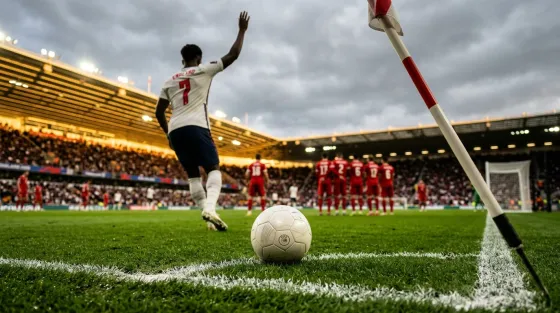
The beautiful game? Nah, just whip it in from a corner
There is something wonderfully English about pinning your World Cup hopes not on silky tiki-taka or devastating counter-attacks, but on the dark arts of corners, free kicks and long throws. Yet here we are, and former England goalkeeper Paul Robinson reckons Thomas Tuchel's side could ride set-pieces all the way to glory in 2026.
Honestly? He might have a point.
The numbers do not lie
The Premier League has gone absolutely set-piece mad this season. According to the BBC, roughly 230 of the division's 845 goals have come from dead-ball situations (excluding penalties), working out at around 27%. That is up from approximately 0.6 set-piece goals per game last season to 0.8 this time around, per Sky Sports. The trend is unmistakable.
Leeds United and Tottenham sit joint top for set-piece dependency, with a whopping 35% of their goals coming from dead-ball deliveries. Arsenal are not far behind, reportedly netting around a third of their goals from set-pieces as they power their title charge.
And it is Arsenal who deserve the most credit for starting this revolution. Nicolas Jover, the club's specialist set-piece coach, has turned corners and free kicks into a genuine attacking weapon. The Gunners have scored 16 goals from corners through 29 matches this season, equalling the club's own Premier League record with nine games still to play. The rest of the league has taken notice: 15 of 20 top-flight clubs now employ dedicated set-piece coaches. Football's secret weapon is no longer much of a secret.
England's delivery service
Here is where it gets interesting for the Three Lions. Tuchel's squad is stuffed with players who thrive in these situations.
Declan Rice has been one of the Premier League's most prolific creators this season, with reports suggesting the majority of his assists have come from set-piece deliveries. Bukayo Saka offers another wicked option from wide areas. Both are near-certainties to start in the United States, Canada and Mexico next summer.
Then there is Reece James. The Chelsea captain, fitness permitting, brings pinpoint delivery from the right. His assist numbers this season lean heavily towards dead-ball situations, making him a valuable squad option even if his injury record gives everyone mild palpitations.
At the receiving end, Tuchel has no shortage of targets. Dan Burn and Harry Maguire provide the sort of aerial presence that makes defenders deeply uncomfortable at corners. Harry Kane and Dominic Calvert-Lewin offer genuine goal threat in the air. It is a potent combination.
Tuchel is already sold
This is not idle punditry, either. Tuchel himself has publicly stated he wants England to use long throws, direct delivery and set-piece routines as a core part of their World Cup strategy. The man is pragmatic to his bones. If launching it into the box wins football matches, he will launch it into the box all day long.
With England drawn in Group L alongside Croatia, Ghana and Panama, there will be no shortage of opportunities to refine these routines before the knockout rounds. And in tournament football, where tight games and cagey defences are the norm, a well-drilled set-piece can be worth more than all the possession stats in the world.
The verdict
Will set-pieces alone win England the World Cup? Of course not. You still need a functioning midfield, a solid defence and a bit of luck. But as an edge, a genuine X-factor that separates you from similarly talented sides? Robinson is spot on. England's dead-ball quality could be the difference between another glorious failure and ending that painful drought stretching back to 1966.
Sometimes the beautiful game is won by doing the ugly stuff brilliantly.
Read the original article at source.