
Air India Grounds Nearly 100 Flights as Iran War Sends Jet Fuel Through the Roof
Air India is grounding nearly 100 long-haul flights through July 2026 as the Iran war and closed airspace push jet fuel prices up 80%.












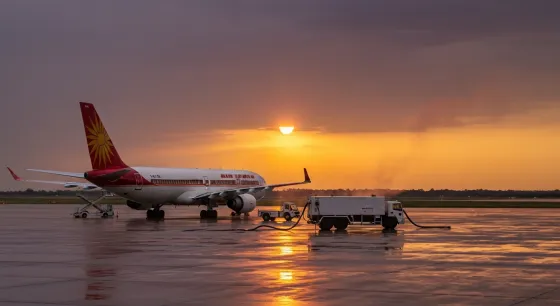
Planning a long-haul jaunt out of Delhi or Mumbai this summer? You might want to refresh your booking page. Air India is pulling nearly 100 international flights from its schedule through July 2026, blaming a brutal cocktail of soaring jet fuel prices and a patchwork of closed airspace that is making long-haul flying about as profitable as selling ice to Eskimos.
What Air India is actually cutting
The Tata-owned carrier, which usually runs around 1,100 flights a day, is trimming roughly 100 services on routes to Europe, North America, Australia and Singapore. These are the marquee long-haul corridors, the ones that gobble fuel by the tonne, which is precisely why they are first on the chopping block.
Chief Executive Campbell Wilson did not sugarcoat it, telling staff that the spike in jet fuel prices and airspace closures in India's neighbourhood have caused many of the airline's international flights to become unprofitable to operate. Translation: keeping these planes in the sky right now means lighting money on fire at 35,000 feet.
Why fuel prices have gone bananas
The villain of this story is the Strait of Hormuz, the narrow stretch of water that ferries roughly 20 per cent of the world's oil. It has been closed since 28 February 2026 thanks to the ongoing US and Israeli war with Iran, and the consequences are exactly what you would expect when you cork the planet's most important oil chokepoint.
Global average jet fuel prices have rocketed to about 179.46 dollars a barrel by the week ending 24 April, an 80 per cent leap from the 99.40 dollars seen in late February. Given that jet fuel makes up roughly 40 per cent of an airline's operating costs, that is not a rounding error. That is the difference between a profitable route and a ticking financial time bomb.
It gets worse for India specifically. The country imports nearly 88 per cent of its crude oil, so when the global price catches a cold, India catches pneumonia.
Pakistan's airspace ban: the gift that keeps on taking
As if a fuel crisis were not enough, Indian carriers are still stuck flying the scenic route. Pakistan slammed its airspace shut to Indian airlines in April 2025, forcing flights heading west to take longer, more expensive detours. Reuters reported that this single decision was forecast to cost Air India around 600 million dollars a year. Add fuel inflation on top, and you can see why Wilson is reaching for the red pen.
The financial damage is already showing. The Air India Group reportedly posted a loss of around 22,000 crore rupees, roughly 2.6 billion dollars, for the financial year ending March 2026. Earlier reporting referenced a 433 million dollar loss, though that figure appears to relate to an older year. Either way, the numbers are not the sort you scribble cheerfully on a fridge.
The industry sounds the alarm
This is not just an Air India sob story. The Federation of Indian Airlines, which speaks for IndiGo, Air India, SpiceJet and others, fired off a letter to India's Civil Aviation Ministry on 26 April 2026 warning that the industry is, in its own words, on the verge of closing down. They are asking for revised aviation turbine fuel pricing, a deferral of excise duties, and outright financial support.
It is not just Indian carriers feeling the pinch either. United Airlines and Lufthansa are reportedly weighing cancellations or fare hikes, and Airports Council International Europe has warned of jet fuel shortages from May. Some analysts reckon Europe to Asia routes could see capacity cuts of 30 to 50 per cent by June. If you thought airfares looked cheeky last summer, brace yourself.
What this means for UK travellers
If you are reading this from Manchester, London or Edinburgh, here is the practical rundown. Direct routes between the UK and India, including Air India's flagship Heathrow services, sit squarely in the long-haul, fuel-intensive category that is most exposed to cuts and price rises.
A few things to bear in mind:
- Check your bookings. If you are flying Air India between now and July, log in and see whether your service has been rejigged. Cuts on this scale rarely happen quietly.
- Expect higher fares. When supply shrinks and fuel costs balloon, ticket prices follow. Booking earlier, being flexible on dates, and considering one-stop alternatives via the Gulf could save real money.
- Travel insurance is your friend. If your flight is cancelled, EU and UK consumer rules still help on departures from the UK, but onward legs from India are governed by Indian aviation rules, which are less generous. A decent policy fills the gap.
- Consider rival carriers. Emirates, Qatar Airways and Etihad have so far been more insulated thanks to their geography, although they are not immune to fuel shocks. Virgin Atlantic and British Airways still fly direct, but expect their pricing to creep up too.
Will it get better any time soon?
That depends almost entirely on geopolitics, which is rarely a comforting answer. Until the Strait of Hormuz reopens and Pakistan and India patch things up enough to share airspace again, the cost base for Indian aviation stays painfully high. Wilson, who according to The Independent is reportedly set to step down as Air India CEO later in 2026, though that has not been confirmed elsewhere, is essentially trying to steer a tanker through a hurricane while reading the weather forecast aloud to nervous shareholders.
The Tata Group bought Air India from the Indian government in 2022 with grand visions of turning the once-iconic carrier into a global powerhouse. The fleet upgrades, the new uniforms, the slicker service: all of it was pointing in the right direction. Then a war, an airspace ban and an oil shock walked into the room.
The bottom line
Nearly 100 cancelled flights is not a blip. It is a flashing red warning light for global aviation, and Air India just happens to be one of the most exposed carriers on the planet right now. For UK travellers, the message is simple: book early, stay flexible, read the small print on your ticket, and keep an eye on your inbox for those dreaded schedule change emails.
If the Hormuz stays shut and fuel prices stay punchy, expect more carriers to follow Air India's lead before the summer is out. The era of cheap long-haul might be taking a break.
Read the original article at source.