
US-Iran Peace Talks: Who Wants What, and Why Nobody Can Agree
The US wants Iran's nuclear programme dismantled. Iran wants reparations and sovereignty. A breakdown of what both sides demand in the 2026 peace talks.












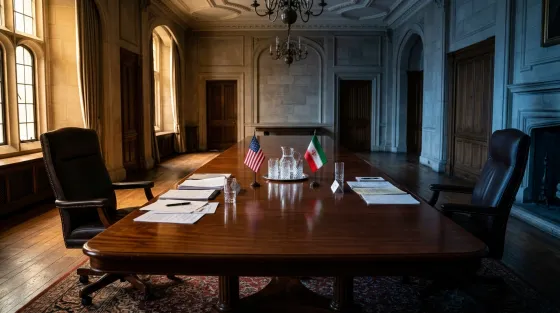
A War Less Than a Month Old, and Already Everyone's Talking Peace
It has been barely four weeks since the United States and Israel launched military operations against Iran on 28 February 2026, and the diplomatic machinery is already grinding away. The trouble is, it appears to be grinding in opposite directions. Washington has put forward a sweeping 15-point peace plan. Tehran has flatly rejected it and fired back with a 5-point counteroffer of its own. Meanwhile, Iran insists no negotiations are even happening, whilst Donald Trump claims they are happening right now. Classic.
What the US Wants
The American proposal, delivered to Iran via Pakistan, reads like a wishlist from someone who has never been told 'no' at a restaurant. The headline demands include:
- A 30-day ceasefire whilst negotiations continue
- Complete dismantling of nuclear facilities at Natanz, Isfahan, and Fordow
- Transfer of Iran's entire enriched uranium stockpile to the IAEA
- An end to all uranium enrichment on Iranian soil
In return, Washington is offering to lift nuclear-related sanctions, scrap the snapback mechanism, and support Iran's Bushehr civilian nuclear plant. On paper, it is a carrot-and-stick arrangement. In practice, Tehran sees rather more stick than carrot.
The US negotiating team is a who's who of Trump's inner circle: Vice President J.D. Vance, Secretary of State Marco Rubio, and envoys Steve Witkoff and Jared Kushner. Critics have noted this is a far cry from the roughly 400-person technical teams that hammered out the 2015 JCPOA. Earlier Geneva talks collapsed in February partly because the American delegation reportedly brought no nuclear technical experts at all.
What Iran Wants
Iran's 5-point counter-proposal tells you everything about where Tehran's head is at. Their demands include:
- Full sovereignty and control over the Strait of Hormuz
- War reparations
- An immediate halt to aggression and assassinations
- An end to attacks on Hezbollah and Iraqi militias
- Guarantees the war will not resume
Axios also reports that Iran wants all US military bases in the Gulf closed and permission to keep its missile programme without limits. Not exactly the sort of asks that make a deal feel imminent.
Iranian officials have told mediators they have been 'tricked twice' by Trump and 'don't want to be fooled again'. Iran's ambassador to Pakistan has gone further, stating flatly that no direct or indirect negotiations are taking place. It is worth noting that before the war, Iran possessed approximately 440 kilograms of 60% enriched uranium, enough for around 10 sophisticated or 4 rudimentary nuclear warheads, with a breakout capability estimated at just 6 days.
The Middlemen
Pakistan, Egypt, and Turkey have stepped into the mediator role, with Pakistan's Army Chief Field Marshal Syed Asim Munir facilitating dialogue between the two sides. It is thankless work. One side says talks are on; the other says they are not. The mediators are essentially running a postal service between two parties who cannot agree on whether the post office exists.
Why a Deal Remains Distant
The human cost is already staggering: as of 25 March, at least 1,500 people have been killed in Iran and 18,551 injured. White House Press Secretary Karoline Leavitt has stated that military operations continue 'unabated' even whilst the administration claims negotiations are under way. That does not exactly scream good faith.
Ali Vaez of the International Crisis Group has warned that the risk of Iran becoming a nuclear weapon state is now 'higher than ever before', noting that a fatwa against nuclear weapons by the former Supreme Leader may no longer apply under new leadership.
Trump faces his own pressures. Gulf states, economic partners, and voters heading into November 2026 midterm elections all give the White House reasons to want this wrapped up. Economist Nader Habibi has put the likelihood of meaningful talks at around 60%, which feels generous given the current gap between the two positions.
The Bottom Line
Both sides want peace, or at least want to look like they want peace. But the US is asking Iran to dismantle its nuclear programme entirely, whilst Iran is demanding the US essentially withdraw from the Middle East. Those are not positions that meet in the middle over a handshake. Expect more diplomatic theatre before anything substantive changes.
Read the original article at source.