
The UN Just Called Slavery the 'Gravest Crime Against Humanity' and Three Countries Disagreed
The UN General Assembly passed a landmark resolution on slavery reparations with 123 votes in favour. The US, Israel, and Argentina were the only three to vote against.









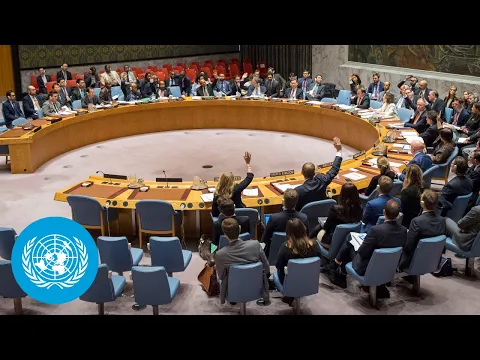
In a vote that really should have been unanimous, the United Nations General Assembly has passed a landmark resolution declaring the trafficking of enslaved Africans the 'gravest crime against humanity'. The tally? 123 in favour, 3 against, 52 abstentions. For those keeping score, the three countries that voted no were the United States, Israel, and Argentina. Make of that what you will.
What the Resolution Actually Says
Passed on the International Day of Remembrance of the Victims of Slavery and the Transatlantic Slave Trade, the resolution's full title is a mouthful: the 'Declaration of the Trafficking of Enslaved Africans and Racialised Chattel Enslavement of Africans as the Gravest Crime Against Humanity'. It calls for formal apologies, restitution, compensation, rehabilitation, and contributions to a reparations fund, though notably without specifying an amount.
It also urges the return of cultural items, from artworks and monuments to museum pieces and archives, to their countries of origin, free of charge. Several European museum curators just felt a collective shiver run down their spines.
Ghana Takes the Lead
The resolution was spearheaded by Ghana under President John Dramani Mahama, who was also named African Union Champion on Reparations. Addressing the General Assembly, Mahama struck a powerful tone: 'Today, we come together in solemn solidarity to affirm truth and pursue a route to healing.'
He also made a pointed linguistic intervention, stating: 'There is no such thing as a slave.' The reframing matters. Language shapes how we understand history, and Mahama's insistence on referring to enslaved people rather than 'slaves' underscores that enslavement was something done to people, not something they inherently were.
The Numbers Behind the Horror
The transatlantic slave trade, spanning roughly 400 years from the 15th to the 19th century, saw an estimated 12.5 million Africans shipped across the Atlantic. According to figures cited by advocacy groups, unpaid wages owed to African people are estimated at $2 to $3 trillion, with unpaid colonial extraction adding another $4 to $6 trillion. For context, the entire African continent's external debt currently sits at around $1.5 trillion. The maths is not subtle.
Who Sat on the Fence
The UK, along with EU member states, chose to abstain. British Ambassador James Kariuki did acknowledge slavery's 'devastating consequences and long-lasting impacts', which is diplomatic speak for 'we know this happened but we are not quite ready to talk about the bill'. The abstention has already sparked responses in the UK Parliament.
So What Happens Now?
Here is the catch: General Assembly resolutions are not legally binding. Nobody is writing cheques tomorrow. But dismissing this as mere symbolism would be short-sighted. The African Union had already adopted its own supporting resolution back in February, and Algeria passed a bill in December 2025 declaring French colonisation a crime against humanity. A pattern is forming.
The resolution also calls for an International Conference on Crimes of Colonialism, which promises to be the most uncomfortable diplomatic gathering since, well, the last time anyone tried to discuss reparations.
Ghana's Foreign Minister Samuel Okudzeto Ablakwa perhaps put it best: the initiative is 'not about comparing historical suffering, but about ensuring acknowledgment and dignity'. In a 193-member body where only three countries could bring themselves to vote against that principle, the direction of travel seems clear. The question is no longer whether this conversation happens, but how quickly it moves from words to action.
Read the original article at source.