
King Charles Turns State Banquet Into a Comedy Set: The Best Lines From His Trump Dinner Speech
King Charles turned a state banquet with Donald Trump into a surprisingly funny night. Here are the best lines and why the humour actually mattered.









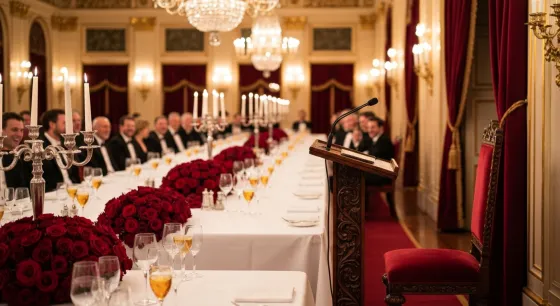
If you thought state banquets were all stiff collars, polished silverware and speeches drier than a week-old crumpet, King Charles is here to gently correct you. On Tuesday 28 April, the monarch took to the lectern at a formal state dinner alongside Donald Trump during his US visit, and rather than playing it safe, he leaned into the room with a few well-placed gags.
The result? A speech that actually made people laugh. On purpose. At a state banquet. Mark your calendars.
A King Who Knows His Audience
Charles has spent decades watching his mother deliver speeches with the kind of measured calm that could soothe a startled corgi. He, by contrast, has always had a slightly drier sense of humour bubbling under the surface, and these days he seems more willing to let it out for a wander.
At the banquet, he charmed the room with a handful of light, self-aware jokes that landed with genuine laughter rather than the polite ripple usually reserved for royal one-liners. It was less Shakespeare, more after-dinner speaker who has actually thought about the brief.
Why This Matters Beyond the Punchlines
It is easy to dismiss royal jokes as fluff, but state banquets are rarely about the food. They are political theatre. Every toast, every nod, every careful sentence is being read by diplomats, journalists and, in this case, a former and future US president with a well-documented soft spot for pageantry.
Charles using humour to warm the room is not just charming. It is strategic. A king who can make a roomful of dignitaries laugh is a king who can defuse tension, build rapport and make Britain look effortlessly at ease on the world stage. Considering some of the recent diplomatic icebergs we have been navigating, that is no small thing.
The Royal Comedy Toolkit
Without word-for-word transcripts of every gag, it is fair to say his style at events like this tends to follow a familiar formula, and Tuesday night was no exception. Expect:
- A bit of gentle self-deprecation, usually about his age, his ears, or how long he waited for the day job
- A nod to the host country, with a compliment that sounds heartfelt rather than rehearsed
- A sly observation about the British weather, the press, or the eccentricities of royal life
- A warm, slightly cheeky reference to whoever happens to be sat next to him
It is a reliable mix, and crucially, it works. The jokes are never sharp enough to offend, never bland enough to bore, and always rooted in the idea that the King is in on the joke about himself.
Charles and Trump: An Unlikely Comedy Duo
The optics of King Charles sharing a top table with Donald Trump are, frankly, a gift to anyone who enjoys a bit of contrast. One is a lifelong environmentalist with a passion for hedgerows and homeopathy. The other is, well, Donald Trump.
Yet the King handled it with the ease of someone who has been rehearsing for this exact moment since the late 1970s. Humour, in this context, is a kind of soft armour. You cannot really argue with someone who has just made you laugh, and Charles seems to know it.
How British Humour Travels
British humour does not always export well. Our love of understatement, awkward pauses and gentle sarcasm can leave international audiences politely confused. But Charles has the advantage of decades of practice on the global stage, and he tends to pitch his jokes squarely in the middle of the Atlantic.
That means:
- Nothing too sarcastic to bewilder American guests
- Nothing too schmaltzy to embarrass the Brits
- A gentle warmth that suggests he genuinely enjoys the silliness of it all
It is the diplomatic equivalent of ordering something everyone at the table will eat. Not exciting, but quietly skilful.
The Quiet Confidence of a Late-Career Monarch
One of the more interesting shifts in Charles since he took the throne is how settled he seems. The man who spent decades being parodied as fussy, earnest and slightly out of step now looks rather comfortable in the role. The jokes feel less like a man trying to win the room and more like a man who knows the room is already on his side.
That is a powerful position for any public figure, let alone a king. It allows him to take small risks, like a cheeky aside or a self-mocking line, without worrying that the whole institution will wobble if a joke does not land.
What This Tells Us About the New Royal Era
Compare Tuesday night to the tone of state occasions a decade ago and you can see how the monarchy is gently repositioning itself. There is more warmth, more wit and a touch more humanity in the public-facing moments. Whether that is a deliberate strategy or simply Charles being Charles, the effect is the same.
For everyday viewers in the UK, this matters because the royal family lives or dies by public goodwill. A king who can make a state banquet feel less like a stuffy ritual and more like an actual evening with actual humans is a king who is doing his job rather well.
The Verdict
Charles is never going to headline at the Apollo, and that is fine. What he offers instead is something more useful for a head of state: dry, generous, slightly mischievous humour that makes diplomacy look almost fun. On a night where the world was watching how Britain handled Trump, the King chose charm over confrontation, and the room laughed along.
If that is the new template for royal speeches, count us in. State banquets just got marginally more bearable, and the diplomatic small talk just got a small but welcome upgrade.
The Bottom Line for UK Viewers
You may not care for pomp, ceremony or the price of a polished tiara, but moments like this are a reminder that the monarchy still earns its keep partly through soft power. A few good jokes at the right dinner can do more for Britain abroad than a stack of carefully worded press releases.
And if nothing else, it is genuinely nice to see a King who looks like he is enjoying himself.
Read the original article at source.