
Iran Says No to Ceasefire, Trump Says Hold My Truth Social Post
Iran turns down the 45-day ceasefire proposal brokered by Egypt, Pakistan and Turkey, demanding permanent guarantees while Trump posts threats on Truth Social.












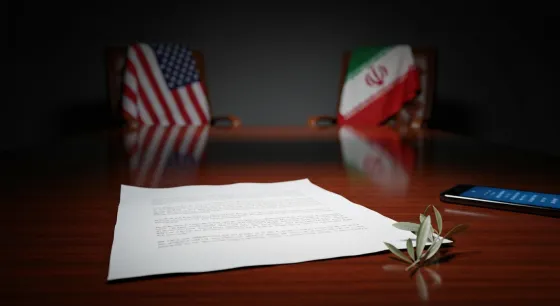
A 45-Day Peace Plan Meets a 10-Paragraph Rejection
If you were hoping the Iran-US conflict might be winding down as it enters its sixth week, allow me to gently lower your expectations. Iran has firmly rejected the latest ceasefire proposal brokered by Egypt, Pakistan and Turkey, choosing instead to send back a lengthy 10-paragraph response that essentially boils down to: "We don't want a pause, we want this to actually stop."
Meanwhile, Donald Trump has extended his deadline for Iran by a generous 20 hours and is posting threats about blowing up power plants on social media. Diplomacy in 2026, everyone.
What Exactly Did Iran Reject?
The proposal on the table was a 45-day ceasefire, carefully assembled by mediators from Egypt, Pakistan and Turkey. It was designed as a Phase 1 arrangement: stop the shooting, reopen the Strait of Hormuz, and buy enough breathing room to negotiate a permanent resolution in Phase 2, which would tackle thornier issues like Iran's highly enriched uranium stockpile.
Iran was not interested. Mojtaba Ferdousi Pour, the head of Iran's diplomatic mission in Cairo, put it bluntly to the Associated Press: "We won't merely accept a ceasefire. We only accept an end of the war with guarantees that we won't be attacked again."
Which, if you strip away the geopolitical complexity, is a fairly reasonable thing to ask for when someone has been bombing your country for over a month. Tehran's formal response, delivered via Pakistan, laid out demands including the lifting of sanctions, reconstruction funding, an end to regional conflicts, and a safe passage protocol for the Strait of Hormuz. Not exactly a quick signature-and-handshake situation.
Trump's Deadline: Now With 20 Extra Hours of Patience
Trump originally set a Monday evening deadline for Iran to comply with US demands. When that came and went without resolution, he graciously extended it by 20 hours to Tuesday 8 PM ET (that's midnight GMT on Wednesday, for those of us keeping score in a sensible time zone).
The extension might sound like a concession, but the accompanying rhetoric suggested otherwise. Trump took to Truth Social to declare that Tuesday would be "Power Plant Day, and Bridge Day, all wrapped up in one, in Iran" if the Strait of Hormuz remained closed. Subtle as a sledgehammer, and about as conducive to peace talks.
He also reportedly claimed that Iranians "want to hear bombs go off as they want to be free," though this specific wording has not been independently verified beyond The Independent's reporting. What is confirmed is that Trump's social media activity during this period has been, to put it diplomatically, inflammatory.
Iran's foreign ministry responded that negotiations are "incompatible with ultimatums and threats to commit war crimes." Hard to argue with the logic there.
Why the Strait of Hormuz Matters More Than You Think
For anyone wondering why a narrow waterway has become the fulcrum of this entire conflict, here's the short version: the Strait of Hormuz carries roughly a fifth of the world's oil and natural gas supply. When Iran effectively closed it in retaliation for the US-Israeli strikes that kicked off this war on 28 February, it sent energy markets into a tailspin.
Brent crude has climbed to approximately $108.67 per barrel during the negotiation period, which means you're almost certainly feeling this conflict every time you fill up your car or open your heating bill. The Strait isn't just a strategic bargaining chip for Iran; it's a lever that affects petrol prices from Birmingham to Brisbane.
Reopening it was a central condition of the 45-day ceasefire plan. Iran closing it was the leverage. Without a deal, it stays shut, and the economic pain spreads further.
The White House Isn't Exactly United Either
Here's a detail that rather undermines the whole deadline drama: the White House itself confirmed that Trump hadn't actually signed off on the 45-day ceasefire plan. Officials described it as "one of many ideas" being floated, which is diplomatic speak for "we're not committed to this either."
So to recap: mediators proposed a plan, Iran rejected it, and it turns out the US president hadn't formally backed it in the first place. One has to wonder what exactly the deadline is for if neither side has agreed to the terms being discussed.
US Mideast envoy Steve Witkoff and Iranian Foreign Minister Abbas Araghchi remain the key figures trying to find common ground, but sources close to the talks say the chances of even a partial deal within 48 hours are slim. Given that both sides appear to be negotiating via social media posts and state news agencies rather than, you know, directly, this is perhaps unsurprising.
Six Weeks In, and Escalation Looms
The conflict began on 28 February 2026 when the United States and Israel launched large-scale strikes on Iran, including the assassination of Ayatollah Khamenei. It was a dramatic opening act, and the subsequent six weeks have done nothing to suggest either side has a clear exit strategy.
Iran has warned of a "more severe and expansive" response if Trump follows through on his threats to strike infrastructure. That's not posturing you can easily ignore when the country in question has already demonstrated its willingness to shut down one of the world's most critical shipping lanes.
The two-phased deal structure that mediators are pushing remains the most realistic path to de-escalation. Phase 1: temporary ceasefire and reopening of the strait. Phase 2: the genuinely difficult negotiations over Iran's nuclear programme, including what happens to its highly enriched uranium, whether through removal or dilution. But you can't get to Phase 2 if Phase 1 keeps getting rejected.
Where Does This Leave Us?
In a word: stuck. Iran wants permanent guarantees, not a 45-day cooling-off period. Trump wants compliance without committing to the framework his own mediators proposed. The mediating nations are doing their best with two parties who appear more interested in posturing than pragmatism.
The Tuesday deadline will come and go. Whether it brings bombs or another extension remains to be seen. But one thing is clear: posting threats about destroying civilian infrastructure on social media is not a negotiating strategy. It's an escalation dressed up as strength.
For the rest of us watching from the sidelines, the consequences are already tangible: rising energy costs, volatile markets, and the creeping realisation that this conflict has no neat resolution on the horizon. The best we can hope for is that cooler heads prevail behind closed doors, even if the public-facing rhetoric suggests otherwise.
Because right now, nobody is winning this war. Least of all the civilians on both sides who never asked for it.
Read the original article at source.