
Iran's Nowruz 2026: Spring Has Sprung, and the Regime Isn't Happy About It
Millions of Iranians celebrated Nowruz 2026 amid airstrikes and crackdowns, turning a 3,000-year-old spring festival into a powerful act of resistance.











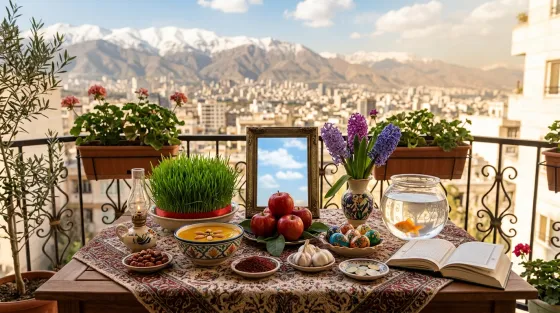
There is something beautifully stubborn about celebrating a new year when your government would rather you stayed indoors and kept quiet. Yet that is precisely what millions of Iranians chose to do this Nowruz, turning a 3,000-year-old festival of renewal into the year's most pointed act of defiance.
A Spring Unlike Any Other
Nowruz 2026, which fell on 20 March, marks the first wartime celebration of the Persian New Year since the Iran-Iraq conflict of the 1980s. A joint US-Israeli military campaign launched on 28 February has battered the country, with nearly 900 strikes reported in the first twelve hours alone. According to human rights organisation HRANA, at least 1,300 civilians have been killed since the campaign began.
But external bombardment is only half the picture. Protests that erupted on 28 December 2025 over a collapsing economy met a brutal January crackdown whose death toll remains fiercely disputed. The Iranian government acknowledges 3,117 deaths; HRANA documents over 7,000; a UN rapporteur estimates upwards of 20,000. Whichever figure you trust, the scale is staggering.
Meanwhile, the Iranian rial has shed over 40% of its value since a June 2025 conflict with Israel, and nearly 90% since US sanctions began in 2018. The 2026 budget responded not with economic relief but by hiking security spending by roughly 150%. Priorities, apparently, were clear.
Fire in the Streets
The real test came on 17 March with Chaharshanbe Suri, the traditional fire-jumping festival held on the last Wednesday before Nowruz. The IRGC had threatened a crackdown exceeding January's violence, and police chief Ahmadreza Radan called it a "decisive night." Iranians, in a display of collective nerve that deserves its own chapter in future history books, went out anyway.

Footage verified by multiple outlets showed crowds leaping over bonfires, chanting, and openly defying security forces. Reports from Iran International and others described gunshots fired to disperse gatherings. In some areas, crowds chanted "Javid Shah" in response to calls from exiled former crown prince Reza Pahlavi. The regime's response to this festive disobedience was characteristically heavy-handed: on 19 March, just one day before Nowruz, authorities executed three young protesters. One was a 19-year-old wrestling champion. The timing was no coincidence.
Silenced but Not Silent
For over three weeks, internet connectivity across Iran has hovered at less than 1% of normal levels, a near-total blackout designed to choke the flow of information. Security forces banned public Nowruz gatherings and shuttered historic sites. Tehran's metro ran free of charge, doubling quietly as civilian shelters from airstrikes.
Yet even under these conditions, Iranians found ways to mark the occasion. "Perhaps this dark night will finally give way to dawn," one woman told reporters as she cleaned her home for the festival. It is the sort of line that reads as poetic until you remember she is describing her actual life.
Supreme Leader Khamenei issued a Nowruz statement declaring "the enemy has been defeated." Given that his citizens are dodging both his security forces and foreign missiles while the currency circles the drain, one wonders which enemy he had in mind.
What Comes Next
Nowruz is celebrated by roughly 300 million people worldwide, but nowhere does it carry quite the same weight as in Iran this year. The festival's core promise, that light follows darkness and renewal follows destruction, has shifted from pleasant metaphor to urgent prayer.
The spring equinox arrived at precisely 18:15:59 local time on 20 March. Whether the political dawn these Iranians are hoping for arrives with similar punctuality remains to be seen. But if Chaharshanbe Suri proved anything, it is that the Iranian public's appetite for defiance has not been extinguished. If anything, they are still jumping over the flames.
Read the original article at source.