
The Great Iranian Disconnect: Why 'Back Online' Doesn't Mean What You Think
Iran claims its internet is back, but the reality is a restricted, throttled web. Discover why 'connectivity' in Iran is now a tool for state control.











The Illusion of Connectivity
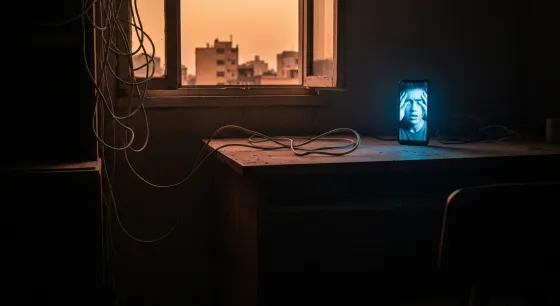
If you believe everything state media tells you, Iran is back in the digital age. Officials are currently trumpeting the triumphant return of the internet, suggesting that the dark days of the blackout are firmly in the rearview mirror. But if you actually try to load a webpage from Tehran, the reality is far more fragmented.
Reports from the ground indicate that for roughly 60 per cent of the population, the internet is less of a superhighway and more of a muddy country lane. While the government claims the grid is live, many users are discovering that 'connectivity' has been redefined to mean something far more restrictive.
The VPN Cat and Mouse Game
For the average Iranian user, the internet has become a game of digital whack a mole. Access is heavily throttled and filtered, forcing citizens to rely on Virtual Private Networks (VPNs) just to reach basic services. When the state flickers the switch back on, it is rarely a full restoration. Instead, users are greeted with a sanitised version of the web where popular platforms remain behind a digital curtain.
It is a frustrating experience that highlights a simple truth: if you have to jump through five hoops just to check your email, you are not really connected. The infrastructure might be technically functional, but the user experience is effectively broken.
Why This Matters Beyond the Borders
You might wonder why this matters from the comfort of your sofa in the UK. In an era where we treat high speed broadband as a human right, the systematic throttling of information is a stark reminder of how fragile digital freedom is. When a state decides to choke off the flow of data, it is not just about stopping social media usage. It is about controlling the narrative and isolating a population from the global community.
This isn't just a technical glitch; it is a calculated political tool. By limiting access to global platforms like Google and Telegram, the state effectively creates a walled garden. It forces users onto government approved platforms where monitoring is simple and dissent is easily silenced.
The Verdict: A Digital Half Life
The situation remains fluid and, frankly, grim. While the government attempts to project an image of normalcy, the lived experience of millions is one of constant digital struggle. It is a reminder that in the twenty first century, the most powerful weapon a regime can wield is often the power to simply pull the plug.
Until the restrictions are lifted and the throttling stops, the claim that the internet has returned is little more than a polished PR exercise. For now, the majority of Iranians remain in a state of digital purgatory, waiting for a connection that actually works.
Read the original article at source.