
Digital Ghosts: The Unsettling Rise of AI Resurrection in Russia
Families in Russia are using AI to resurrect fallen soldiers as chatbots. We explore the ethical implications and the psychological toll of this digital grief.












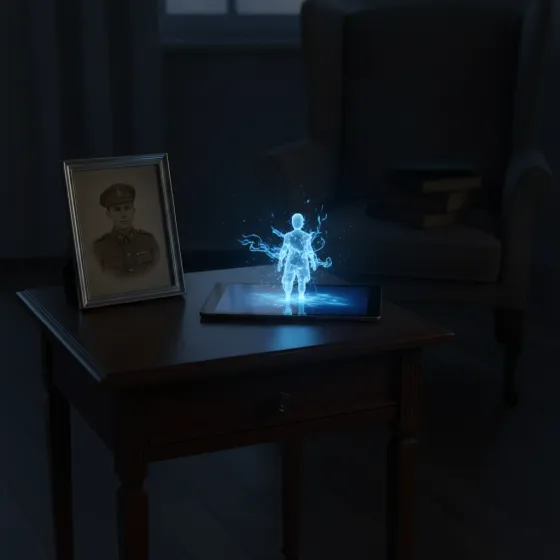
When Grief Meets Generative AI
We are living in an era where technology promises to fix almost anything, but some things are perhaps better left broken. In Russia, a disturbing trend is emerging at the intersection of profound national grief and advanced artificial intelligence. Families who have lost loved ones in the ongoing war in Ukraine are turning to AI to create digital versions of the deceased, effectively resurrecting them as chatbots or animated images.
The Illusion of Presence
It sounds like a dark episode of Black Mirror, but for many, it is a desperate attempt to cope with sudden loss. These digital avatars are programmed to mimic the speech patterns, personality traits, and physical appearance of the fallen soldiers. By feeding existing text messages, voice recordings, and photographs into large language models, families can engage in what feels like a conversation with the dead.
However, let us be clear: this is not a return of the person. It is a sophisticated simulation. When you strip away the technological wizardry, you are left with an algorithm predicting the next word in a sequence based on past data. While it might offer a fleeting sense of comfort, there is something deeply unsettling about interacting with a ghost constructed from training data.
Why This Matters
This phenomenon raises significant ethical and psychological questions. Is it healthy to keep the dead 'alive' in our digital spaces? For the families involved, the lack of closure provided by the war makes the lure of AI irresistible. Yet, there is a real danger that this technology stunts the natural grieving process. Instead of moving through the stages of loss, individuals might find themselves trapped in a loop of simulated interaction that can never truly satisfy the human need for connection.
The Tech Perspective
From a purely technical standpoint, the barrier to entry for this kind of 'necromancy' has never been lower. Generative AI tools are now so accessible that anyone with a basic understanding of prompting can build a persona. While these tools are frequently used for benign tasks like customer service or creative writing, their application here highlights a complete lack of guardrails regarding digital dignity and post mortem consent.
- Emotional Dependency: Users may become reliant on the AI for emotional regulation.
- Data Privacy: Whose digital footprint are we using, and do they get a say in their digital afterlife?
- Psychological Impact: Prolonged engagement with a simulation could delay healthy processing of trauma.
Ultimately, while we can simulate the voice and mannerisms of those we have lost, we cannot replicate the soul. These digital resurrections are a testament to the power of AI, but also a stark reminder of the limits of our digital reach. Sometimes, silence is the most honest response to death, no matter how clever the software becomes.
Read the original article at source.