
The Commute of Courage: Life on the Frontline Bus Routes of Kherson
In Kherson, the daily bus commute is a dangerous act of defiance. Discover how drivers and passengers navigate the constant threat of drone strikes.












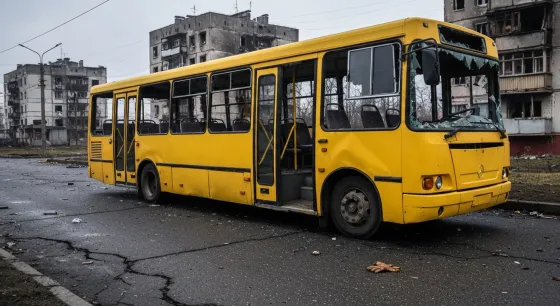
Public transport takes on a sinister meaning in Kherson
Most of us complain about a delayed train or a bus that never turns up. In the city of Kherson, however, the complaints are of a far more existential variety. For the drivers and passengers navigating the streets of this frontline city, the morning commute is not just a test of patience; it is a brush with death.
The grim reality of the daily route
Russian drone operators have turned their sights on civilian public transport. It is a brutal, calculated tactic that has already claimed the lives of three transport workers this year. These are not military targets. These are buses filled with people trying to get to work, to the shops, or to see family. The buses have become symbols of resilience in a city that refuses to stop living, even when the threat of an aerial strike is constant.
Why target a bus?
The logic is as cold as it is cruel. By targeting buses, the aim is to paralyse the city, isolate its residents, and erode the sense of normalcy that remains. When you turn a bus stop into a danger zone, you make the simple act of existing in a city feel like a gamble. It is a psychological weapon designed to drain the spirit of a population that has already endured so much.
Life under the watchful eye of drones
I have spoken to people who describe the sound of a drone engine as the modern equivalent of the air raid siren. It is a persistent, buzzing reminder that nowhere is truly safe. Drivers are now forced to make split second decisions: do they keep to the schedule and risk being spotted, or do they alter routes and leave stranded passengers behind? It is an impossible choice for anyone to have to make, let alone those who are just trying to keep the city moving.
The resilience of the Kherson transport workers
Despite the very real risk of being targeted, the buses keep running. The drivers are the unsung heroes of this conflict. They wake up, they get behind the wheel, and they navigate streets that are effectively hunting grounds. They do this not for glory, but because the city needs to function. If the transport stops, the city dies, and that is exactly what the aggressors want.
What does this mean for the wider world?
It is easy to look at these reports from the comfort of a sofa in the UK and feel a sense of detachment. But we should be clear: this is a deliberate targeting of civilian infrastructure. It is a violation of the basic rules of conflict that we like to pretend exist. When we ignore these stories, we allow the normalisation of violence against ordinary people who are simply trying to get from A to B.
The brave individuals behind the wheel in Kherson deserve our recognition, not just as victims of a war, but as people standing up to a campaign of terror. They are the frontline of a different kind of resistance, and their courage is as profound as it is heartbreaking.
Read the original article at source.